Center for Innovation in Molecular and Pharmaceutical Sciences (CIMPS), Dr. Reddy's Institute of Life Sciences, University of Hyderabad Campus, Gachibowli, Hyderabad, 500046, India.
Amity Institute of Biotechnology, Amity University, Kolkata, 700135, India.
Biochem Biophys Res Commun. 2022 Oct 30;627:168-175. doi: 10.1016/j.bbrc.2022.08.050. Epub 2022 Aug 23.
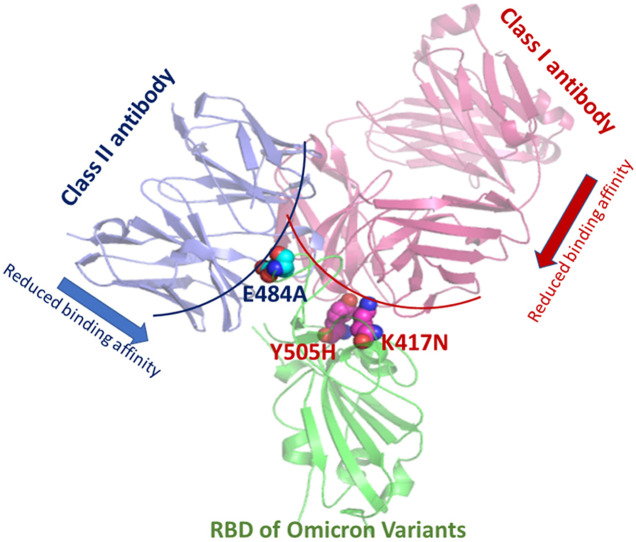
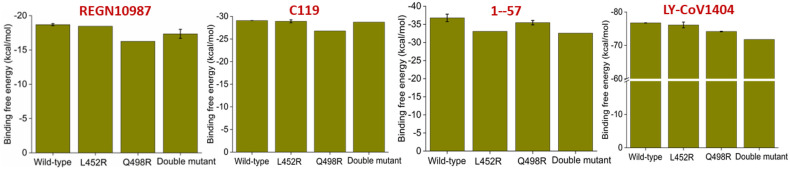
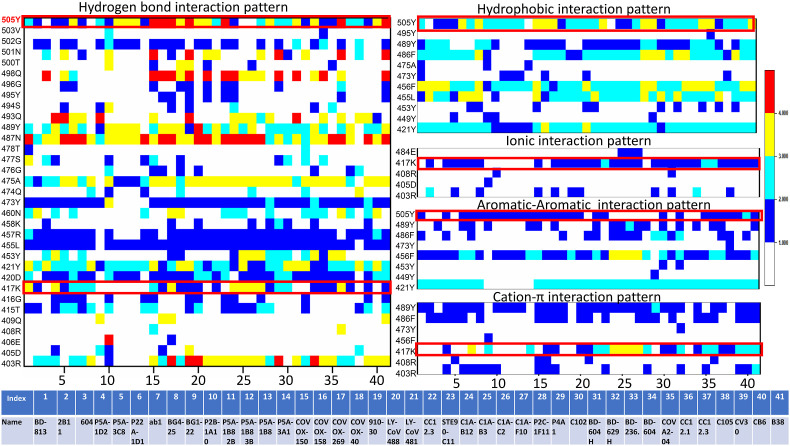
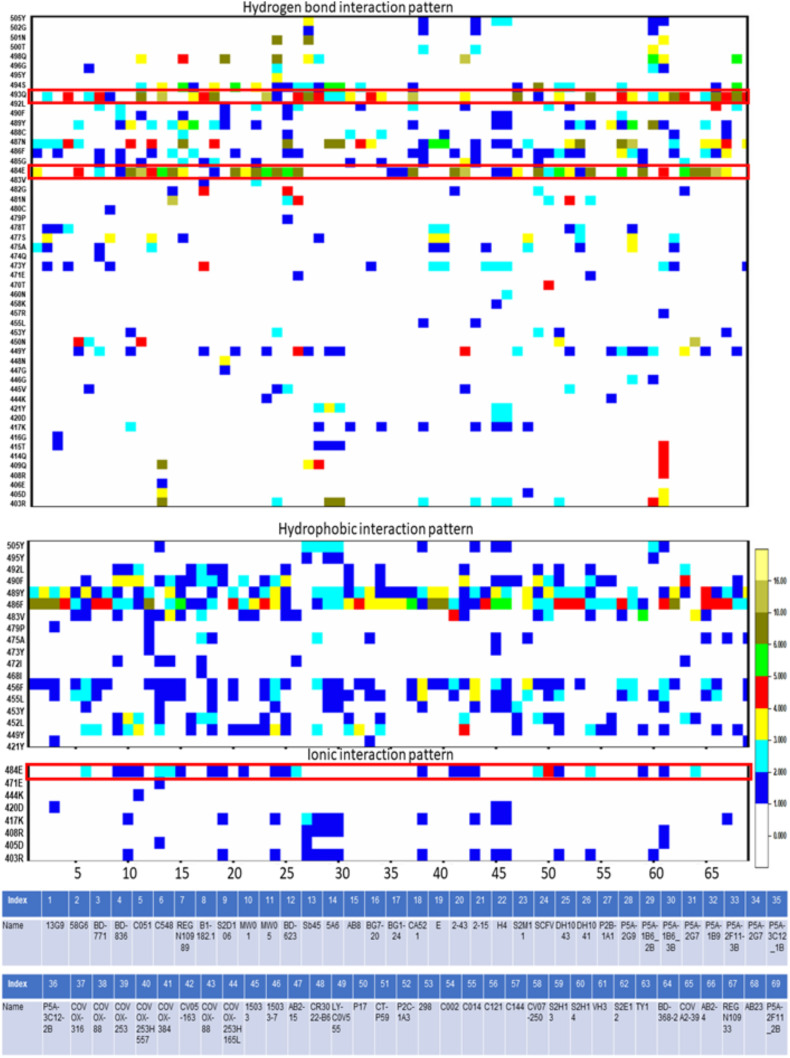
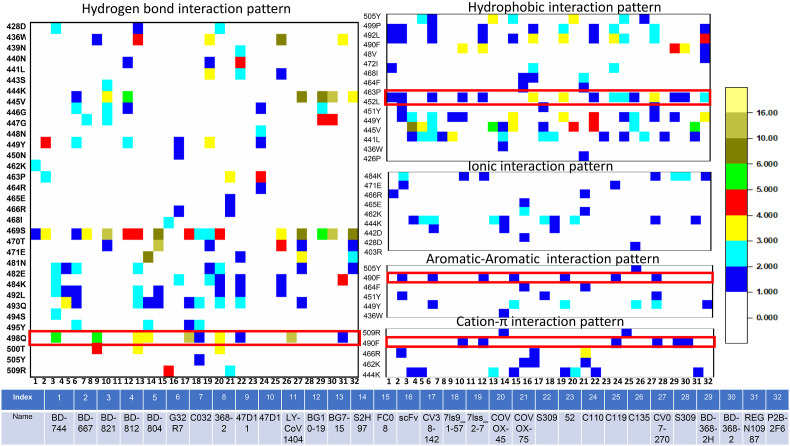
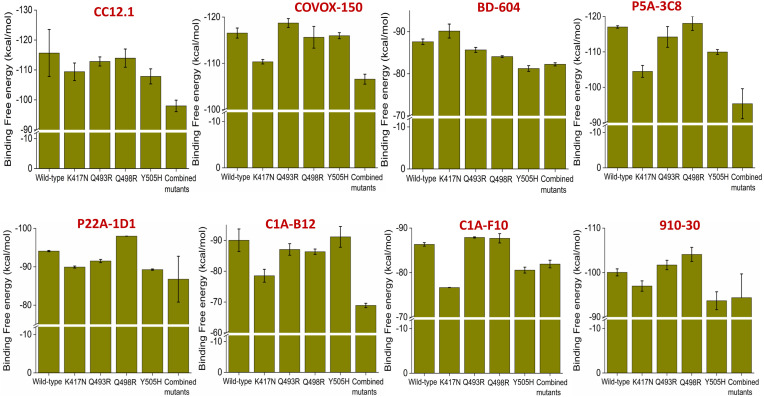
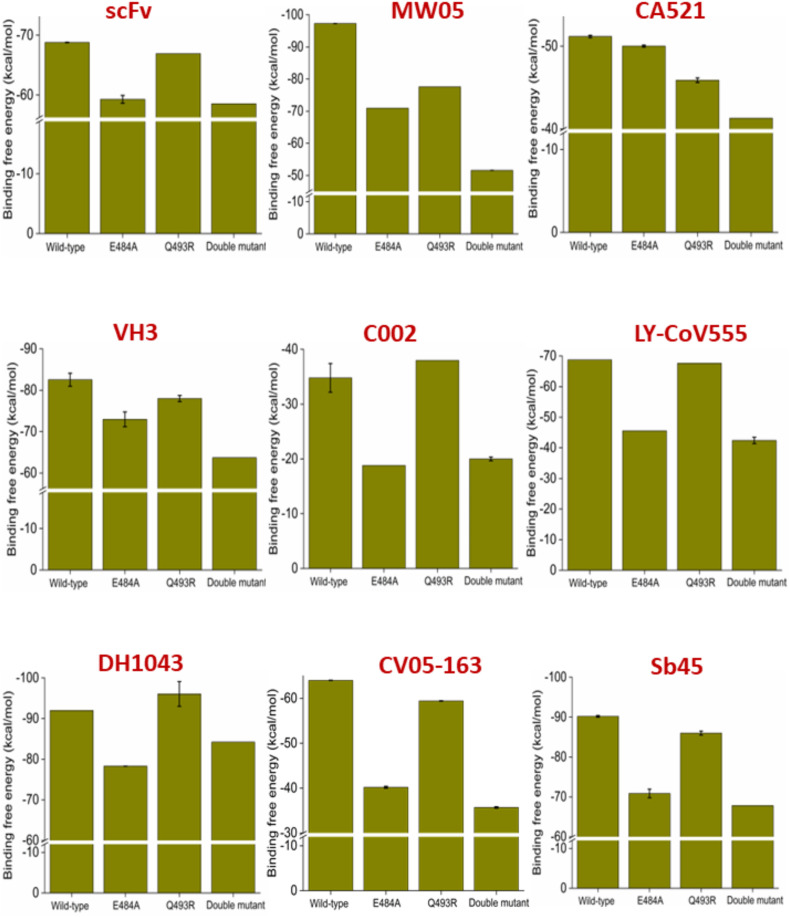
Recent times witnessed an upsurge in the number of COVID19 cases which is primarily attributed to the emergence of several omicron variants, although there is substantial population vaccination coverage across the globe. Currently, many therapeutic antibodies have been approved for emergency usage. The present study critically evaluates the effect of mutations observed in several omicron variants on the binding affinities of different classes of RBD-specific antibodies using a combined approach of immunoinformatics and binding free energy calculations. Our binding affinity data clearly show that omicron variants achieve antibody escape abilities by incorporating mutations at the immunogenic hotspot residues for each specific class of antibody. K417N and Y505H point mutations are primarily accountable for the loss of class I antibody binding affinities. The K417N/Q493R/Q498R/Y505H combined mutant significantly reduces binding affinities for all the class I antibodies. E484A single mutation, on the other hand, drastically reduces binding affinities for most of the class II antibodies. E484A and E484A/Q493R double mutations cause a 33-38% reduction in binding affinity for an approved therapeutic monoclonal antibody. The Q498R RBD mutation observed across all the omicron variants can reduce ∼12% binding affinity for REGN10987, a class III therapeutic antibody, and the L452R/Q498R double mutation causes a ∼6% decrease in binding affinities for another class III therapeutic antibody, LY-CoV1404. Our data suggest that achieving the immune evasion abilities appears to be the selection pressure behind the emergence of omicron variants.
最近,COVID19 病例数量激增,这主要归因于几种奥密克戎变体的出现,尽管全球范围内有大量人口接种了疫苗。目前,许多治疗性抗体已被批准紧急使用。本研究采用免疫信息学和结合自由能计算相结合的方法,批判性地评估了几种奥密克戎变体中观察到的突变对不同类别的 RBD 特异性抗体结合亲和力的影响。我们的结合亲和力数据清楚地表明,奥密克戎变体通过在每个特定类别的抗体的免疫原性热点残基上引入突变,从而获得抗体逃逸能力。K417N 和 Y505H 点突变主要导致 I 类抗体结合亲和力丧失。K417N/Q493R/Q498R/Y505H 组合突变显著降低了所有 I 类抗体的结合亲和力。另一方面,E484A 单突变极大地降低了大多数 II 类抗体的结合亲和力。E484A 和 E484A/Q493R 双突变导致一种已批准的治疗性单克隆抗体的结合亲和力降低 33-38%。所有奥密克戎变体中观察到的 Q498R RBD 突变可使 REGN10987(一种 III 类治疗性抗体)的结合亲和力降低约 12%,L452R/Q498R 双突变使另一种 III 类治疗性抗体 LY-CoV1404 的结合亲和力降低约 6%。我们的数据表明,获得免疫逃逸能力似乎是奥密克戎变体出现的选择压力。