Bai Lei, Tu Wen-Yo, Xiao Yatao, Zhang Kejing, Shen Chengyong
Department of Neurobiology in The First Affiliated Hospital; Insitiute of Translational Medicine, Zhejiang University, Zhejiang, China.
MOE Frontier Science Center for Brain Research and Brain-Machine Integration, Zhejiang University, Hangzhou, China.
Cell Biosci. 2022 Aug 30;12(1):140. doi: 10.1186/s13578-022-00876-6.
Neuromuscular junctions (NMJs) are peripheral synapses connecting motoneurons and skeletal myofibers. At the postsynaptic side in myofibers, acetylcholine receptor (AChR) proteins are clustered by the neuronal agrin signal. Meanwhile, several nuclei in each myofiber are specially enriched around the NMJ for postsynaptic gene transcription. It remains mysterious that how gene expressions in these synaptic nuclei are systematically regulated, especially by motoneurons.
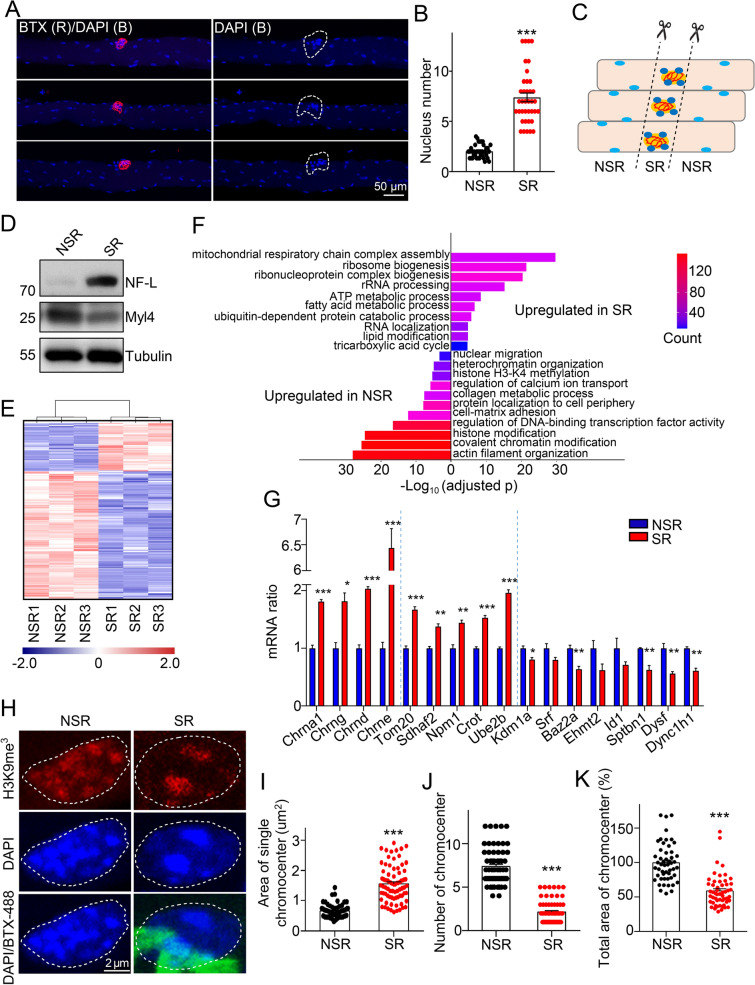
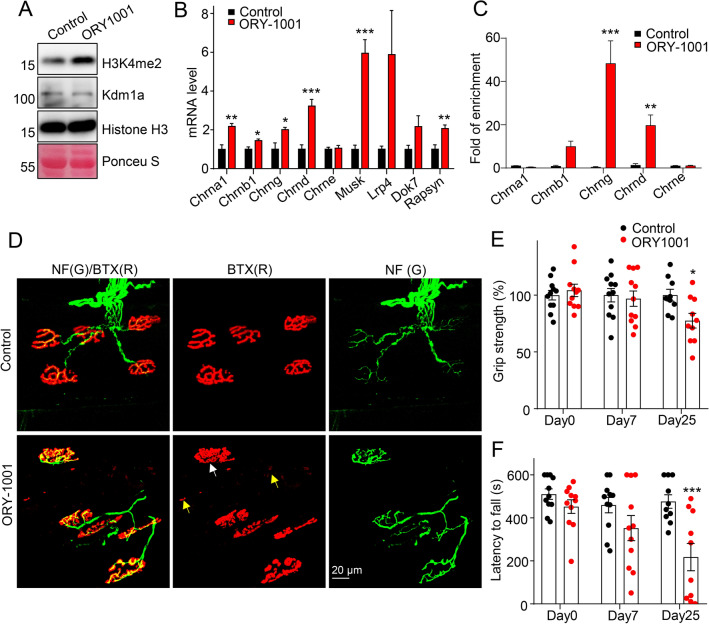
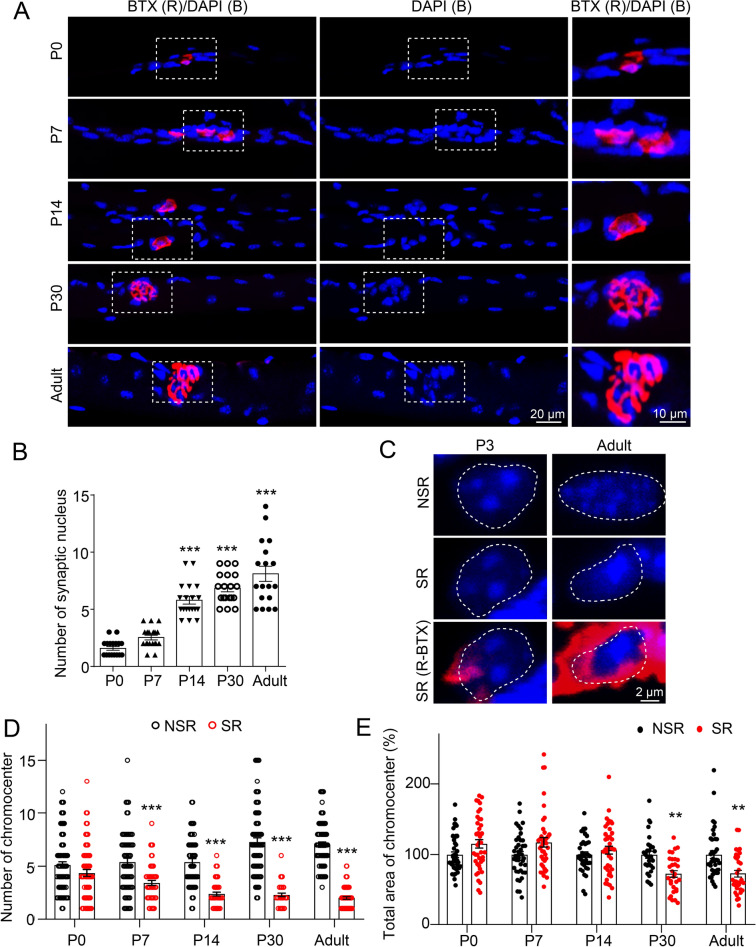
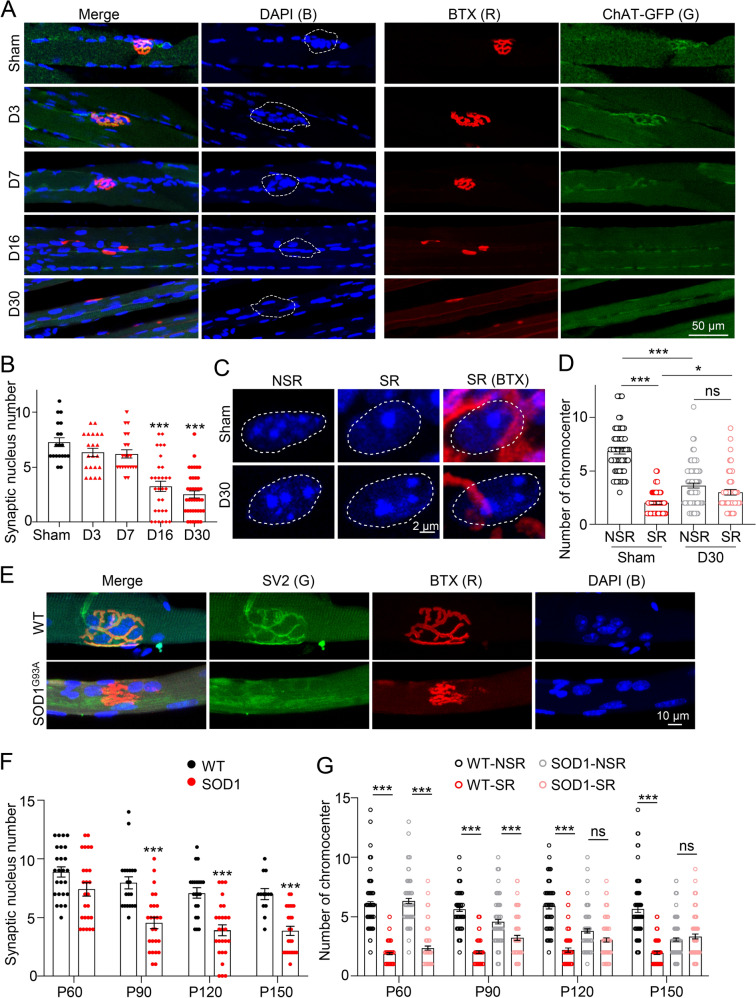
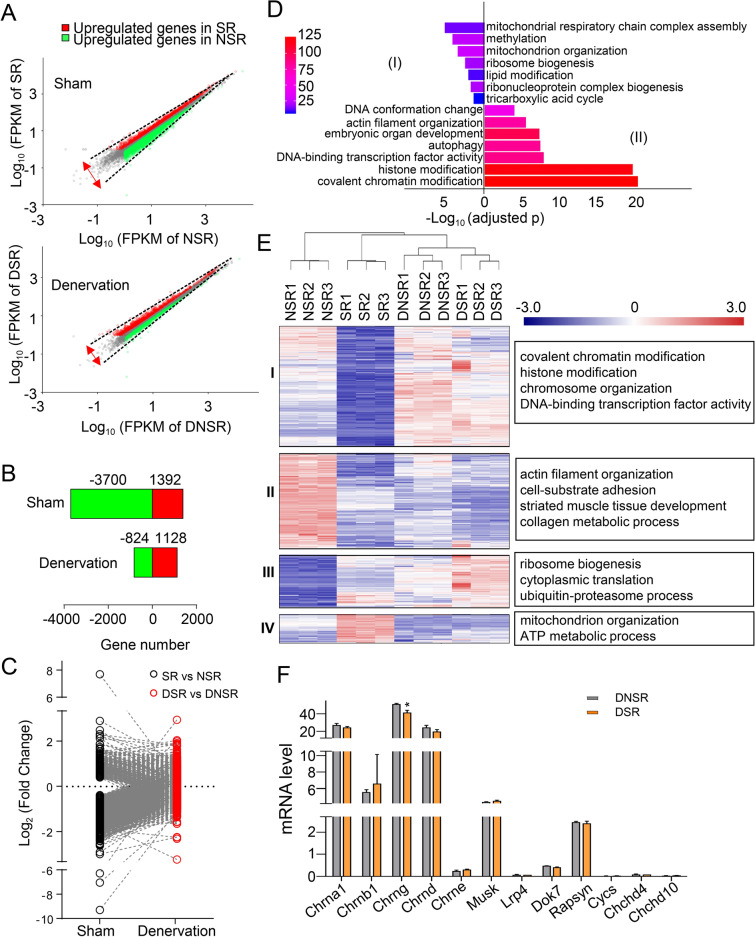
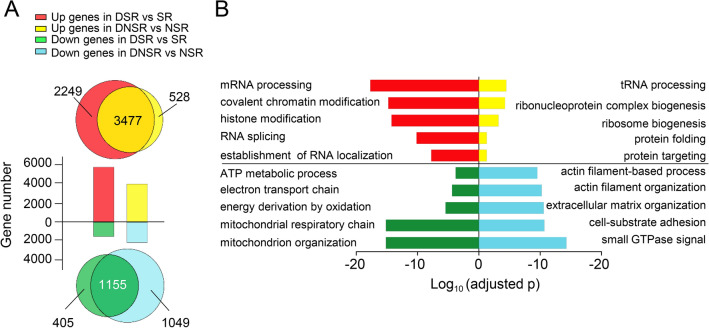
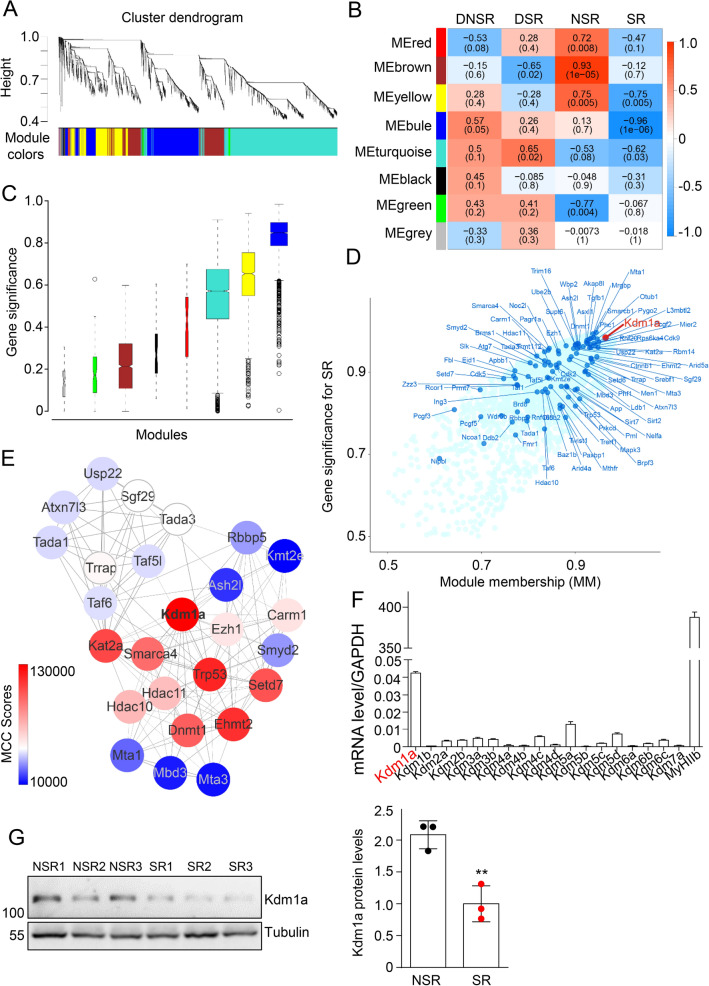
We found that synaptic nuclei have a distinctive chromatin structure and gene expression profiling. Synaptic nuclei are formed during NMJ development and maintained by motoneuron innervation. Transcriptome analysis revealed that motoneuron innervation determines the distinct expression patterns in the synaptic region and non-synaptic region in each multinucleated myofiber, probably through epigenetic regulation. Myonuclei in synaptic and non-synaptic regions have different responses to denervation. Weighted gene co-expression network analysis revealed that the histone lysine demethylases Kdm1a is a negative regulator of synaptic gene expression. Inhibition of Kdm1a promotes AChR expression but impairs motor functions.
These results demonstrate that motoneurons innervation determines the distinct gene expressions in multinucleated myofibers. Thus, dysregulation of nerve-controlled chromatin structure and muscle gene expression might cause muscle weakness and atrophy in motoneuron degenerative disorders.
神经肌肉接头(NMJ)是连接运动神经元和骨骼肌纤维的外周突触。在肌纤维的突触后一侧,乙酰胆碱受体(AChR)蛋白由神经元聚集蛋白信号聚集。同时,每个肌纤维中的几个细胞核在神经肌肉接头周围特别富集,用于突触后基因转录。这些突触细胞核中的基因表达如何被系统地调控,尤其是被运动神经元调控,仍然是个谜。
我们发现突触细胞核具有独特的染色质结构和基因表达谱。突触细胞核在神经肌肉接头发育过程中形成,并由运动神经元支配维持。转录组分析表明,运动神经元支配可能通过表观遗传调控决定了每个多核肌纤维中突触区域和非突触区域的不同表达模式。突触和非突触区域的肌核对去神经支配有不同反应。加权基因共表达网络分析表明,组蛋白赖氨酸去甲基化酶Kdm1a是突触基因表达的负调节因子。抑制Kdm1a可促进AChR表达,但会损害运动功能。
这些结果表明,运动神经元支配决定了多核肌纤维中不同的基因表达。因此,神经控制的染色质结构和肌肉基因表达失调可能会导致运动神经元退行性疾病中的肌肉无力和萎缩。