Department of Surgery, Division of Thoracic Surgery, The Jikei University, Minato-ku, Japan.
Thorac Cancer. 2022 Oct;13(20):2908-2910. doi: 10.1111/1759-7714.14625. Epub 2022 Aug 31.
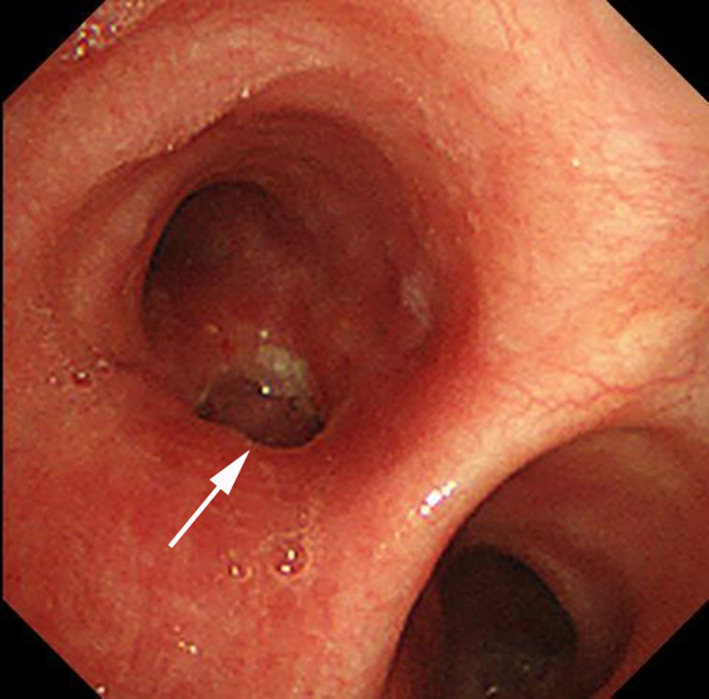
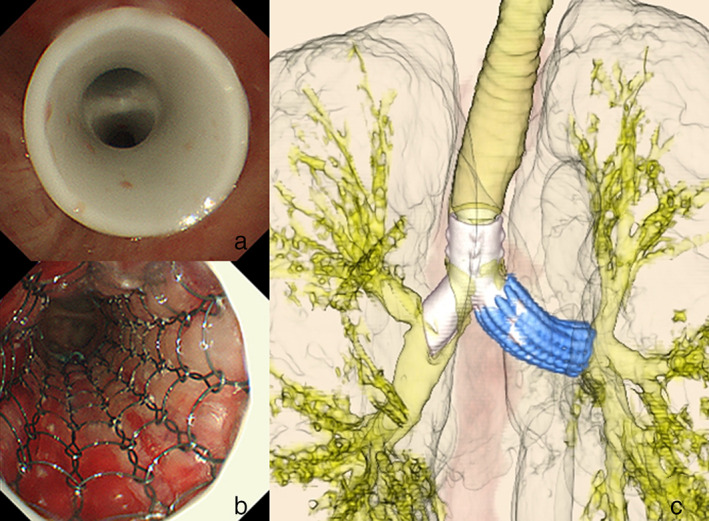
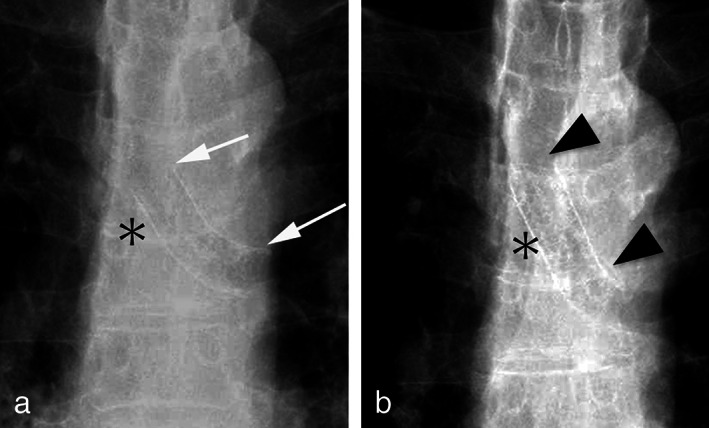
Esophagobronchial fistula (EBF) formation is a severe complication of advanced thoracic malignancies, that affects the prognosis and quality of life of patients. This study reports the case of an 80-year-old man with advanced esophageal cancer, complicated by EBF formation in the left main bronchus proximal to the carina following chemoradiation therapy. A fully covered stent was placed in the left main bronchus but was dislocated on the oral side. The attempt to place a partially covered self-expandable metallic stent (SEMS) also failed due to stent dislocation on the oral side. To avoid stent dislocation, a partially covered SEMS with a length of 40 mm and a diameter of 16 mm was placed to cover the EBF in the left main bronchus. Then, a silicone Y stent (16 × 13 × 13 mm in outer diameter) was inserted to support the SEMS from the inside. After placing the SEMS and Y stent, the position of the SEMS was stabilized. The patient remained stable with adequate oral intake.
食管支气管瘘(EBF)形成是晚期胸部恶性肿瘤的严重并发症,会影响患者的预后和生活质量。本研究报告了一例 80 岁男性患者,患有晚期食管癌,在放化疗后发生隆突近端左主支气管 EBF。在左主支气管中放置了一个全覆膜支架,但在口侧移位。由于口侧支架移位,尝试放置部分覆膜自膨式金属支架(SEMS)也失败了。为了避免支架移位,放置了一个长 40mm、直径 16mm 的部分覆膜 SEMS 来覆盖左主支气管中的 EBF。然后,插入一个硅胶 Y 支架(外径 16×13×13mm)从内部支撑 SEMS。放置 SEMS 和 Y 支架后,支架的位置稳定。患者情况稳定,能够经口充分摄入。