Castillo Paola, Marginet Marta, Jares Pedro, García Mireia, Gonzalvo Elena, Arance Ana, García Adriana, Alos Llucia, Teixido Cristina
Department of Pathology, Hospital Clinic, IDIBAPS, University of Barcelona, 08036 Barcelona, Spain.
Department of Medical Oncology, Hospital Clinic, IDIBAPS, University of Barcelona, 08036 Barcelona, Spain.
Explor Target Antitumor Ther. 2020;1(2):101-108. doi: 10.37349/etat.2020.00006. Epub 2020 Apr 28.
Single biomarker diagnostic test of V600 locus in metastatic melanoma is mandatory for treatment decision; however, multiple-gene based techniques, such as targeted next-generation sequencing (NGS) are being used to maximize the number of patients that can benefit from a targeted therapy. The main objective of this study is to investigate whether an NGS panel could be adopted in routine clinical care for advanced melanoma.
Patients diagnosed with advanced melanoma at our center from 2017 to 2019 were included. Presence of genetic alterations was performed using two methods: real-time polymerase chain reaction-based Idylla test (Biocartis) and NGS with the oncomine solid tumor DNA kit (Thermo Fisher Scientific). Total genomic DNA was extracted from formalin-fixed and paraffin embedded samples for sequencing.
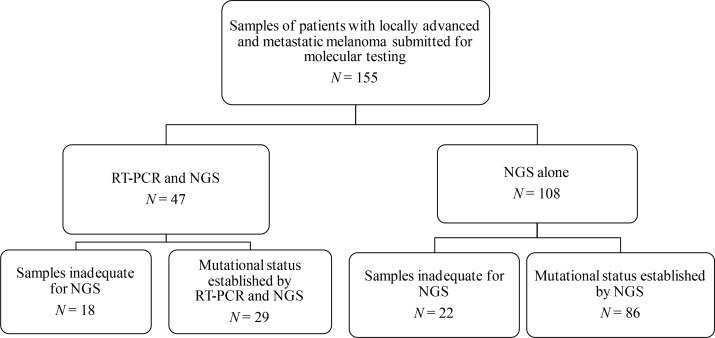
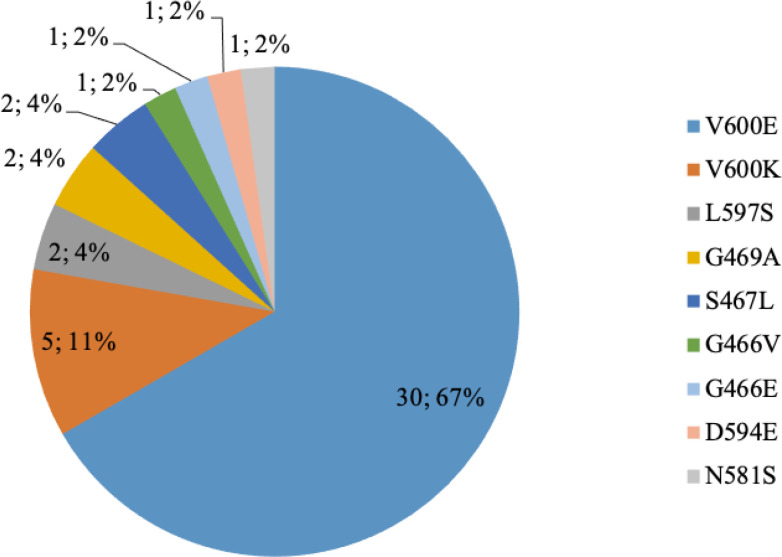
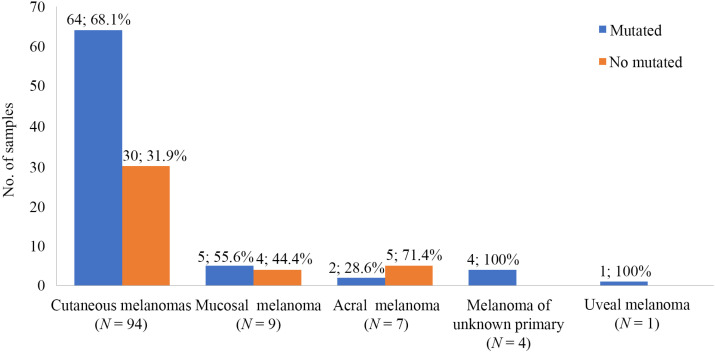
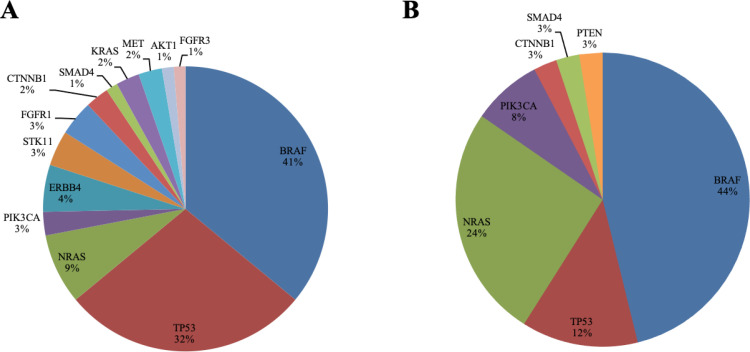
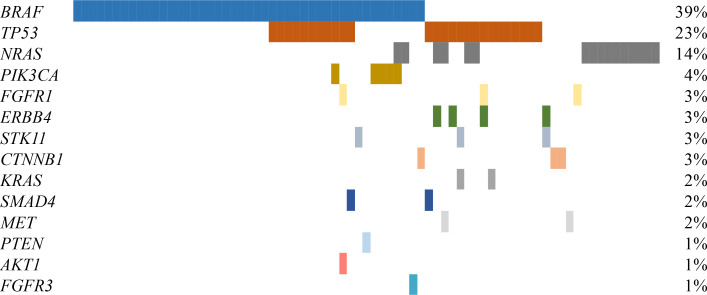
A total of 155 samples were evaluated for molecular analysis but 40 samples (25.8%) were inadequate for sequencing. The clinical utility of V600 real-time polymerase chain reaction and targeted-NGS was compared in 29 samples and a very good concordance was observed (Kappa = 0.89, 95% confidence interval 0.68 ± 1.05). An oncogenic mutation by NGS was found in 75 samples (65%)-53% of whom were candidates for personalized therapies. The most prevalent mutated genes were (39%), (23%), and (14%). Other genes identified at lower incidence (< 5%) were: , , , , , , , , and . Co-occurrence of oncogenic mutations was detected in 40% of the samples. Among the mutations identified, was significantly more prevalent in men (men 31.8% women 12.2%, = 0.03) and in women (men 9.1% women 24.4%, = 0.03).
Targeted-NGS testing is a feasible technique to implement in the routine clinical practice. Based on our results, NGS has provided more information on target-genes than RT-PCR technique, maximizing the benefit for patients with advanced melanoma.
转移性黑色素瘤V600位点的单一生物标志物诊断检测对于治疗决策至关重要;然而,基于多基因的技术,如靶向新一代测序(NGS),正被用于使能够从靶向治疗中获益的患者数量最大化。本研究的主要目的是调查NGS检测 panel 是否可用于晚期黑色素瘤的常规临床护理。
纳入2017年至2019年在本中心诊断为晚期黑色素瘤的患者。使用两种方法检测基因改变:基于实时聚合酶链反应的Idylla检测(Biocartis)和使用肿瘤实体瘤DNA试剂盒(Thermo Fisher Scientific)的NGS。从福尔马林固定石蜡包埋样本中提取总基因组DNA进行测序。
共对155个样本进行分子分析,但40个样本(25.8%)测序不合格。在29个样本中比较了V600实时聚合酶链反应和靶向NGS的临床效用,观察到非常好的一致性(Kappa = 0.89,95%置信区间0.68±1.05)。通过NGS在75个样本(65%)中发现致癌突变,其中53%为个性化治疗候选者。最常见的突变基因是(39%)、(23%)和(14%)。其他发生率较低(<5%)的基因有:、、、、、、、、和。在40%的样本中检测到致癌突变的共发生。在鉴定出的突变中,在男性中显著更常见(男性31.8%,女性12.2%,=0.03),在女性中(男性9.1%,女性24.4%,=0.03)。
靶向NGS检测是一种可在常规临床实践中实施的可行技术。基于我们的结果,NGS比RT-PCR技术提供了更多关于靶基因的信息,使晚期黑色素瘤患者的获益最大化。