Meoni Giulia, Decarli Nicola Libertà, Benucci Maurizio, Raspanti Claudio, Ribecco Angela Stefania
Medical Oncology Unit, Oncology Department, San Giovanni di Dio Hospital, Azienda USL Toscana Centro, 50143 Florence, Italy.
Pathology Unit, Oncology Department, San Giovanni di Dio Hospital, Azienda USL Toscana Centro, 50143 Florence, Italy.
Explor Target Antitumor Ther. 2020;1(5):372-380. doi: 10.37349/etat.2020.00022. Epub 2020 Oct 30.
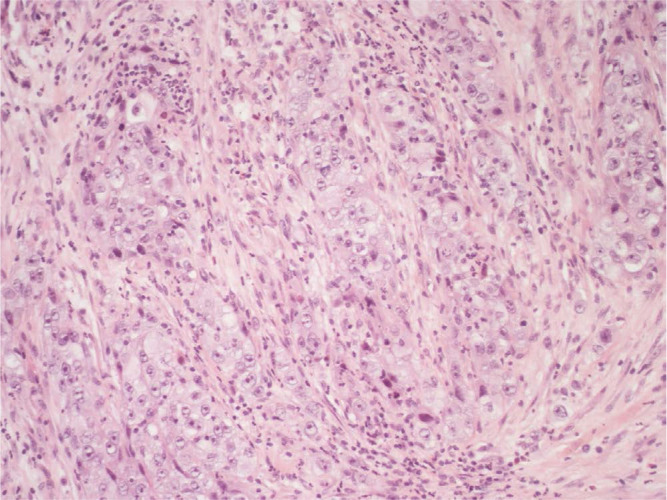
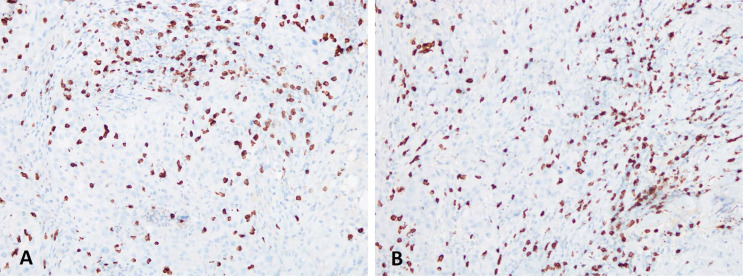
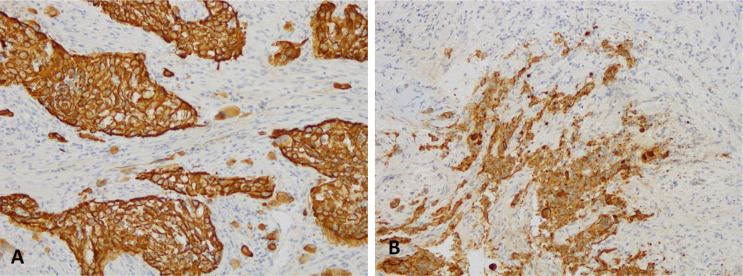
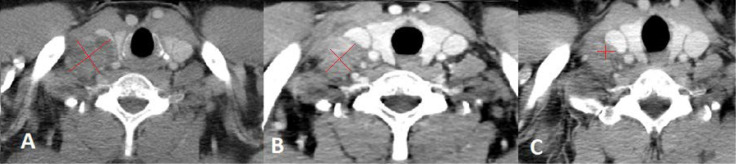
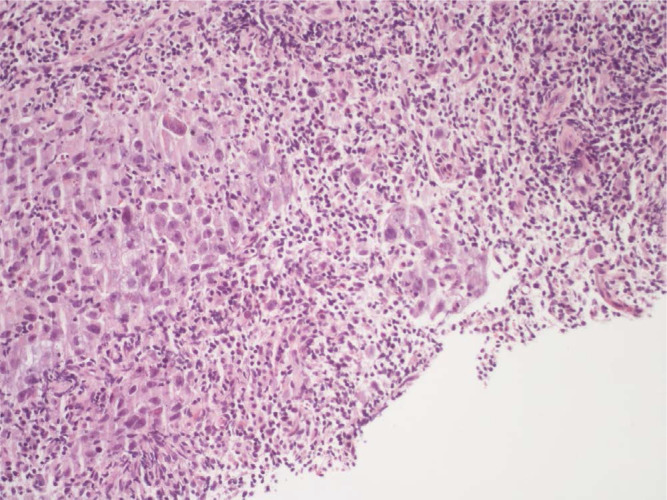
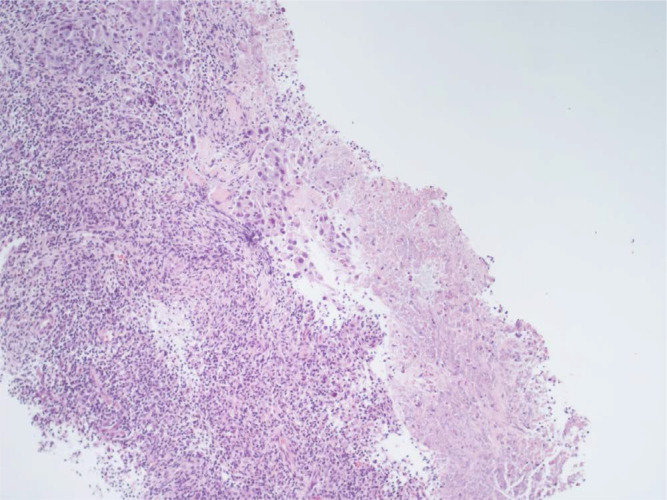
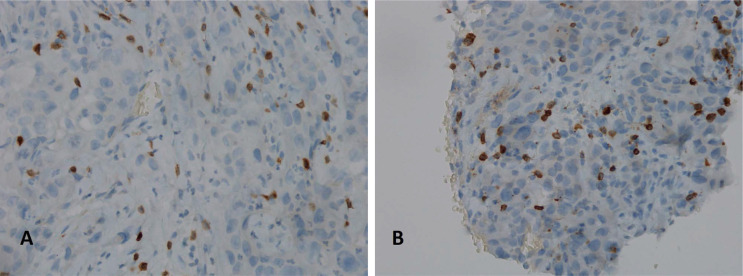
Immunotherapy dramatically changed the management of several malignancies including non-small cell lung cancer (NSCLC). Since immune checkpoint inhibitors have a different mechanism of action from cytotoxic agents or small molecules against NSCLC, also tumor response may present with atypical features. Pseudoprogression (PP) is a distinct response pattern defined by a transient enlargement of the tumor burden, sustained by inflammatory cells and usually not associated with worsening of performance status (PS). Here the authors describe the case of a lung adenocarcinoma patient treated with pembrolizumab, who developed an early symptomatic PP with a dramatic global worsening of PS. Subsequently an improvement in general condition and a brilliant tumor response were observed. Tumor re-biopsy was collected after the treatment in order to support the identification of PP and to describe microenvironment modifications induce by immunotherapy.
免疫疗法极大地改变了包括非小细胞肺癌(NSCLC)在内的多种恶性肿瘤的治疗方式。由于免疫检查点抑制剂针对NSCLC的作用机制与细胞毒性药物或小分子不同,肿瘤反应也可能呈现非典型特征。假性进展(PP)是一种独特的反应模式,其定义为肿瘤负荷短暂增大,由炎症细胞维持,通常与体能状态(PS)恶化无关。本文作者描述了一例接受派姆单抗治疗的肺腺癌患者的病例,该患者出现了早期有症状的PP,PS显著全面恶化。随后观察到患者一般状况改善且肿瘤反应良好。治疗后进行了肿瘤再次活检,以支持PP的鉴定并描述免疫疗法诱导的微环境改变。