Kanazawa Takehiko, Nishihama Ryuichi, Ueda Takashi
Division of Cellular Dynamics, National Institute for Basic Biology, Okazaki, Aichi, Japan.
The Department of Basic Biology, SOKENDAI (The Graduate University for Advanced Studies), Okazaki, Aichi, Japan.
Front Plant Sci. 2022 Aug 15;13:979066. doi: 10.3389/fpls.2022.979066. eCollection 2022.
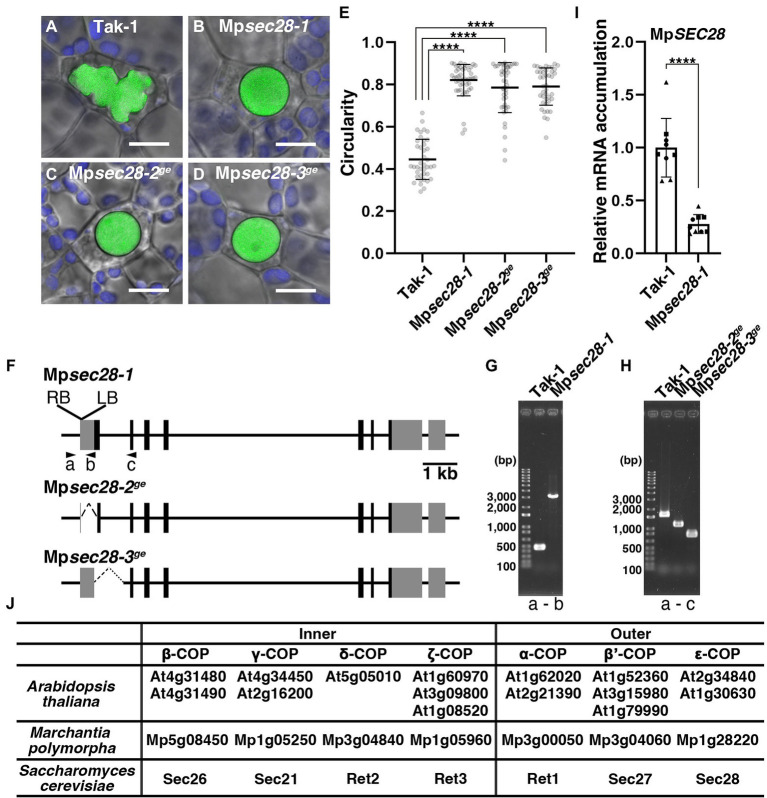
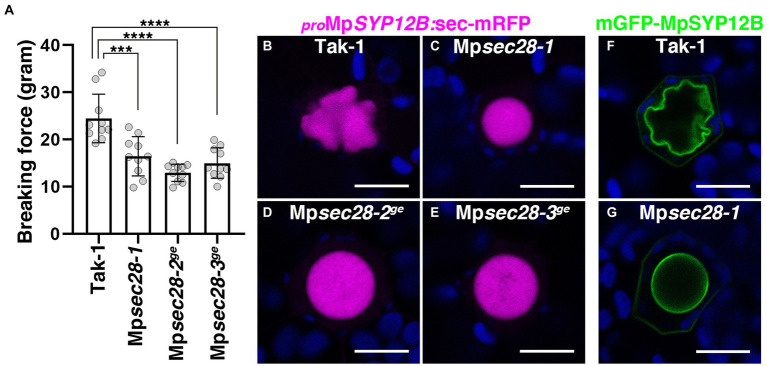
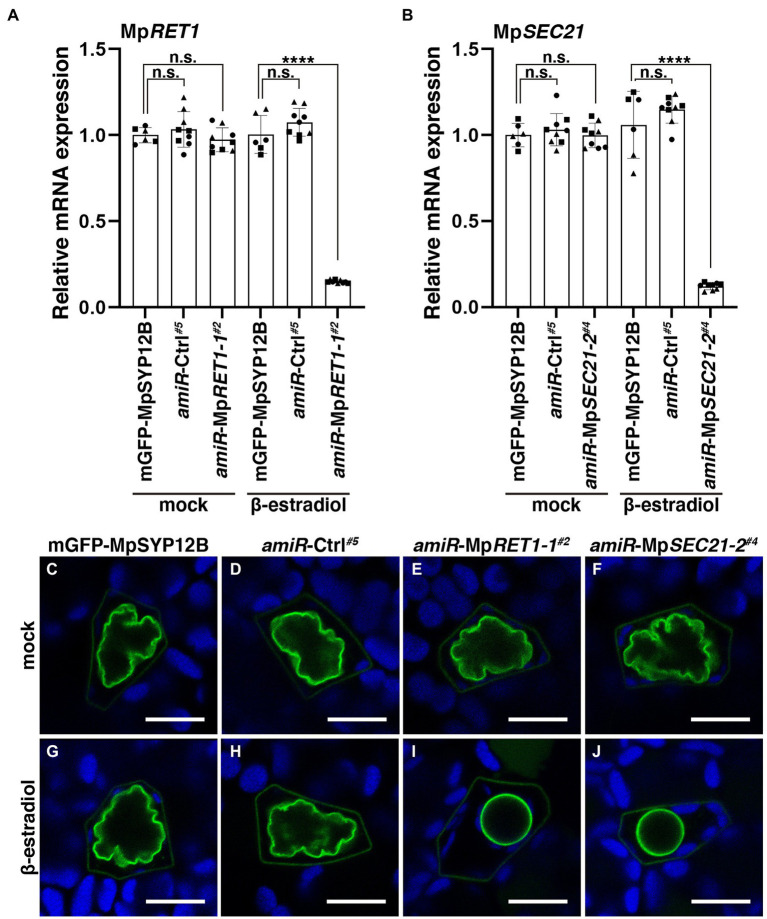
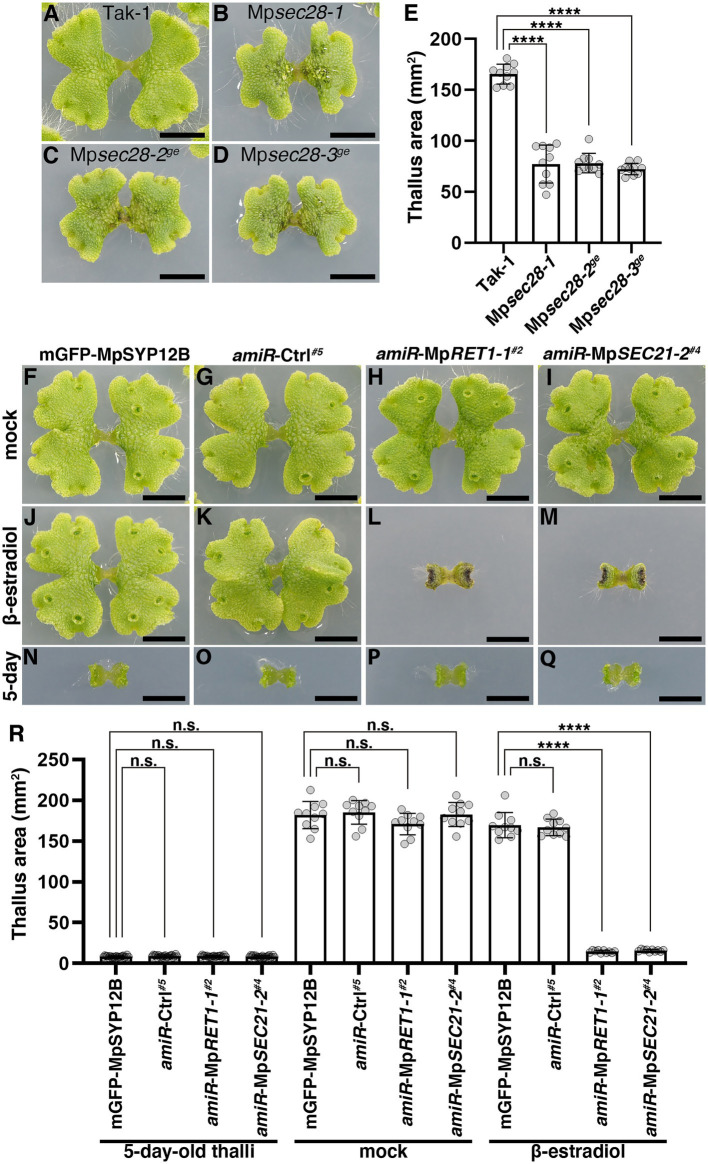
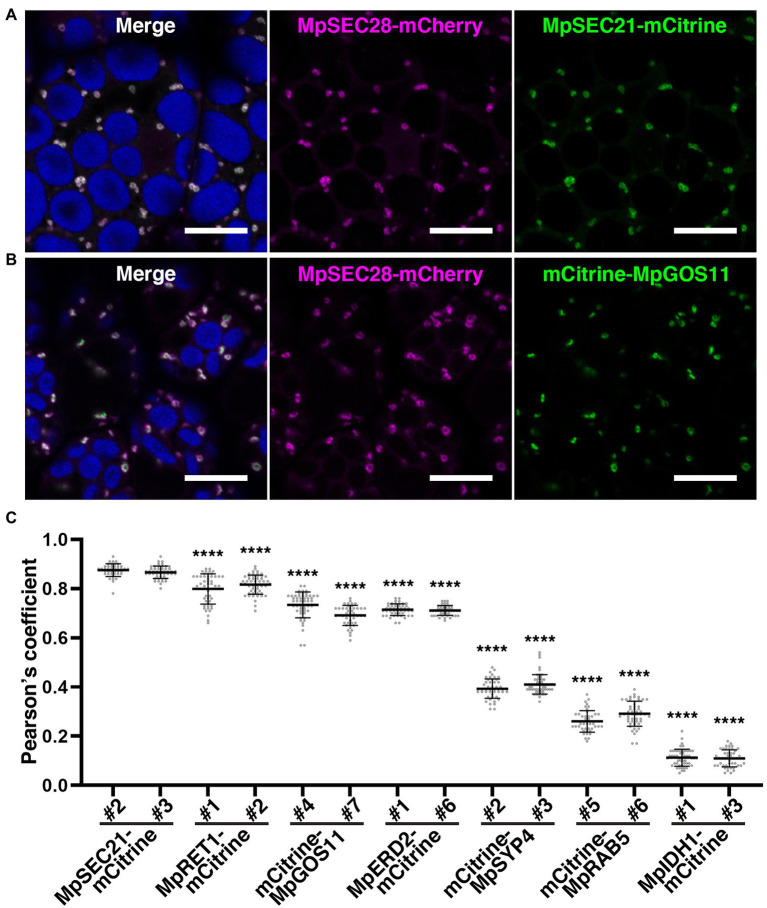
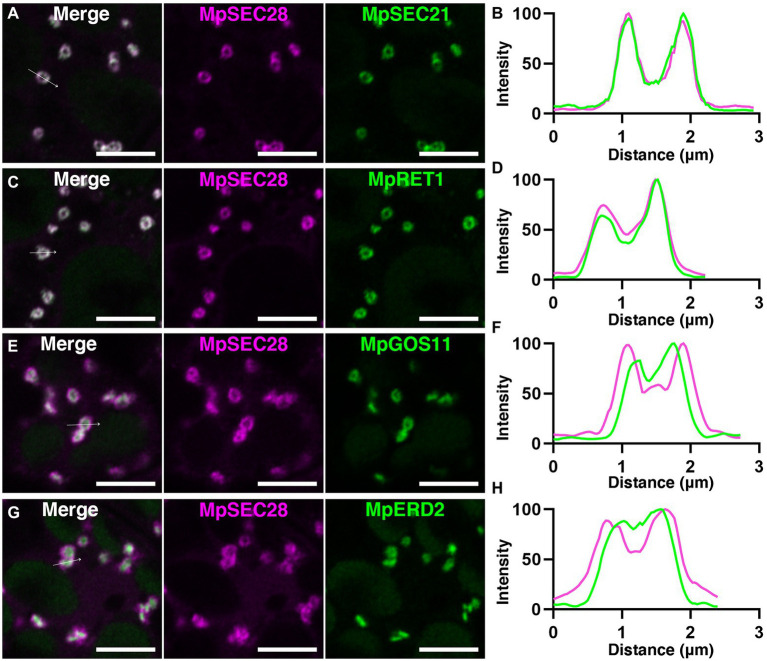
Eukaryotic cells possess endomembrane organelles equipped with specific sets of proteins, lipids, and polysaccharides that are fundamental for realizing each organelle's specific function and shape. A tightly regulated membrane trafficking system mediates the transportation and localization of these substances. Generally, the secretory/exocytic pathway is responsible for transporting cargo to the plasma membrane and/or the extracellular space. However, in the case of oil body cells in the liverwort the oil body, a liverwort-unique organelle, is thought to be formed by secretory vesicle fusion through redirection of the secretory pathway inside the cell. Although their formation mechanism remains largely unclear, oil bodies exhibit a complex and bumpy surface structure. In this study, we isolated a mutant with spherical oil bodies through visual screening of mutants with abnormally shaped oil bodies. This mutant harbored a mutation in a coat protein complex I (COPI) subunit MpSEC28, and a similar effect on oil body morphology was also detected in knockdown mutants of other COPI subunits. Fluorescently tagged MpSEC28 was localized to the periphery of the Golgi apparatus together with other subunits, suggesting that it is involved in retrograde transport from and/or in the Golgi apparatus as a component of the COPI coat. The Mp mutants also exhibited weakened stiffness of the thalli, suggesting impaired cell-cell adhesion and cell wall integrity. These findings suggest that the mechanism of cell wall biosynthesis is also involved in shaping the oil body in , supporting the redirection of the secretory pathway inward the cell during oil body formation.
真核细胞拥有内膜细胞器,这些细胞器配备有特定的蛋白质、脂质和多糖组合,这些对于实现每个细胞器的特定功能和形状至关重要。一个严格调控的膜运输系统介导这些物质的运输和定位。一般来说,分泌/胞吐途径负责将货物运输到质膜和/或细胞外空间。然而,在地钱的油体细胞中,油体是地钱特有的细胞器,被认为是通过细胞内分泌途径的重定向由分泌囊泡融合形成的。尽管它们的形成机制在很大程度上仍不清楚,但油体呈现出复杂且凹凸不平的表面结构。在本研究中,我们通过对油体形状异常的突变体进行视觉筛选,分离出了具有球形油体的突变体。该突变体在衣被蛋白复合体I(COPI)亚基MpSEC28中存在突变,并且在其他COPI亚基的敲低突变体中也检测到了对油体形态的类似影响。荧光标记的MpSEC28与其他亚基一起定位于高尔基体的周边,表明它作为COPI衣被的一个组分参与从高尔基体的逆向运输和/或在高尔基体中的逆向运输。Mp突变体的叶状体还表现出硬度减弱,表明细胞间粘附和细胞壁完整性受损。这些发现表明细胞壁生物合成机制也参与了地钱中油体形状的塑造,支持了油体形成过程中分泌途径向细胞内的重定向。