Liu Jie, Sun Shengjun, Zhou Cheng, Sun Zhihong, Wang Qin, Sun Chengming
Yantai Yuhuangding Hospital, Yantai, P. R. China.
Yantaishan Hospital of Yantai, P. R. China.
J Cancer. 2022 Aug 21;13(10):3151-3159. doi: 10.7150/jca.75597. eCollection 2022.
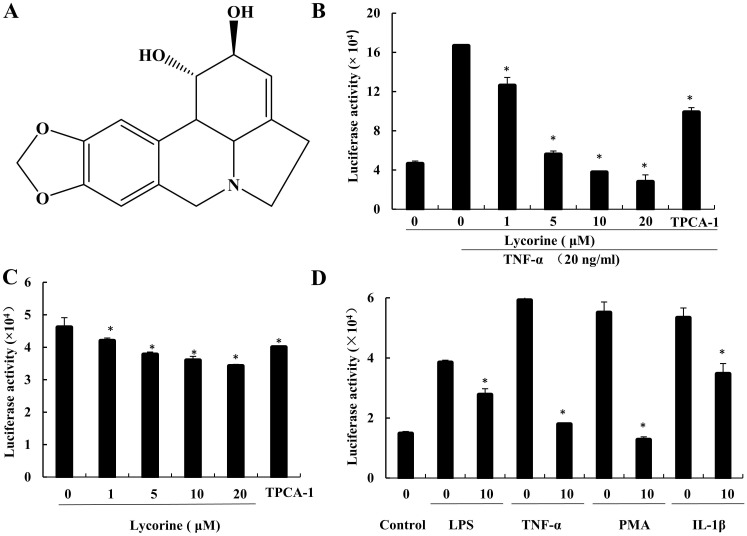
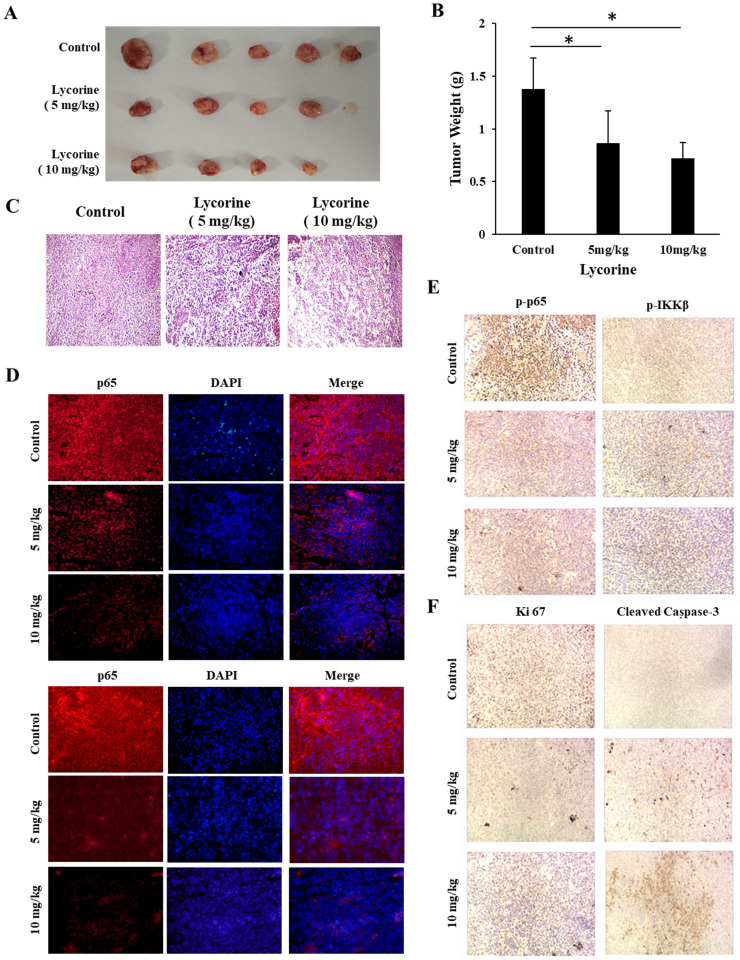
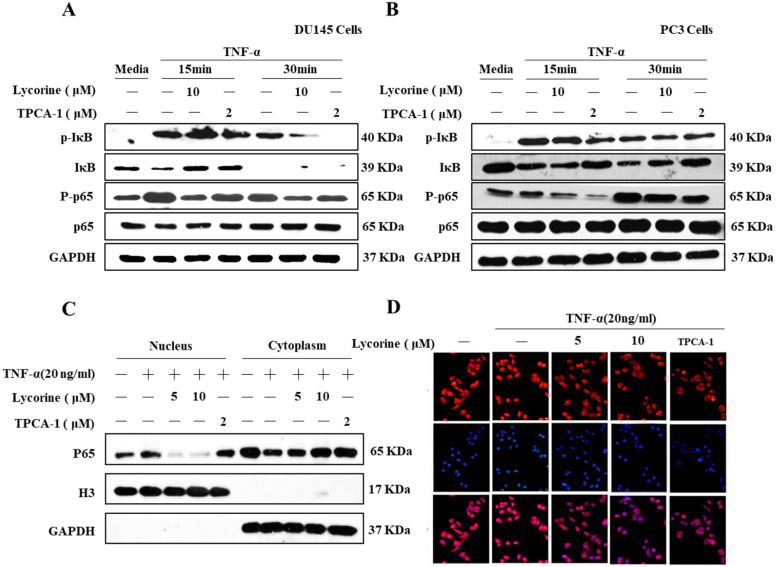
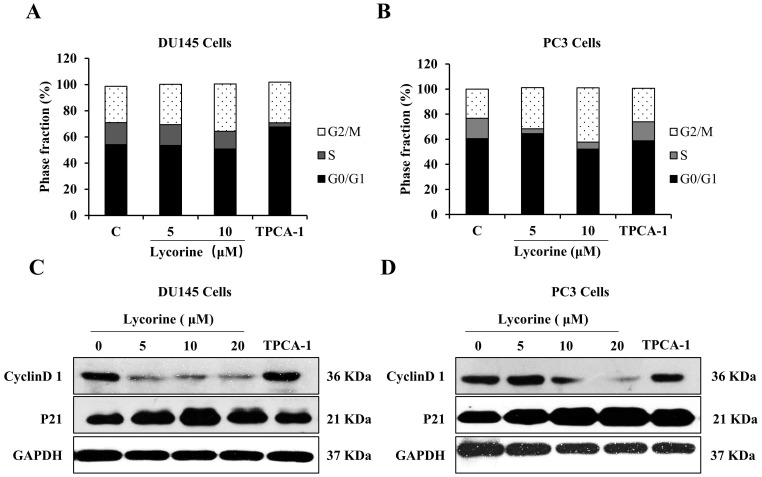
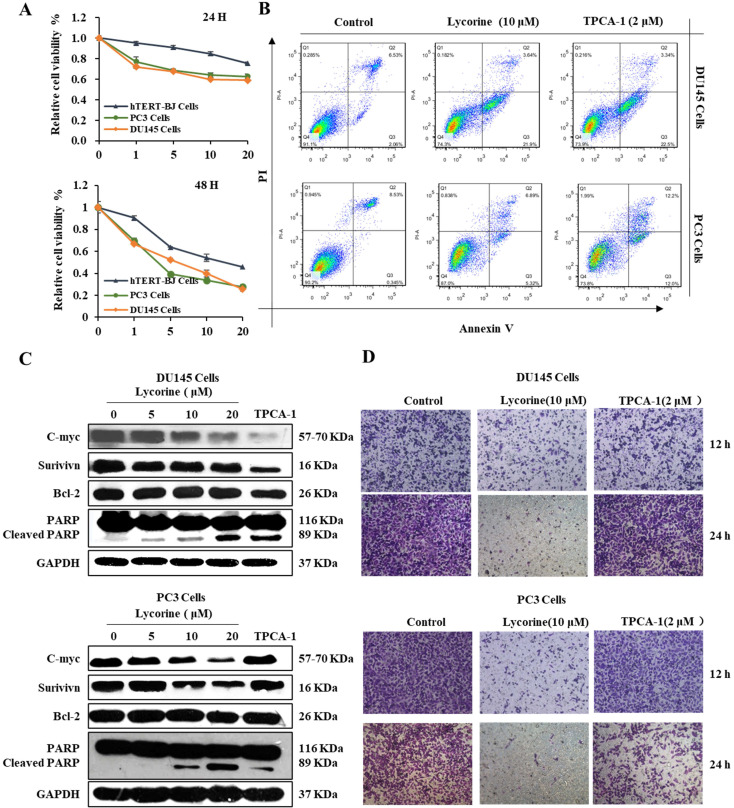
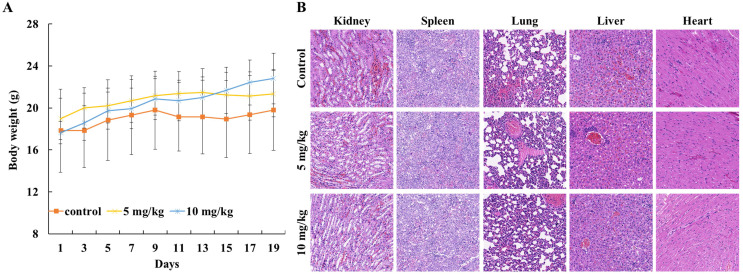
NF-κB transcription factors critically regulate the expression of genes which are involved in important cellular processes, including cellular proliferation and apoptosis. Abnormal activation of the NF-κB signaling pathway has been implicated in a variety of human cancers. Hyper-activation of the NF-κB signaling pathway has been found to lead to tumor survival, anti-apoptosis and invasion in the development of prostate cancer. In the present work, we identified Lycorine as a potent NF-κB inhibitor using a NF-κB activity dependent luciferase reporter in PC3 and DU145 prostate cancer cells. With this reporter gene assay, we found that Lycorine significantly suppressed the constitutive NF-κB activity as well as the NF-κB activity induced by TNF-α, LPS, PMA and IL-1β. Western blotting analysis of the NF-κB signaling pathway further showed that Lycorine inhibited IκB-α (inhibitor of κB) phosphorylation, IκB-α degradation, and p65 phosphorylation. Consistent with this, the subsequent nuclear translocation of p65 was blocked by Lycorine as evidenced in the immunofluorescence assay and western blotting. Furthermore, we observed that cell cycle was arrested at G2/M in Lycorine treated cells using FACS analysis. Western blotting analysis indicated that Lycorine increased the expression of Cyclin D1 but decreased the expression of p21. In addition, FACS analysis showed that Lycorine induced apoptosis in DU145 and PC3 cells. Western blotting analysis revealed that Lycorine decreased the expression of anti-apoptosis genes myc, survivin and Bcl-2 while increased cleavage of PARP. Finally, we observed a significant anticancer effect of Lycorine in a RM-1 prostate cancer xenograft mouse model. In agreement with its anticancer effect, Lycorine inhibited p65 phosphorylation, IKK-β phosphorylation and the expression of Ki-67, while increased the cleavage of Caspase 3 in tumor tissue. Taken together, our data demonstrated the and anti-prostate cancer activity of Lycorine by inhibiting the NF-κB signaling pathway, and highlighted it as a lead compound for further development into an effective anticancer drug.
核因子-κB(NF-κB)转录因子对参与重要细胞过程(包括细胞增殖和凋亡)的基因表达起着关键的调控作用。NF-κB信号通路的异常激活与多种人类癌症相关。研究发现,在前列腺癌的发展过程中,NF-κB信号通路的过度激活会导致肿瘤存活、抗凋亡和侵袭。在本研究中,我们利用NF-κB活性依赖性荧光素酶报告基因,在PC3和DU145前列腺癌细胞中鉴定出石蒜碱是一种有效的NF-κB抑制剂。通过该报告基因检测,我们发现石蒜碱能显著抑制组成型NF-κB活性以及由肿瘤坏死因子-α(TNF-α)、脂多糖(LPS)、佛波酯(PMA)和白细胞介素-1β(IL-1β)诱导的NF-κB活性。对NF-κB信号通路的蛋白质印迹分析进一步表明,石蒜碱抑制IκB-α(κB抑制剂)的磷酸化、IκB-α的降解以及p65的磷酸化。与此一致的是,免疫荧光检测和蛋白质印迹结果表明,石蒜碱可阻止p65随后的核转位。此外,我们通过流式细胞术分析观察到,经石蒜碱处理的细胞的细胞周期停滞在G2/M期。蛋白质印迹分析表明,石蒜碱增加了细胞周期蛋白D1(Cyclin D1)的表达,但降低了p21的表达。此外,流式细胞术分析显示,石蒜碱可诱导DU145和PC3细胞凋亡。蛋白质印迹分析显示,石蒜碱降低了抗凋亡基因myc、生存素(survivin)和Bcl-2的表达,同时增加了聚(ADP-核糖)聚合酶(PARP)的切割。最后,我们在RM-1前列腺癌异种移植小鼠模型中观察到石蒜碱具有显著的抗癌作用。与其抗癌作用一致,石蒜碱抑制肿瘤组织中p65的磷酸化、IKK-β的磷酸化以及Ki-67的表达,同时增加了半胱天冬酶3(Caspase 3)的切割。综上所述,我们的数据证明了石蒜碱通过抑制NF-κB信号通路具有抗癌和抗前列腺癌活性,并突出了其作为先导化合物进一步开发成有效抗癌药物的潜力。