Department of Neurosurgery, Renmin Hospital of Wuhan University, Wuhan, 430060 Hubei, China.
Department of Neurosurgery, General Hospital, Central Theater Command, PLA, Wuhan, 430070 Hubei, China.
Oxid Med Cell Longev. 2022 Aug 22;2022:1614336. doi: 10.1155/2022/1614336. eCollection 2022.
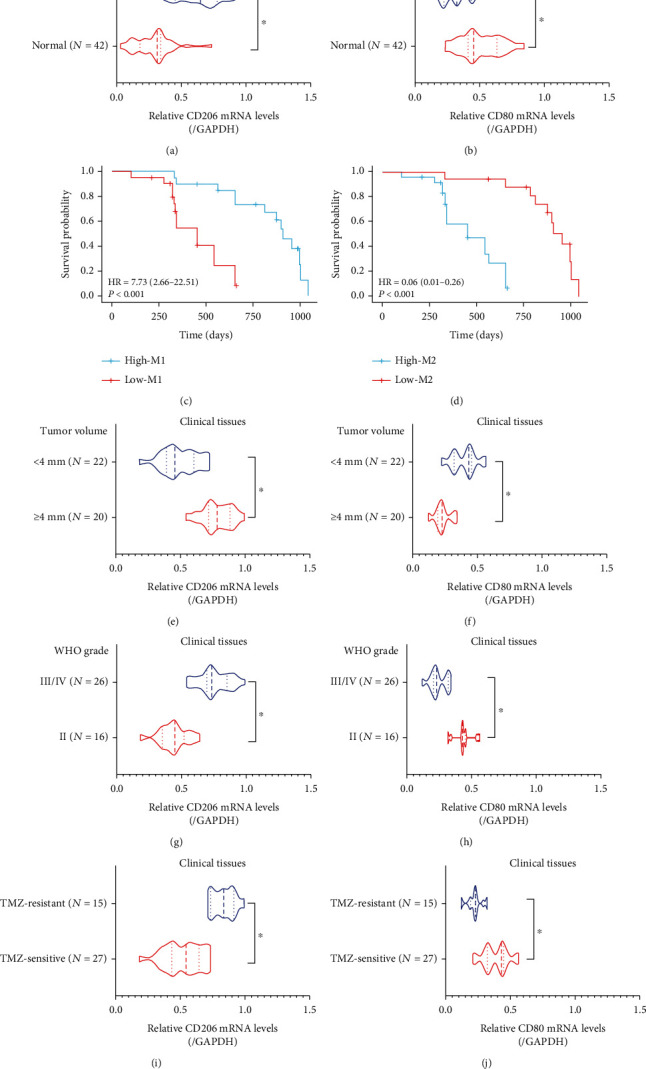
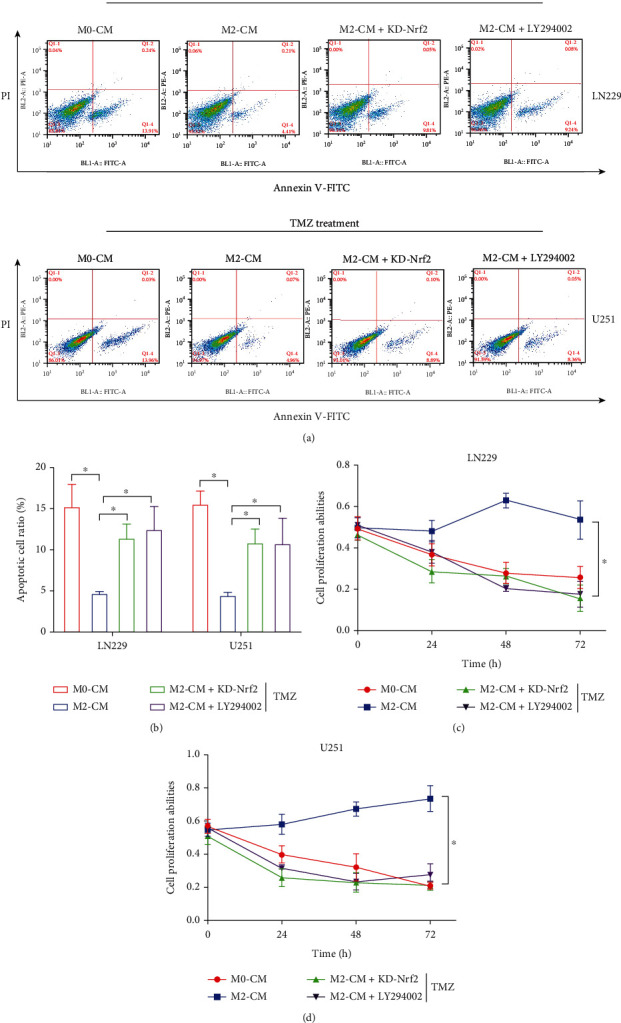
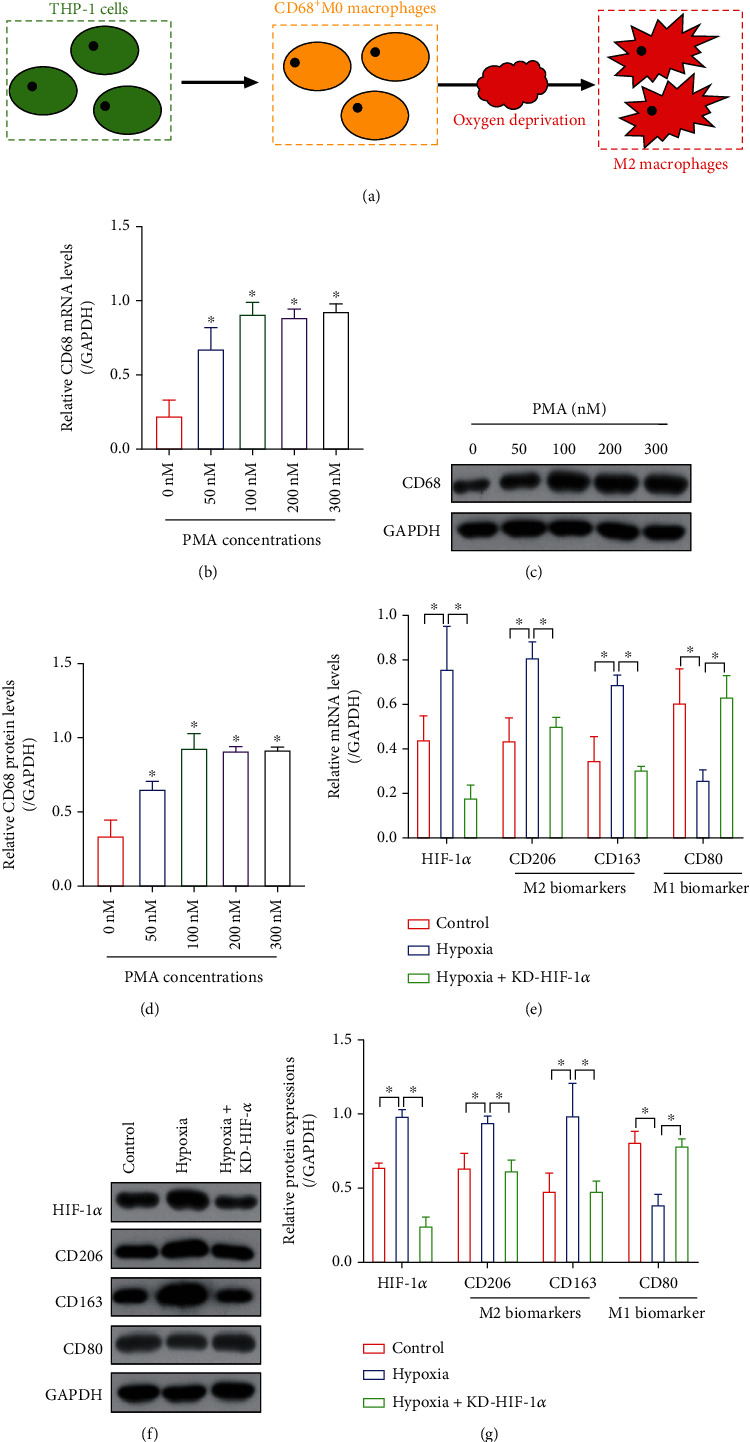
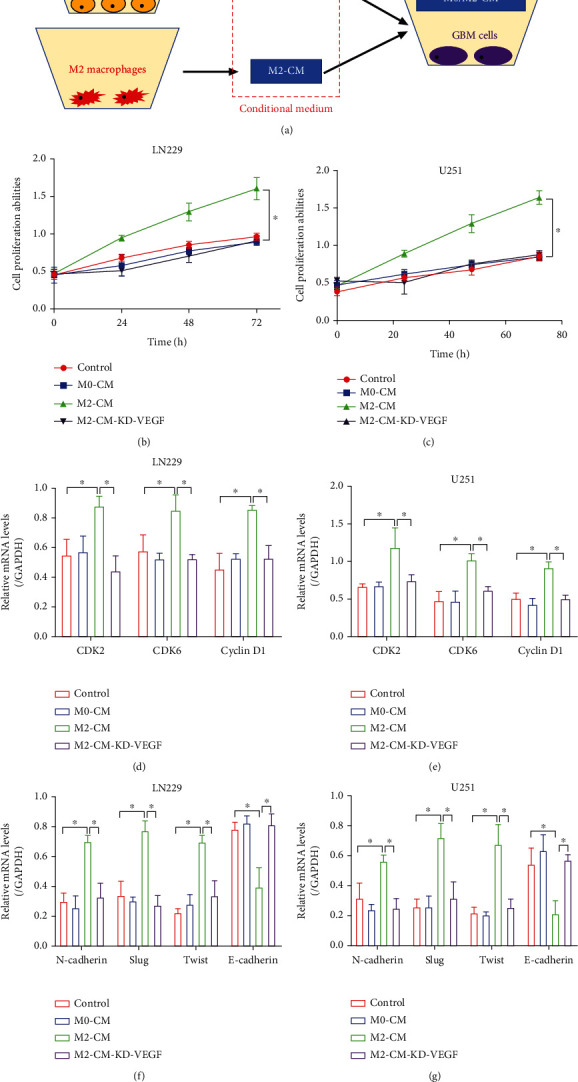
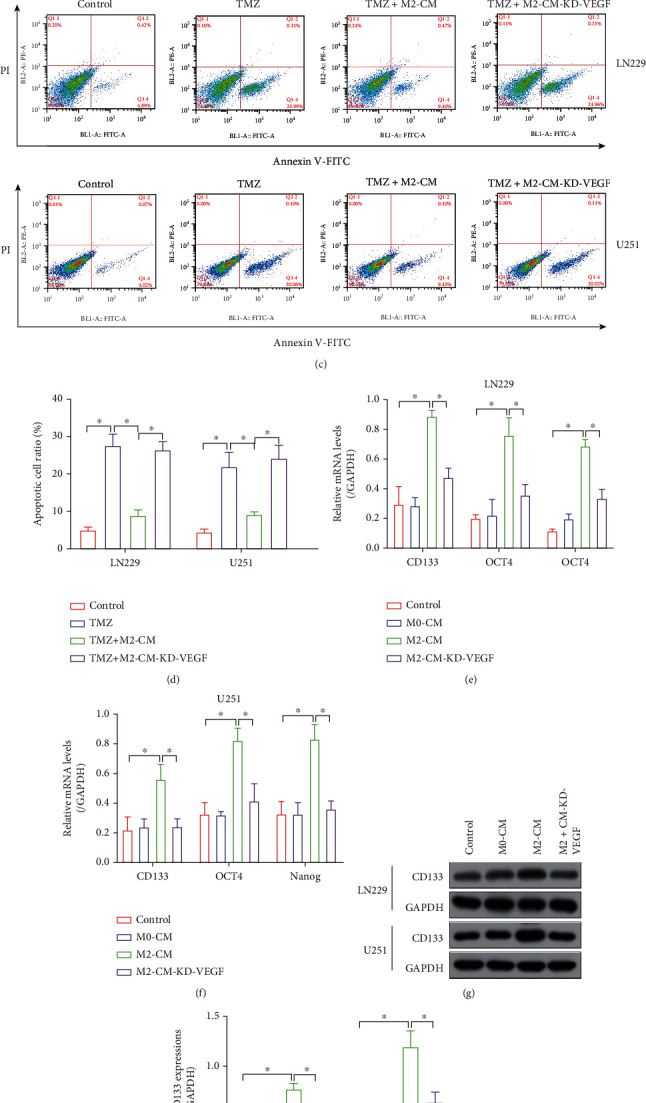
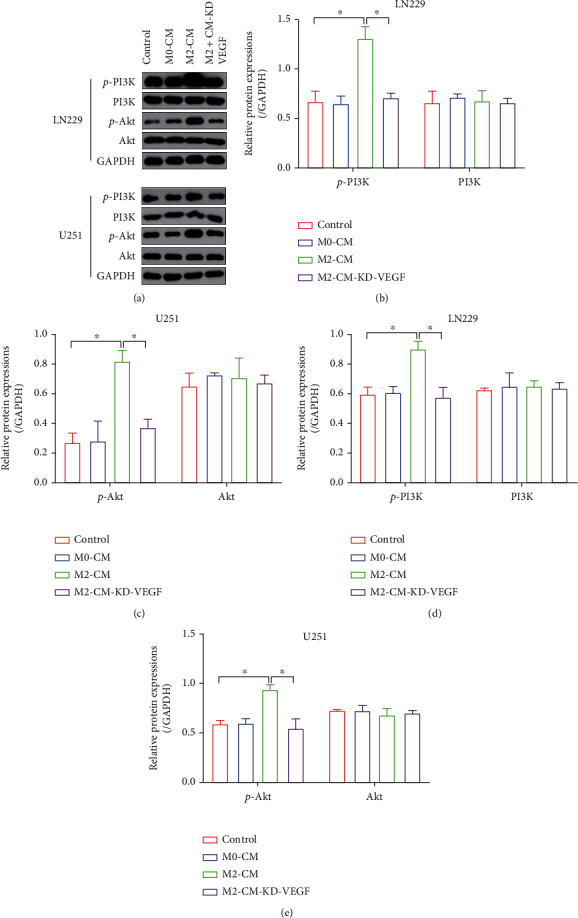
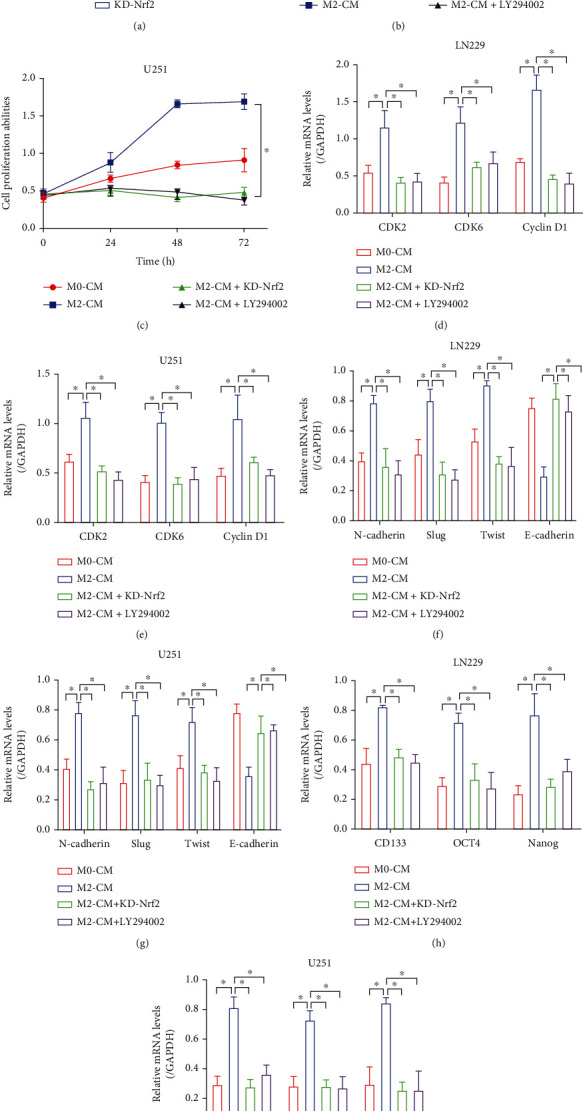
Hypoxia-induced M2 phenotypes of tumor associated macrophages (TAMs) promote the development and chemoresistance of multiple types of cancers, including glioblastoma (GBM). However, the detailed molecular mechanisms have not been fully understood. In this study, we firstly reported that hypoxic pressure promoted M2 macrophage generation, which further promoted cancer progression and temozolomide (TMZ) resistance in GBM through secreting vascular endothelial growth factor (VEGF). Specifically, the clinical data suggested that M2 macrophages were significantly enriched in GBM tissues compared with the adjacent normal tissues, and the following experiments validated that hypoxic pressure promoted M2-polarized macrophages through upregulating hypoxia-inducible factor-1 (HIF-1). In addition, hypoxic M2 macrophages VEGF-dependently promoted cell proliferation, epithelial-mesenchymal transition (EMT), glioblastoma stem cell (GSC) properties, and TMZ resistance in GBM cells through activating the PI3K/Akt/Nrf2 pathway. Also, M2 macrophages secreted VEGF to accelerate angiogenesis in human umbilical vein endothelial cells (HUVECs) through interacting with its receptor VEGFR. In general, we concluded that hypoxic M2 macrophages contributed to cancer progression, stemness, drug resistance, and angiogenesis in GBM through secreting VEGF, and our data supported the notion that targeting hypoxia-associated M2 macrophages might be an effective treatment strategy for GBM in clinical practices.
缺氧诱导的肿瘤相关巨噬细胞(TAMs)M2 表型促进了多种癌症的发展和化疗耐药,包括胶质母细胞瘤(GBM)。然而,其详细的分子机制尚未完全阐明。在这项研究中,我们首先报道了低氧压力促进了 M2 巨噬细胞的生成,进而通过分泌血管内皮生长因子(VEGF)促进了 GBM 的癌症进展和替莫唑胺(TMZ)耐药。具体而言,临床数据表明,与相邻正常组织相比,M2 巨噬细胞在 GBM 组织中明显富集,随后的实验验证了低氧压力通过上调缺氧诱导因子-1(HIF-1)促进了 M2 极化的巨噬细胞的生成。此外,低氧 M2 巨噬细胞通过激活 PI3K/Akt/Nrf2 通路,依赖 VEGF 促进 GBM 细胞的增殖、上皮间质转化(EMT)、胶质瘤干细胞(GSC)特性和 TMZ 耐药。此外,M2 巨噬细胞通过与 VEGF 受体 VEGFR 相互作用,分泌 VEGF 以加速人脐静脉内皮细胞(HUVECs)的血管生成。总的来说,我们得出结论,缺氧诱导的 M2 巨噬细胞通过分泌 VEGF 促进了 GBM 中的癌症进展、干性、耐药性和血管生成,我们的数据支持了靶向与缺氧相关的 M2 巨噬细胞可能是 GBM 临床治疗的一种有效策略的观点。