Department of Orthopedics, Chongqing University Three Gorges Hospital, School of Medicine, Chongqing University, Chongqing Municipality Clinical Research Center for Geriatric Diseases, Chongqing, China.
Orthopedic Laboratory of Chongqing Medical University, Chongqing, China.
Cancer Sci. 2022 Dec;113(12):4104-4119. doi: 10.1111/cas.15551. Epub 2022 Sep 15.
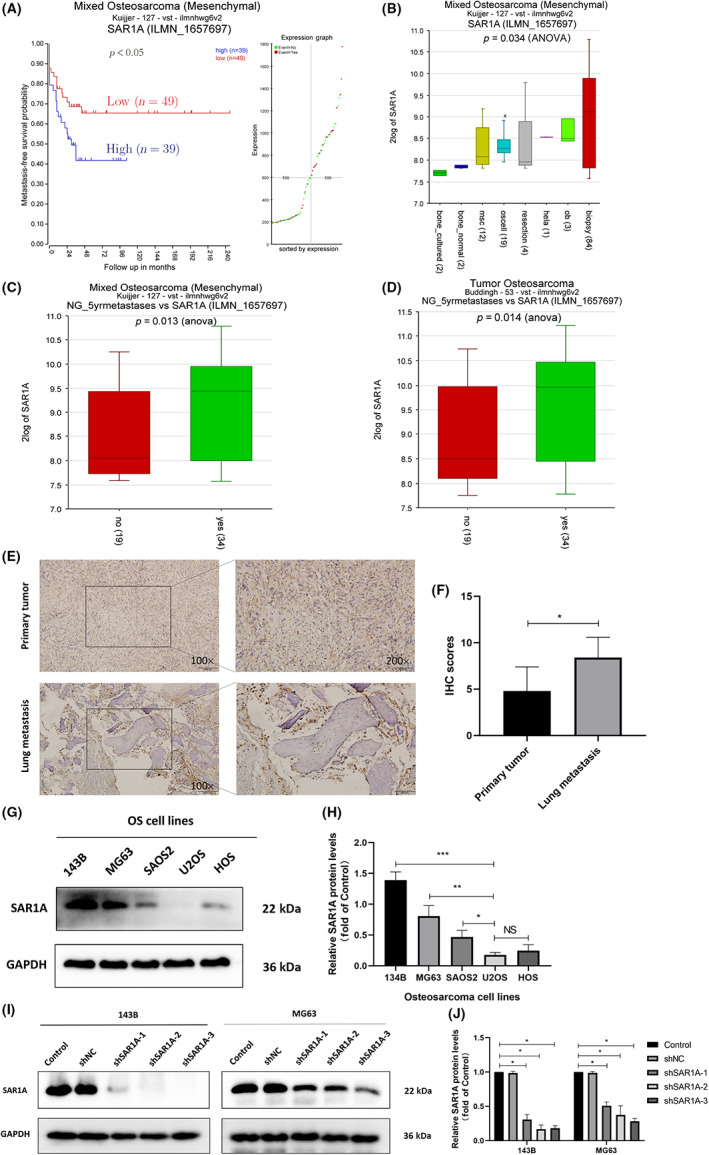
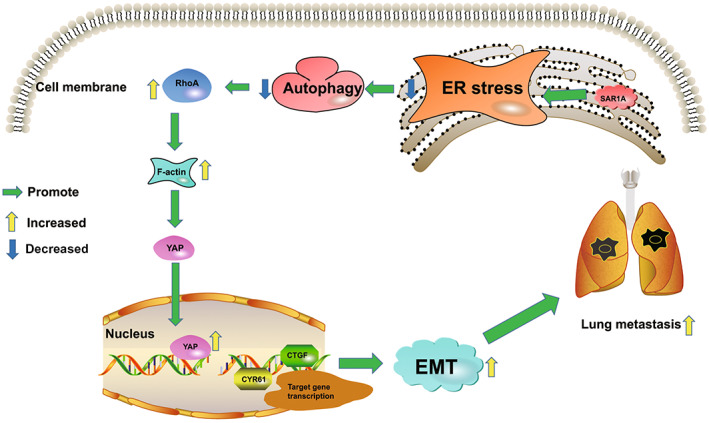
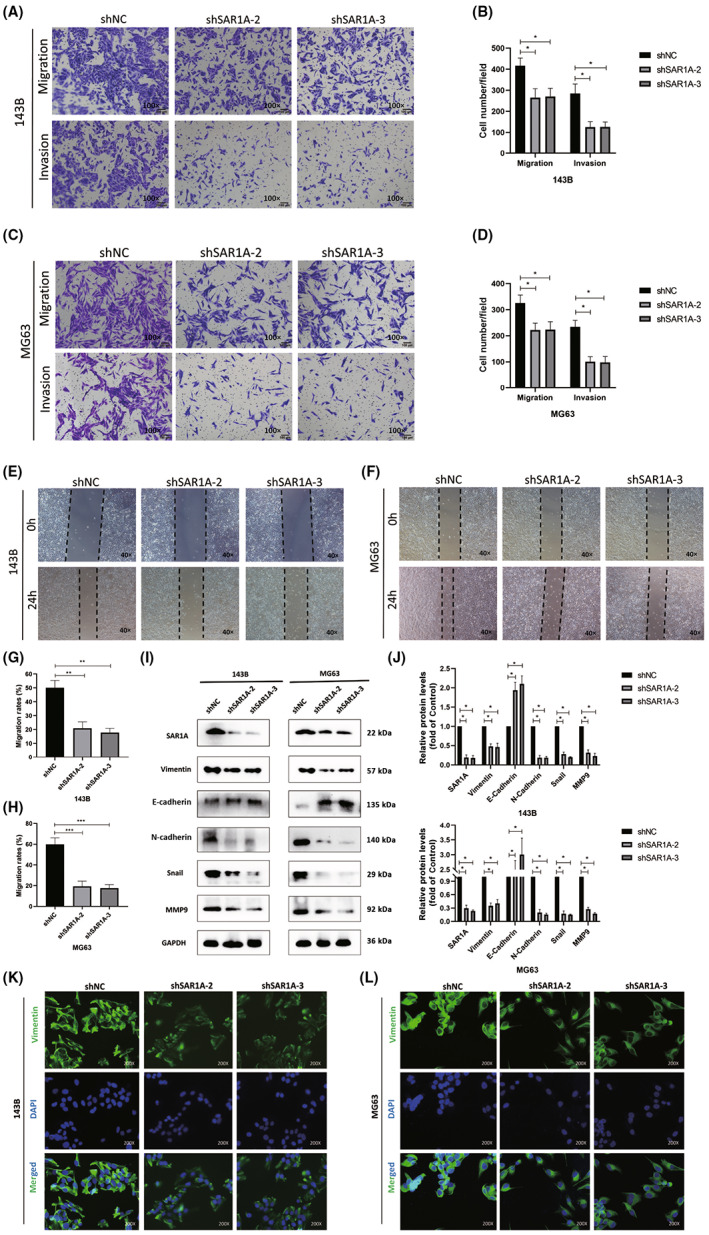
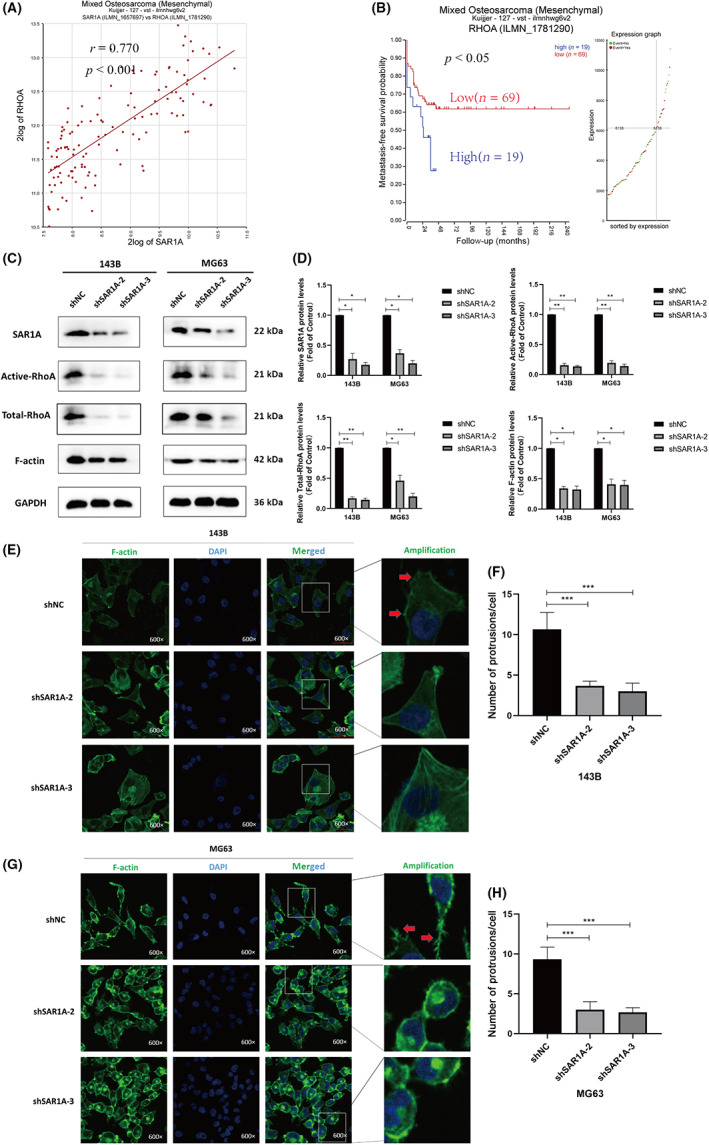
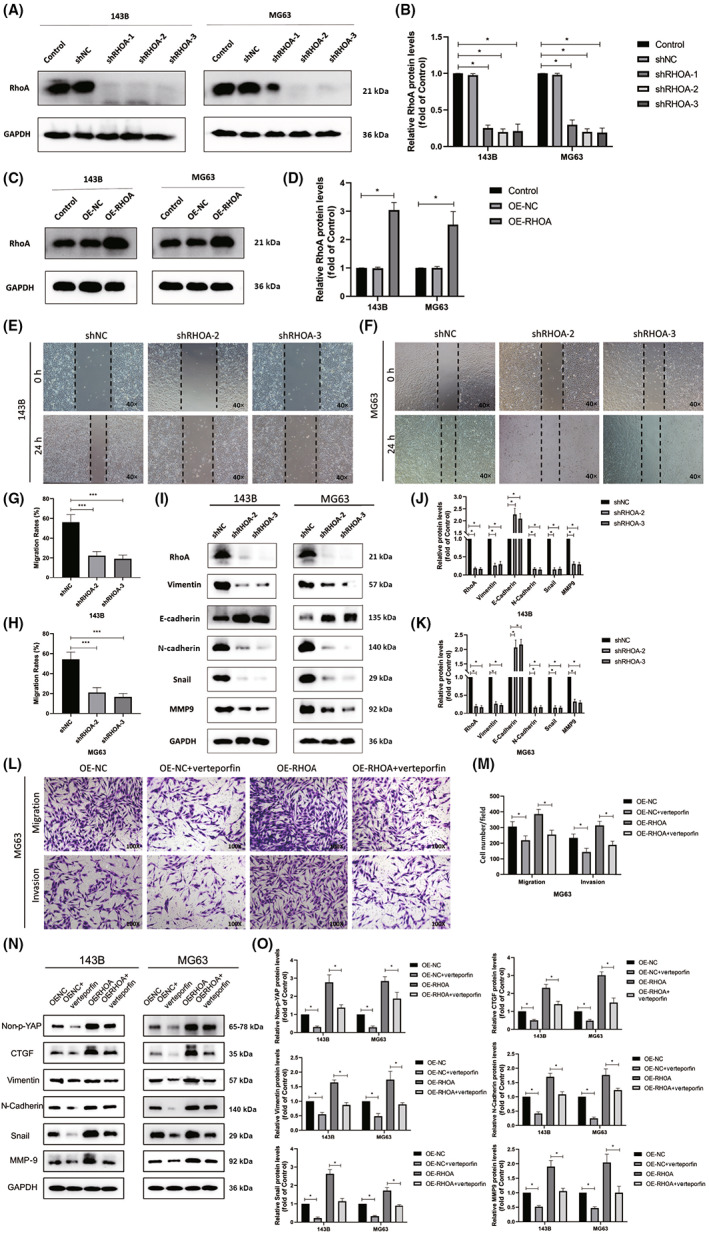
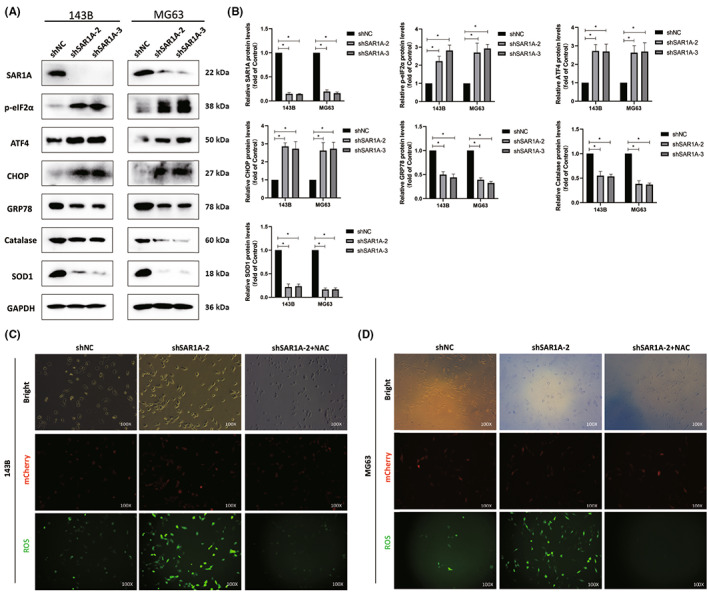
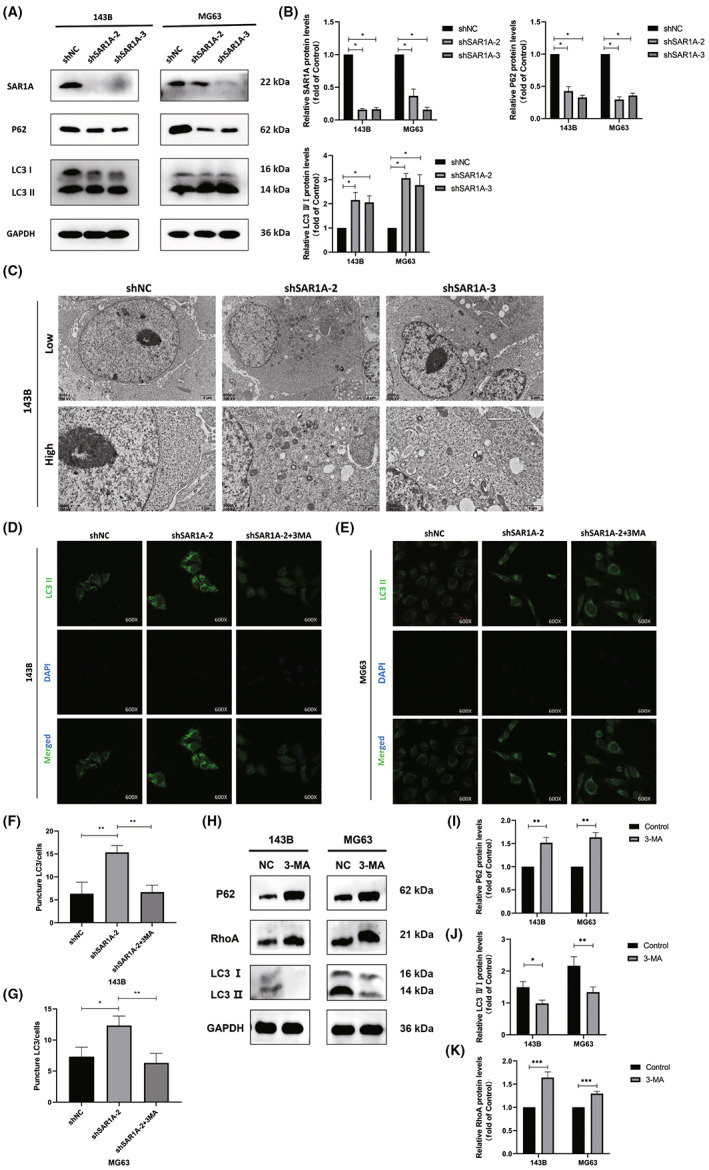
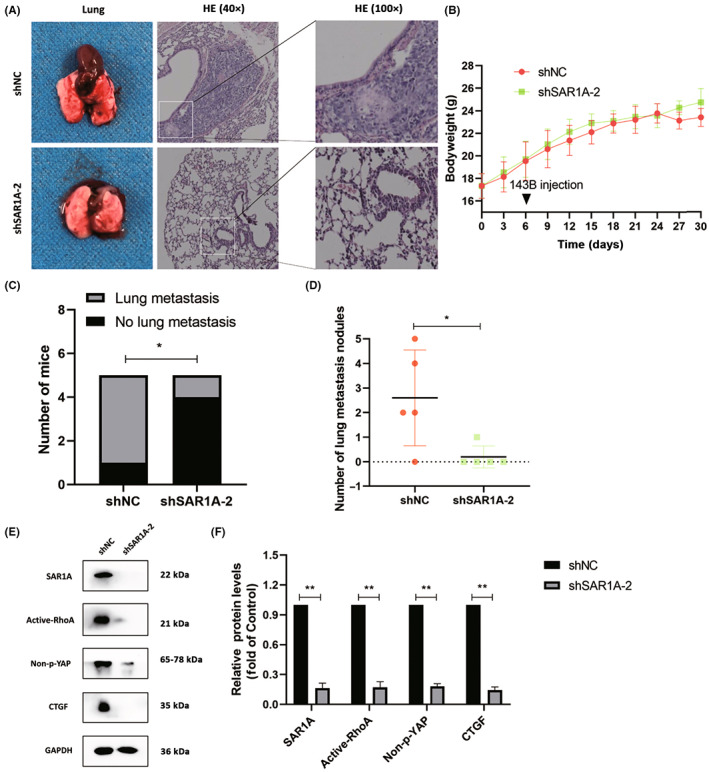
Osteosarcoma is the most prevalent form of primary bone malignancy affecting adolescents. Secretion-associated Ras-related GTPase 1A (SAR1A) is a key regulator of endoplasmic reticulum (ER) homeostasis, but its role as a regulator of osteosarcoma metastasis has yet to be clarified. Bioinformatics analyses revealed SAR1A and RHOA to be upregulated in osteosarcoma patients, with the upregulation of these genes being associated with poor 5-year metastasis-free survival rates. In addition, the upregulation of SAR1A and RHOA in osteosarcoma was highly positively correlated. Immunohistochemical analyses additionally revealed that SAR1A levels were increased in osteosarcoma pulmonary metastases. In vitro wound healing and Transwell assays indicated that knocking down SAR1A or RHOA impaired the invasive and migratory activity of osteosarcoma cells, whereas RHOA overexpression had the opposite effect. Western blotting and immunofluorescent staining revealed the inhibition of osteosarcoma cell epithelial-mesenchymal transition following SAR1A or RHOA knockdown; RHOA overexpression had the opposite effect. Following SAR1A knockdown, phalloidin staining indicated that osteosarcoma cells showed reduced lamellipodia formation. Endoplasmic reticulum stress levels and reactive oxygen species production were enhanced following the knockdown of SAR1A, as was autophagic activity, with lung metastases being reduced in vivo after such knockdown. Knocking down SAR1A suppresses osteosarcoma cell metastasis through the RhoA/YAP, ER stress, and autophagic pathways, offering new insights into the regulation of autophagic activity in the context of osteosarcoma cell metastasis and suggesting that these pathways could be amenable to therapeutic intervention.
骨肉瘤是青少年中最常见的原发性骨恶性肿瘤。分泌相关 Ras 相关 GTP 酶 1A(SAR1A)是内质网(ER)稳态的关键调节剂,但它作为骨肉瘤转移的调节剂的作用尚未阐明。生物信息学分析显示 SAR1A 和 RHOA 在骨肉瘤患者中上调,这些基因的上调与 5 年无转移生存率降低相关。此外,骨肉瘤中 SAR1A 和 RHOA 的上调高度正相关。免疫组织化学分析还表明 SAR1A 水平在骨肉瘤肺转移中增加。体外划痕愈合和 Transwell 分析表明,敲低 SAR1A 或 RHOA 会损害骨肉瘤细胞的侵袭和迁移活性,而 RHOA 过表达则有相反的效果。Western blot 和免疫荧光染色显示,敲低 SAR1A 或 RHOA 可抑制骨肉瘤细胞上皮-间充质转化;RHOA 过表达则有相反的效果。敲低 SAR1A 后,鬼笔环肽染色表明骨肉瘤细胞的片状伪足形成减少。敲低 SAR1A 后内质网应激水平和活性氧产生增加,自噬活性增强,体内肺转移减少。敲低 SAR1A 通过 RhoA/YAP、内质网应激和自噬途径抑制骨肉瘤细胞转移,为骨肉瘤细胞转移中自噬活性的调节提供了新的见解,并表明这些途径可能适合治疗干预。