Department of Parasitology, Faculty of Medicine and Allied Sciences, Rajarata University of Sri Lanka, Saliyapura, Sri Lanka.
South Asian Clinical Toxicology Research Collaboration (SACTRC), Faculty of Medicine, University of Peradeniya, Peradeniya, Sri Lanka.
PLoS Negl Trop Dis. 2022 Sep 1;16(9):e0010723. doi: 10.1371/journal.pntd.0010723. eCollection 2022 Sep.
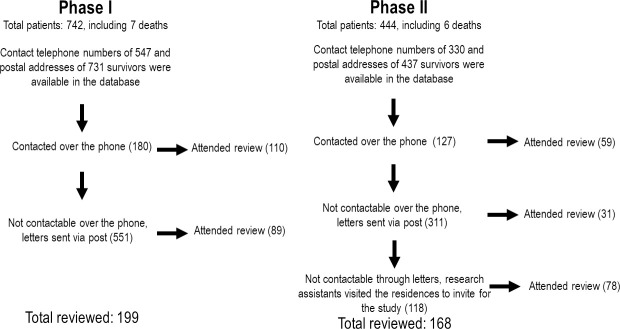
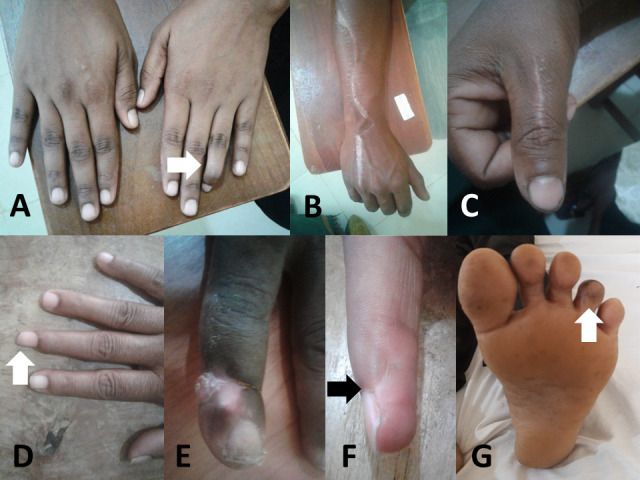
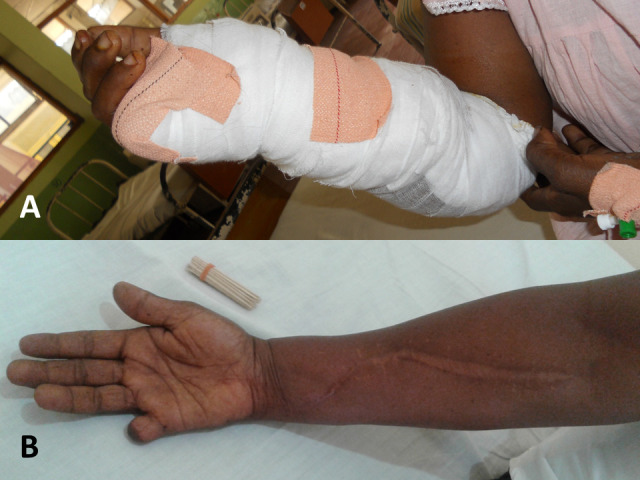
The acute effects of snakebite are often emphasized, with less information on long-term effects. We aimed to describe the long-term health effects perceived by patients followed up after confirmed snakebites. Two groups of snakebite patients (>18y) from the Anuradhapura snakebite cohort were reviewed: Group I had a snakebite during August 2013-October 2014 and was reviewed after 4 years, and group II had a snakebite during May 2017-August 2018, and was reviewed after one year. Patients were invited by telephone, by sending letters, or doing home visits, including 199 of 736 patients (27%) discharged alive from group I and 168 of 438 patients (38%) from group II, a total of 367 followed up. Health effects were categorised as musculoskeletal, impact on daily life, and medically unexplained. Health issues were attributed to snakebite in 107/199 patients (54%) from group I and 55/168 patients (33%) from group II, suggesting the proportion with health issues increases with time. Sixteen patients (all viperine bites) had permanent musculoskeletal problems, none with a significant functional disability affecting daily routine. 217/367 reported being more vigilant about snakes while working outdoors, but only 21/367 were using protective footwear at review. Of 275 farmers reviewed, only six (2%) had restricted farming activities due to fear of snakebite, and only one stopped farming. 104/199 (52%) of group I and 42/168 (25%) of group II attributed non-specific symptoms (fatigue, body aches, pain, visual impairment) and/or oral cavity-related symptoms (avulsed teeth, loose teeth, receding gums) to the snakebite, which cannot be explained medically. In multivariate logistic regression, farming, type of snake, antivenom administration, and time since snakebite were associated with medically unexplained symptoms. The latter suggests medically unexplained effects increased with time. Based on two groups of snakebite patients reviewed one and four years post-bite, we show that long-term musculoskeletal disabilities are uncommon and not severe in snakebite survivors in rural Sri Lanka. However, a large portion of patients complain of various non-specific general and oral symptoms, not explainable based on the known pathophysiology of snakebite. These perceived effects of snakebite were more common in patients with systemic envenoming, and were more frequent the longer the time post-bite.
蛇伤的急性影响经常被强调,而对长期影响的信息较少。我们旨在描述在确认蛇伤后接受随访的患者所感知的长期健康影响。对来自阿努拉达普拉蛇伤队列的两组蛇伤患者(>18 岁)进行了回顾:第 I 组在 2013 年 8 月至 2014 年 10 月期间发生蛇伤,并在 4 年后进行了回顾,第 II 组在 2017 年 5 月至 2018 年 8 月期间发生蛇伤,并在 1 年后进行了回顾。通过电话、信件或家访邀请了 367 名患者中的 199 名(第 I 组中的 27%)和 168 名(第 II 组中的 38%)存活出院的患者进行随访。将健康影响分类为肌肉骨骼、对日常生活的影响和无法用医学解释的影响。健康问题归因于第 I 组 107/199 名患者(54%)和第 II 组 55/168 名患者(33%)的蛇伤,这表明随着时间的推移,出现健康问题的比例增加。第 I 组中有 16 名患者(均为蝰蛇咬伤)出现永久性肌肉骨骼问题,无一人因影响日常生活的严重功能障碍而出现。367 名接受评估的患者中有 217 名报告在户外工作时对蛇更加警惕,但只有 21/367 名在评估时使用了防护鞋。在接受评估的 275 名农民中,只有 6 名(2%)因害怕蛇伤而限制了农业活动,只有 1 名停止了农业活动。第 I 组中有 104/199 名(52%)和第 II 组中有 42/168 名(25%)患者将非特异性症状(疲劳、身体疼痛、疼痛、视力障碍)和/或口腔相关症状(牙齿脱落、松动牙齿、退缩的牙龈)归因于蛇伤,这些症状无法用医学解释。在多变量逻辑回归中,务农、蛇的类型、抗蛇毒血清的使用以及蛇伤后的时间与无法用医学解释的症状有关。后者表明,无法用医学解释的影响随着时间的推移而增加。基于两组蛇伤患者在咬伤后一年和四年进行的回顾性研究,我们表明,在斯里兰卡农村地区,蛇咬伤幸存者的长期肌肉骨骼残疾并不常见,也不严重。然而,很大一部分患者抱怨各种非特异性的一般和口腔症状,这些症状不能根据蛇伤的已知病理生理学来解释。这些对蛇伤的感知影响在有全身中毒症状的患者中更为常见,并且随着咬伤后时间的延长而更为常见。