Institute of Immunity and Transplantation, Division of Infection and Immunity, University College London, Royal Free Hospital, London, UK; Quell Therapeutics, 84 Wood Lane, London, UK.
Institute of Immunity and Transplantation, Division of Infection and Immunity, University College London, Royal Free Hospital, London, UK.
J Autoimmun. 2022 Oct;132:102888. doi: 10.1016/j.jaut.2022.102888. Epub 2022 Aug 29.
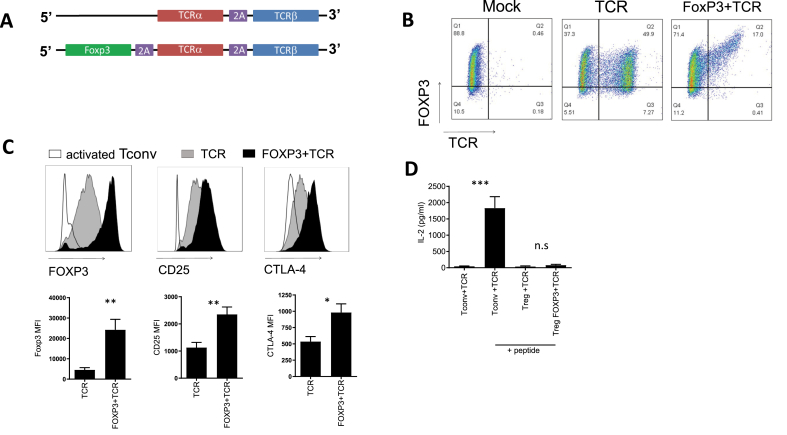
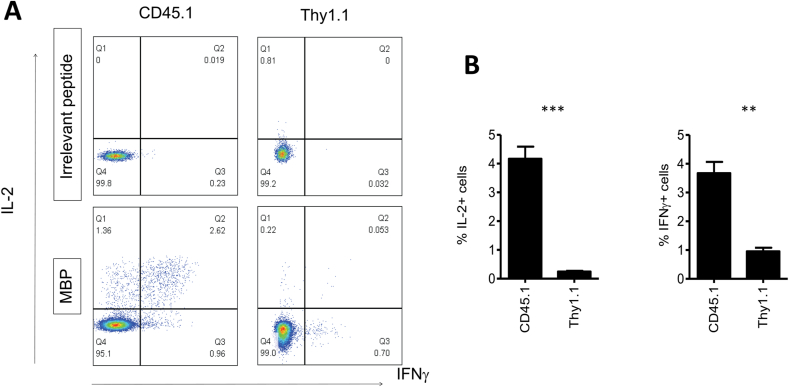
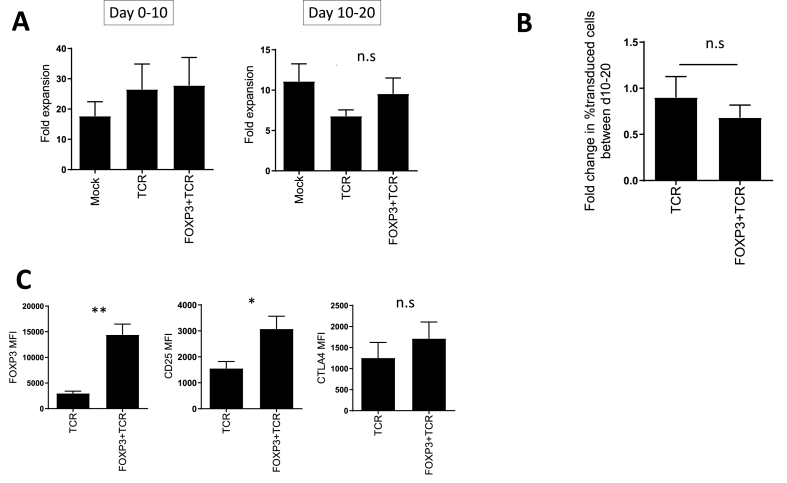
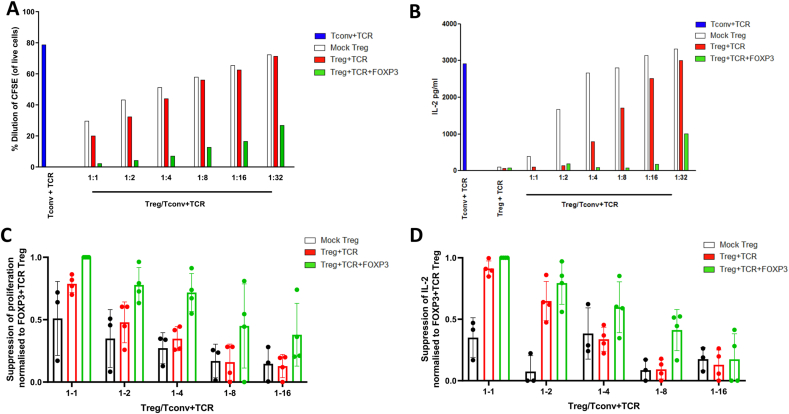
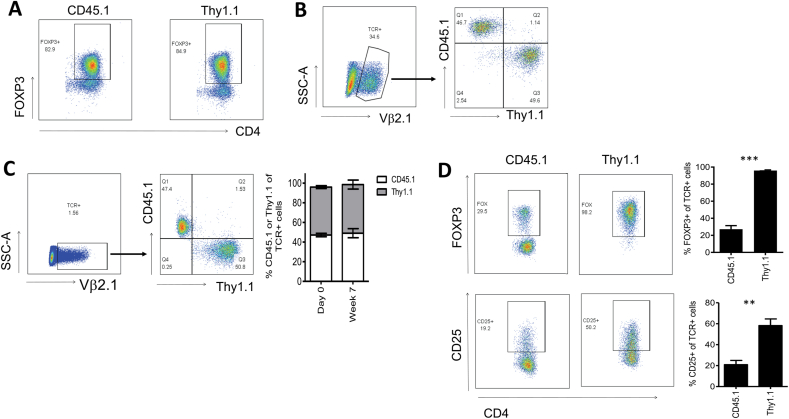
Regulatory T cells (Treg) are potent inhibitors of autoreactive T cells. The intracellular transcription factor FoxP3 controls the expression levels of a diverse set of genes and plays a critical role in programming functional Tregs. Although, antigen-specific Tregs are more potent than polyclonal Tregs in treating ongoing autoimmunity, phenotype plasticity associated with loss of FoxP3 expression in Tregs can lead to the conversion into antigen-specific effector T cells which might exacerbate autoimmune pathology. In this study, we designed a retroviral vector driving the expression of FoxP3 and a human HLA-DR-restricted TCR from the same promoter. Transduction of purified human Tregs revealed that all TCR-positive cells had elevated levels of FoxP3 expression, increased CD25 and CTLA4 expression and potent suppressive function. Elevated FoxP3 expression did not impair the in vitro expansion of engineered Tregs. Adoptive transfer into HLA-DR transgenic mice revealed that FoxP3+TCR engineered Tregs showed long-term persistence with stable FoxP3 and TCR expression. In contrast, adoptive transfer of Tregs engineered with TCR only resulted in the accumulation of TCR-positive, FoxP3-negative T cells which displayed antigen-specific effector function when stimulated with the TCR-recognised peptides. Our data indicate that forced expression of FoxP3 can prevent accumulation of antigen-specific effector T cells without impairing the engraftment and persistence of engineered Tregs.
调节性 T 细胞(Treg)是自身反应性 T 细胞的有效抑制剂。胞内转录因子 FoxP3 控制着一组多样化基因的表达水平,在编程功能性 Treg 中发挥着关键作用。尽管抗原特异性 Treg 在治疗正在进行的自身免疫方面比多克隆 Treg 更有效,但 Treg 中 FoxP3 表达的丧失与表型可塑性相关,可能导致转化为抗原特异性效应 T 细胞,从而加剧自身免疫病理。在这项研究中,我们设计了一种逆转录病毒载体,该载体从同一启动子驱动 FoxP3 和人类 HLA-DR 限制性 TCR 的表达。对纯化的人 Treg 的转导表明,所有 TCR 阳性细胞的 FoxP3 表达水平升高,CD25 和 CTLA4 表达增加,且具有强大的抑制功能。FoxP3 表达水平的升高并未损害工程 Treg 的体外扩增。将其过继转移到 HLA-DR 转基因小鼠中表明,FoxP3+TCR 工程化 Treg 具有长期持久性,FoxP3 和 TCR 表达稳定。相比之下,过继转移仅用 TCR 工程化的 Treg 会导致 TCR 阳性、FoxP3 阴性 T 细胞的积累,当用 TCR 识别的肽刺激时,这些细胞会显示出抗原特异性效应功能。我们的数据表明,强制表达 FoxP3 可以防止抗原特异性效应 T 细胞的积累,而不会损害工程化 Treg 的植入和持久性。