Fox Chase Cancer Center, 333 Cottman Ave., Philadelphia, PA, 19111, USA.
Sci Rep. 2022 Sep 1;12(1):14899. doi: 10.1038/s41598-022-18876-4.
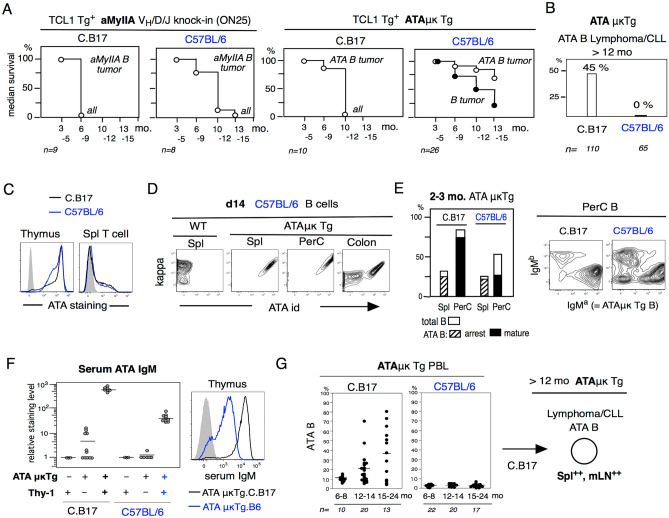
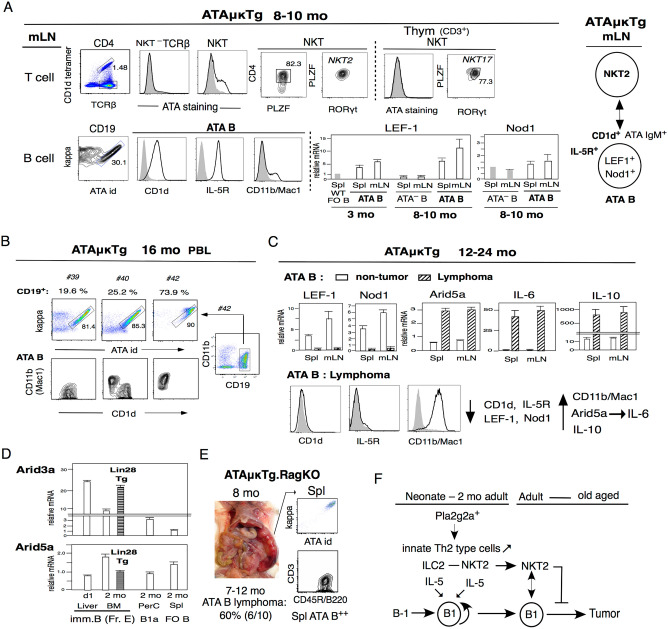
Newborns require early generation of effective innate immunity as a primary physiological mechanism for survival. The neonatal Lin28Let7 developmental pathway allows increased generation of Th2-type cells and B1a (B-1 B) cells compared to adult cells and long-term maintenance of these initially generated innate cells. For initial B1a cell growth from the neonatal to adult stage, Th2-type IL-5 production from ILC2s and NKT2 cells is important to increase B1a cells. The Th17 increase is dependent on extracellular bacteria, and increased bacteria leads to lower Th2-type generation. Secreted group IIA-phospholipase A2 (sPLA2-IIA) from the Pla2g2a gene can bind to gram-positive bacteria and degrade bacterial membranes, controlling microbiota in the intestine. BALB/c mice are Pla2g2a, and express high numbers of Th2-type cells and B1a cells. C57BL/6 mice are Pla2g2a-deficient and distinct from the SLAM family, and exhibit fewer NKT2 cells and fewer B1a cells from the neonatal to adult stage. We found that loss of Pla2g2a in the BALB/c background decreased IL-5 from Th2-type ILC2s and NKT2s but increased bacterial-reactive NKT17 cells and MAIT cells, and decreased the number of early-generated B1a cells and MZ B cells and the CD4/CD8 T cell ratio. Low IL-5 by decreased Th2-type cells in Pla2g2a loss led to low early-generated B1a cell growth from the neonatal to adult stage. In anti-thymocyte/Thy-1 autoreactive μκ transgenic (ATAμκ Tg) Pla2g2a BALB/c background C.B17 mice generated NKT2 cells that continuously control CD1d B1 B cells through old aging and lost CD1d in B1 B cells generating strong B1 ATA B cell leukemia/lymphoma. Pla2g2a-deficient ATAμκTg C57BL/6 mice suppressed the initial B1a cell increase, with low/negative spontaneous leukemia/lymphoma generation. These data confirmed that the presence of Pla2g2a to control bacteria is important to allow the neonatal to adult stage. Pla2g2a promotes innate Th2-type immunity lymphocytes to increase early generated B1a cells.
新生儿需要早期产生有效的固有免疫,作为生存的主要生理机制。新生 Lin28Let7 发育途径允许与成人细胞相比,增加 Th2 型细胞和 B1a(B-1B)细胞的生成,并长期维持这些最初产生的固有细胞。对于从新生儿到成人阶段的初始 B1a 细胞生长,来自 ILC2 和 NKT2 细胞的 Th2 型 IL-5 产生对于增加 B1a 细胞很重要。Th17 的增加依赖于细胞外细菌,而增加的细菌会导致 Th2 型生成减少。来自 Pla2g2a 基因的分泌型 IIA 磷脂酶 A2(sPLA2-IIA)可以与革兰氏阳性菌结合并降解细菌膜,控制肠道中的微生物群。BALB/c 小鼠是 Pla2g2a 基因敲入型,表达大量的 Th2 型细胞和 B1a 细胞。C57BL/6 小鼠是 Pla2g2a 缺失型,与 SLAM 家族不同,从新生儿到成人阶段,NKT2 细胞和 B1a 细胞数量较少。我们发现,在 BALB/c 背景下 Pla2g2a 的缺失减少了 Th2 型 ILC2 和 NKT2 细胞的 IL-5,但增加了细菌反应性 NKT17 细胞和 MAIT 细胞,并减少了早期产生的 B1a 细胞和 MZ B 细胞的数量以及 CD4/CD8 T 细胞比例。Pla2g2a 缺失导致 Th2 型细胞减少,导致从新生儿到成人阶段早期产生的 B1a 细胞生长减少。在抗胸腺细胞/Thy-1 自身反应性 μκ 转基因(ATAμκTg)Pla2g2a BALB/c 背景下的 C.B17 小鼠中,NKT2 细胞不断通过衰老控制 CD1d B1B 细胞,并在 B1B 细胞中丢失 CD1d,产生强烈的 B1ATA B 细胞白血病/淋巴瘤。Pla2g2a 缺陷型 ATAμκTg C57BL/6 小鼠抑制了初始 B1a 细胞的增加,自发白血病/淋巴瘤的发生率较低/为阴性。这些数据证实,控制细菌的 Pla2g2a 的存在对于从新生儿到成人阶段的过渡是重要的。Pla2g2a 促进固有 Th2 型免疫淋巴细胞增加早期产生的 B1a 细胞。