The Ocean Cleanup, Rotterdam, The Netherlands.
The Modelling House, Raglan, New Zealand.
Sci Rep. 2022 Sep 1;12(1):12666. doi: 10.1038/s41598-022-16529-0.
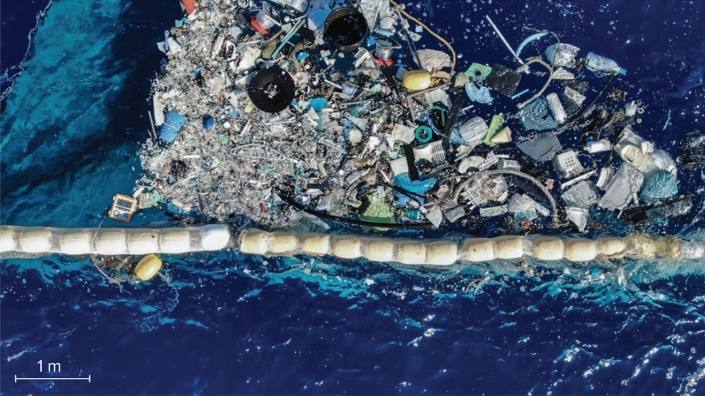
The subtropical oceanic gyre in the North Pacific Ocean is currently covered with tens of thousands of tonnes of floating plastic debris, dispersed over millions of square kilometres. A large fraction is composed of fishing nets and ropes while the rest is mostly composed of hard plastic objects and fragments, sometimes carrying evidence on their origin. In 2019, an oceanographic mission conducted in the area, retrieved over 6000 hard plastic debris items > 5 cm. The debris was later sorted, counted, weighed, and analysed for evidence of origin and age. Our results, complemented with numerical model simulations and findings from a previous oceanographic mission, revealed that a majority of the floating material stems from fishing activities. While recent assessments for plastic inputs into the ocean point to coastal developing economies and rivers as major contributors into oceanic plastic pollution, here we show that most floating plastics in the North Pacific subtropical gyre can be traced back to five industrialised fishing nations, highlighting the important role the fishing industry plays in the solution to this global issue.
北太平洋亚热带环流目前覆盖着数万吨漂浮的塑料碎片,分布在数百万平方公里的海域。其中很大一部分是渔网和绳索,其余的主要是硬塑料物体和碎片,有时还带有其来源的证据。2019 年,在该地区进行的一次海洋学任务中,回收了超过 6000 件>5 厘米的硬塑料碎片。这些碎片后来被分类、计数、称重,并对其来源和年龄进行了分析。我们的结果,结合数值模型模拟和之前的海洋学任务的发现,表明大部分漂浮物质来自渔业活动。虽然最近的评估指出,塑料输入海洋主要来自沿海发展中经济体和河流,但我们在这里表明,北太平洋亚热带环流中的大部分漂浮塑料都可以追溯到五个工业化捕鱼国家,这突出了捕鱼业在解决这一全球性问题中所扮演的重要角色。