Heissig Beate, Salama Yousef, Tateno Masatoshi, Takahashi Satoshi, Hattori Koichi
Department of Research Support Utilizing Bioresource Bank Graduate School of Medicine Juntendo University School of Medicine Tokyo Japan.
An-Najah Center for Cancer and Stem Cell Research Faculty of Medicine and Health Sciences An-Najah National University Nablus Palestine.
EJHaem. 2022 May 6;3(3):849-861. doi: 10.1002/jha2.439. eCollection 2022 Aug.
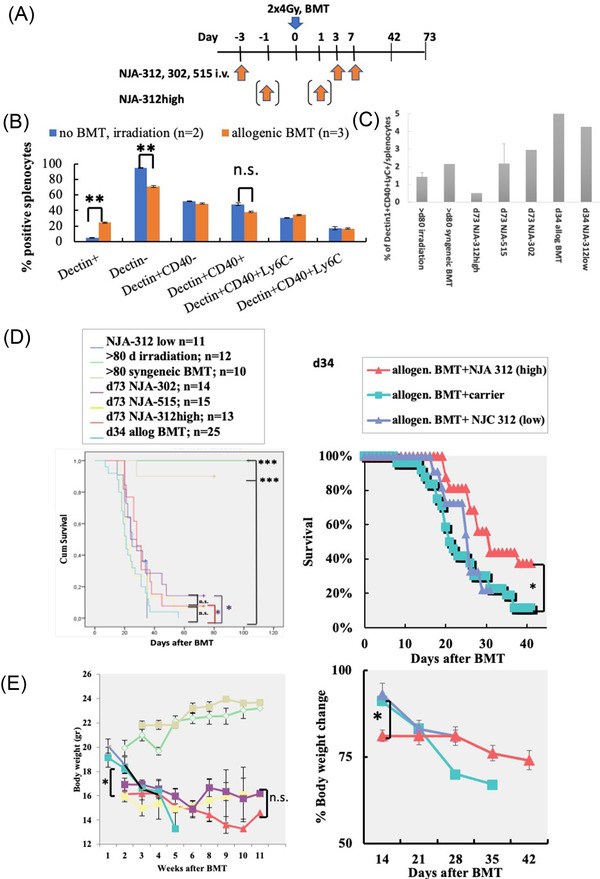
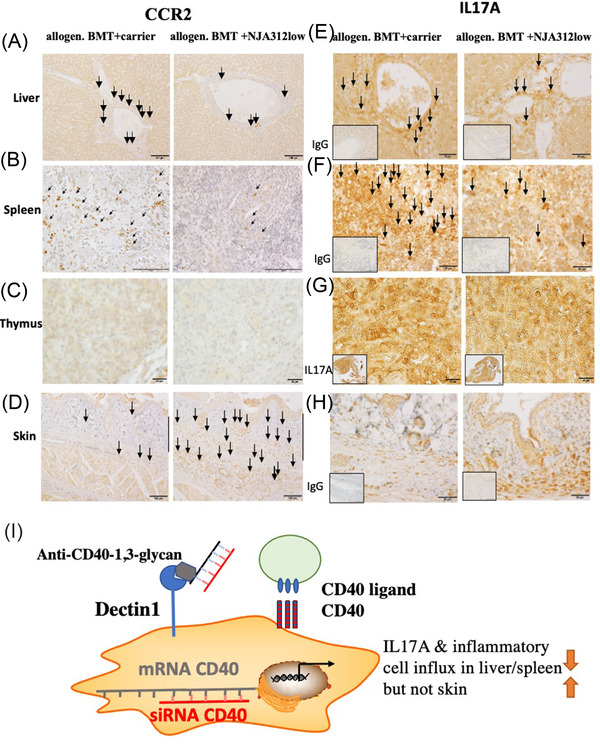
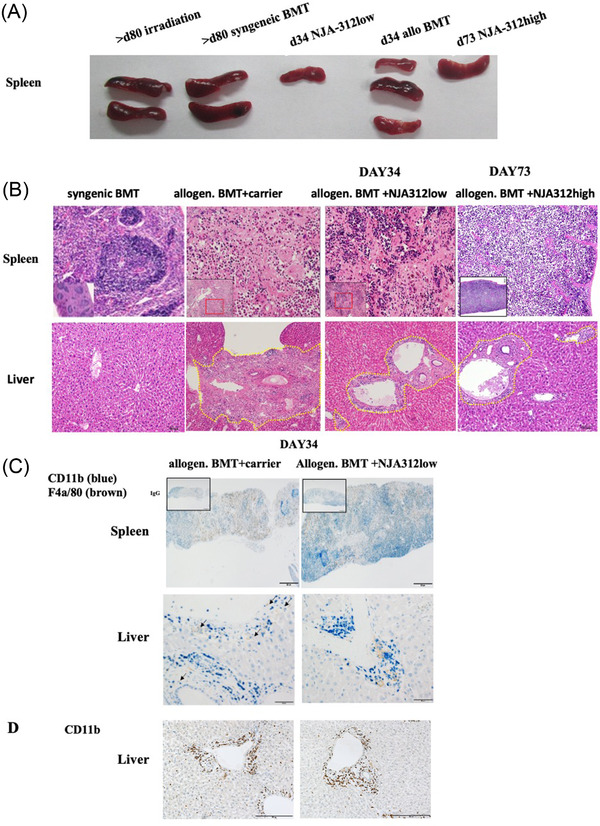
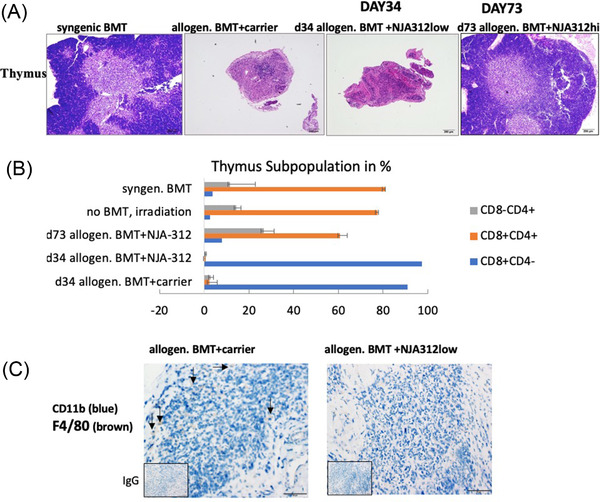
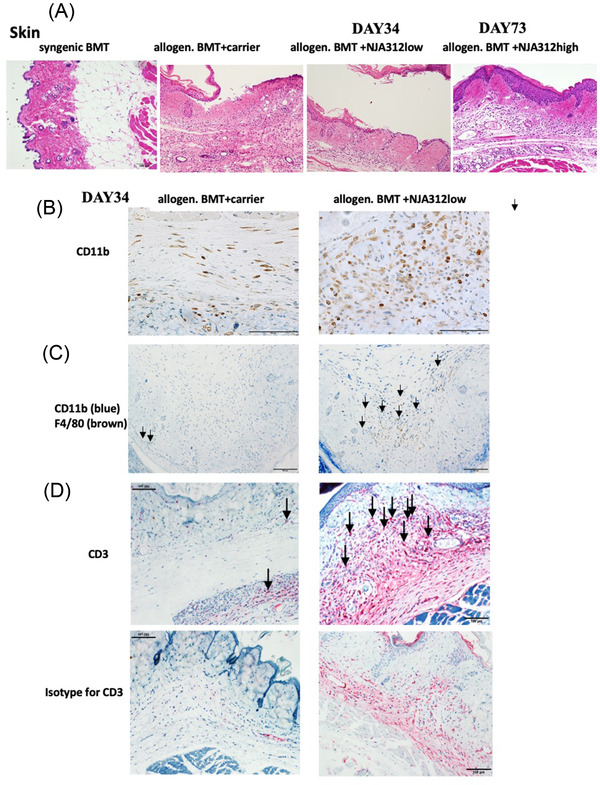
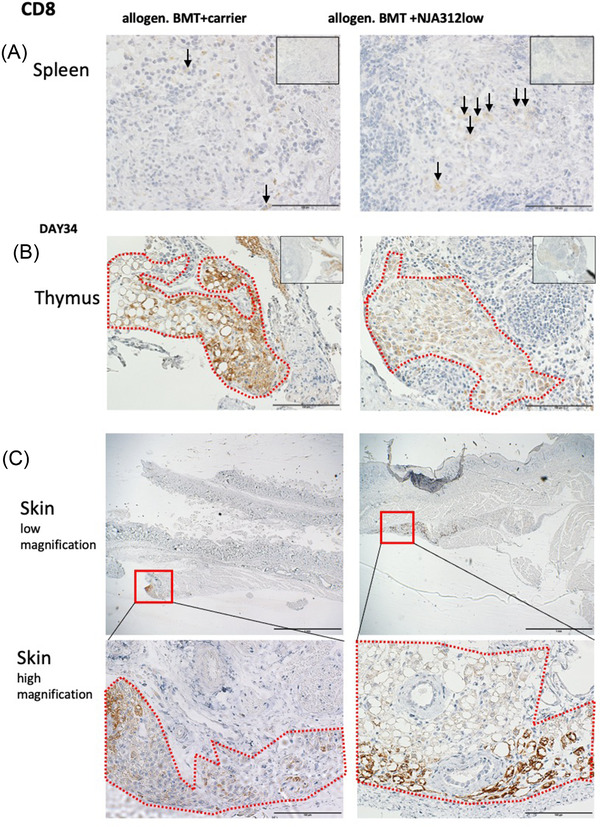
Acute graft-versus-host disease (aGvHD) remains a major threat to a successful outcome after allogeneic hematopoietic stem cell transplantation (HSCT). Although antibody-based targeting of the CD40/CD40 ligand costimulatory pathway can prevent aGvHD, side effects hampered their clinical application, prompting a need for other ways to interfere with this important dendritic T-cell costimulatory pathway. Here, we used small interfering RNA (siRNA) complexed with β-glucan allowing the binding and uptake of the siRNA/β-glucan complex (siCD40/schizophyllan [SPG]; chemical modifications called NJA-312, NJA-302, and NJA-515) into Dectin1+ cells, which recognize this pathogen-associated molecular pattern receptor. aGvHD was induced by the transplantation of splenocytes and bone marrow cells from C57BL/6J into CBF1 mice. Splenic dendritic cells retained Dectin1 expression after HSCT but showed lower expression after irradiation. The administration of siCD40/SPG, NJA-312, and NJA-302 ameliorated aGvHD-mediated lethality and tissue damage of spleen and liver, but not skin. Multiple NJA-312high injections prevented aGvHD but resulted in early weight loss in allogeneic HSCT mice. In addition, NJA-312 treatment caused delayed initial donor T and B-cell recovery but resulted in stable chimerism in surviving mice. Mechanistically, NJA-312 reduced organ damage by suppressing CCR2+, F4/80+, and IL17A-expressing cell accumulation in spleen, liver, and thymus but not the skin of mice with aGvHD. Our work demonstrates that siRNA targeting of CD40 delivered via the PAMP-recognizing lectin Dectin1 changes the immunological niche, suppresses organ-specific murine aGvHD, and induces immune tolerance after organ transplantation. Our work charts future directions for therapeutic interventions to modulate tissue-specific immune reactions using Pathogen-associated molecular pattern (PAMP) molecules like 1,3-β-glucan for cell delivery of siRNA.
急性移植物抗宿主病(aGvHD)仍然是异基因造血干细胞移植(HSCT)成功结局的主要威胁。尽管基于抗体靶向CD40/CD40配体共刺激途径可预防aGvHD,但副作用阻碍了它们的临床应用,这促使需要其他方法来干扰这一重要的树突状细胞与T细胞共刺激途径。在此,我们使用与β-葡聚糖复合的小干扰RNA(siRNA),使siRNA/β-葡聚糖复合物(siCD40/裂褶菌多糖[SPG];化学修饰称为NJA-312、NJA-302和NJA-515)能够结合并被识别这种病原体相关分子模式受体的Dectin1+细胞摄取。通过将C57BL/6J小鼠的脾细胞和骨髓细胞移植到CBF1小鼠中诱导aGvHD。脾树突状细胞在HSCT后保留Dectin1表达,但照射后表达降低。给予siCD40/SPG、NJA-312和NJA-302可改善aGvHD介导的致死率以及脾脏和肝脏的组织损伤,但对皮肤无此作用。多次高剂量注射NJA-312可预防aGvHD,但导致异基因HSCT小鼠早期体重减轻。此外,NJA-312治疗导致初始供体T细胞和B细胞恢复延迟,但在存活小鼠中导致稳定的嵌合状态。从机制上讲,NJA-312通过抑制aGvHD小鼠脾脏、肝脏和胸腺而非皮肤中CCR2+、F4/80+和表达IL17A的细胞积聚来减轻器官损伤。我们的工作表明,通过可识别病原体相关分子模式的凝集素Dectin1递送靶向CD40的siRNA可改变免疫微环境,抑制器官特异性小鼠aGvHD,并在器官移植后诱导免疫耐受。我们的工作为使用1,3-β-葡聚糖等病原体相关分子模式(PAMP)分子进行siRNA细胞递送以调节组织特异性免疫反应的治疗干预指明了未来方向。