ENT Institute and Department of Otorhinolaryngology, Eye & ENT Hospital, Fudan University, Shanghai 200031, China.
Clinical Laboratory Center, Children's Hospital of Fudan University, National Children's Medical Center, Shanghai 201102, China.
Oxid Med Cell Longev. 2022 Aug 23;2022:9914716. doi: 10.1155/2022/9914716. eCollection 2022.
To determine the role played by electrode insertion angle in cochlear implantation (CI) outcomes in adult and children patients with sensorineural hearing loss (SNHL).
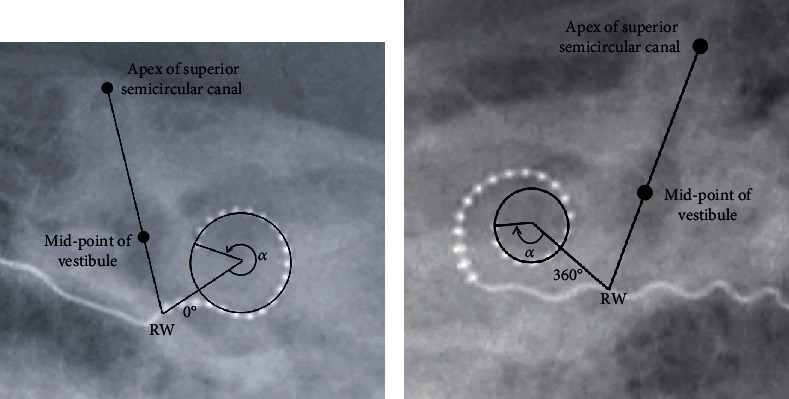
Adults ( = 10) and children ( = 19) with SNHL undergoing CI in a tertiary specialized hospital were retrospectively enrolled. The measurements were evaluated before and after CI surgery using sound field audiometry and speech recognition tests. Questionnaires were used to assess subjective benefits. Electrode insertion angles were determined using postoperative X-rays.
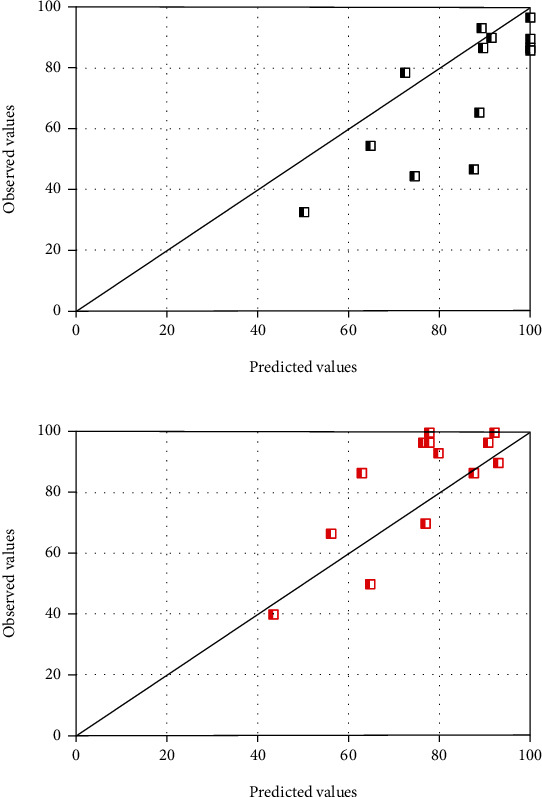
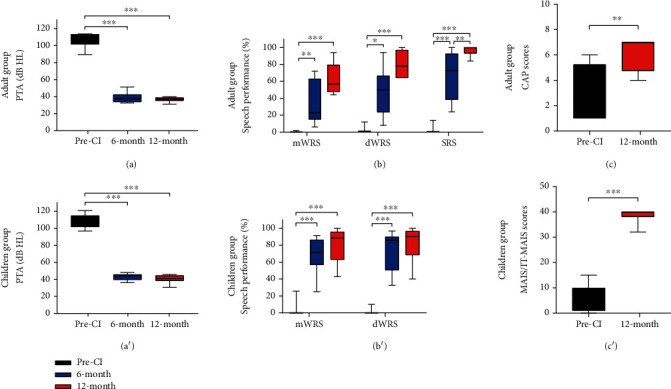
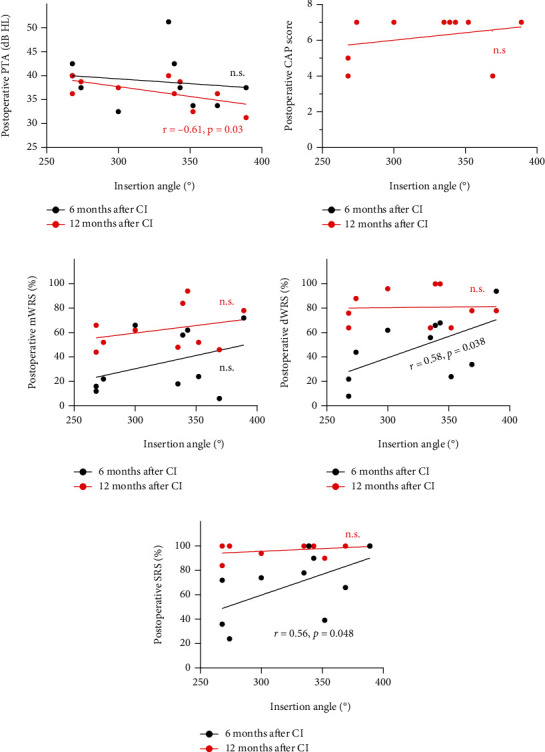
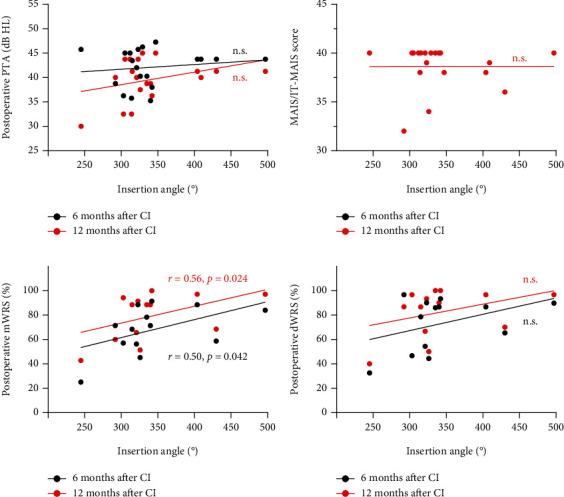
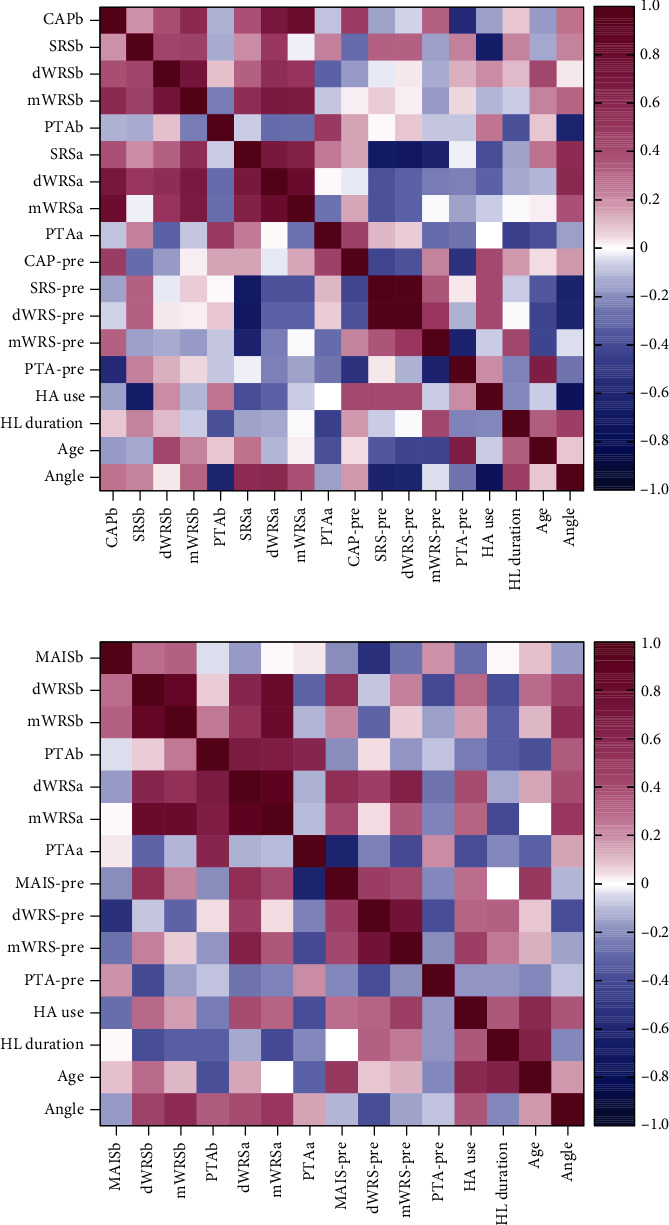
Both adult and children patients showed significant improvements in hearing, speech performance, and audiology and speech-related quality of life after CI. The angular insertion depths of adult and children group were 323.70 ± 43.57° and 341.53 ± 57.07°, respectively, showing no significant difference. In the adult group, deeper insertion depths were found to be strongly linked to lower postoperative pure tone thresholds at 12 months and higher postoperative disyllabic Word Recognition and Sentence Recognition Scores at 6 months (all < 0.05). In the children group, deeper insertion depth had a positive correlation with postoperative monosyllabic Word Recognition Scores 6 and 12 months after CI surgery (both < 0.05). Multiple linear regression models were constructed to predict disyllabic Word Recognition Scores at 6 and 12 months postoperatively in the children group, in which insertion angle, duration of hearing loss, and preoperative questionnaire result were identified as dependent variables.
Greater angular insertion depths resulted in improved hearing and speech performances after CI. The benefits of greater angular insertion depths can be found in both adult and children patients and last for at least 12 months. Clinicians are expected to determine the optimal implantation direction during CI and ensure the insertion depth to improve the speech rehabilitation of patients.
确定电极插入角度在成人和儿童感音神经性听力损失(SNHL)患者人工耳蜗植入(CI)中的作用。
回顾性纳入在一家三级专科医院接受 CI 的成人(n=10)和儿童(n=19)SNHL 患者。使用声场测听和言语识别测试在 CI 手术后评估测量值。使用问卷评估主观获益。使用术后 X 射线确定电极插入角度。
成人和儿童患者在 CI 后听力、言语表现以及听力学和言语相关生活质量均有显著改善。成人和儿童组的角插入深度分别为 323.70±43.57°和 341.53±57.07°,差异无统计学意义。在成人组中,较深的插入深度与术后 12 个月的纯音阈值降低以及术后 6 个月的双音节词识别和句子识别得分升高呈强烈相关(均<0.05)。在儿童组中,较深的插入深度与术后 6 和 12 个月的单音节词识别得分呈正相关(均<0.05)。构建了多元线性回归模型以预测儿童组术后 6 和 12 个月的双音节词识别得分,其中插入角度、听力损失持续时间和术前问卷结果被确定为因变量。
CI 后更大的角插入深度可改善听力和言语表现。成人和儿童患者都能从更大的角插入深度中获益,并且这种获益至少可持续 12 个月。临床医生有望在 CI 期间确定最佳的植入方向,并确保插入深度以改善患者的言语康复。