Interdisciplinary Crohn Colitis Centre Rhein-Main, Frankfurt, Germany.
Institute of Nutritional Science, Justus-Liebig University, Giessen, Germany.
Eur J Pediatr. 2022 Nov;181(11):3781-3793. doi: 10.1007/s00431-022-04582-w. Epub 2022 Sep 2.
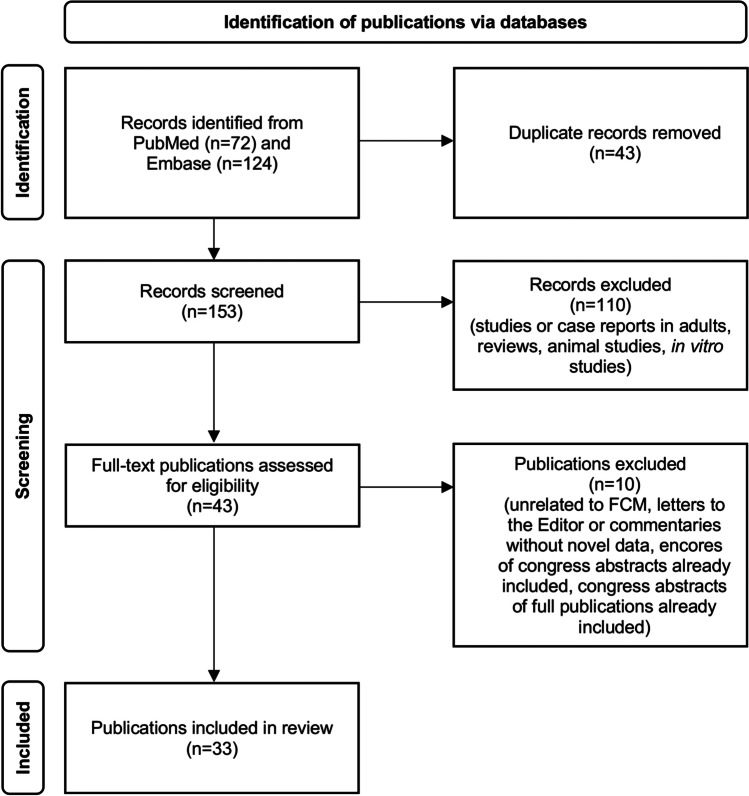
Iron deficiency is the primary cause of anaemia worldwide and is particularly common among children and adolescents. Intravenous (IV) iron therapy is recommended for paediatric patients with certain comorbidities or if oral iron treatment has been unsuccessful. IV ferric carboxymaltose (FCM) has recently been approved by the US Food and Drug Administration for use in children aged > 1 year. This narrative review provides an overview of the available publications on the efficacy and safety of IV FCM in children and adolescents. A literature search using PubMed and Embase yielded 153 publications; 33 contained clinical data or reports on clinical experience relating to IV FCM in subjects < 18 years of age and were included in the review. No prospective, randomised controlled studies on the topic were found. Most publications were retrospective studies or case reports and included patients with various underlying conditions or patients with inflammatory bowel disease. Efficacy data were included in 27/33 publications and improvements in anaemia, and/or iron status parameters were reported in 26 of them. Safety data were included in 25/33 publications and were in line with the adverse events described in the prescribing information.
The available publications indicate that IV FCM, a nanomedicine with a unique and distinctive therapeutic profile, is an effective and generally well-tolerated treatment for iron deficiency or iron deficiency anaemia in children and adolescents. Despite the wealth of retrospective evidence, prospective, randomised controlled trials in the paediatric setting are still necessary.
• Iron deficiency and iron deficiency anaemia are usually managed using oral iron therapy, but intravenous iron therapy is recommended for certain paediatric patients. • Intravenous ferric carboxymaltose (FCM) has recently been approved in the US for use in children aged > 1 year.
• Despite evidence that FCM is effective and generally well tolerated in children and adolescents, so far, only retrospective studies, non-randomised uncontrolled prospective studies, or case reports have been published in full. • There is a strong need for prospective, randomised controlled trials on FCM in the paediatric setting.
铁缺乏是全世界贫血的主要原因,尤其在儿童和青少年中较为常见。对于某些合并症或口服铁治疗无效的儿科患者,推荐使用静脉(IV)铁治疗。最近,美国食品和药物管理局批准静脉给予三价羧基麦芽糖铁(FCM)用于治疗年龄大于 1 岁的儿童。本叙述性综述提供了关于儿童和青少年中 IV FCM 的疗效和安全性的现有出版物概述。使用 PubMed 和 Embase 进行文献检索,共获得 153 篇文献;其中 33 篇包含有关 18 岁以下受试者 IV FCM 的临床数据或临床经验报告,并纳入本综述。未发现关于该主题的前瞻性、随机对照研究。大多数出版物为回顾性研究或病例报告,包括患有各种基础疾病或炎症性肠病的患者。27/33 篇文献中包含疗效数据,其中 26 篇报告了贫血和/或铁状态参数的改善。25/33 篇文献中包含安全性数据,与说明书中描述的不良事件一致。
现有文献表明,作为一种具有独特且独特治疗特征的纳米药物,IV FCM 是治疗儿童和青少年铁缺乏或缺铁性贫血的有效且通常耐受良好的治疗方法。尽管有大量回顾性证据,但仍需要在儿科环境中进行前瞻性、随机对照试验。
·铁缺乏和缺铁性贫血通常使用口服铁治疗,但对于某些儿科患者,推荐使用静脉铁治疗。
·最近,美国批准静脉给予三价羧基麦芽糖铁(FCM)用于治疗年龄大于 1 岁的儿童。
·尽管有证据表明 FCM 在儿童和青少年中有效且通常耐受良好,但迄今为止,仅发表了完整的回顾性研究、非随机对照前瞻性研究或病例报告。
·在儿科环境中,迫切需要进行 FCM 的前瞻性、随机对照试验。