Comparative Neuromuscular Diseases Laboratory, Department of Clinical Science and Services, Royal Veterinary College, University of London, London, UK.
Edinburgh Medical School: Biomedical Sciences, University of Edinburgh, Edinburgh, UK.
J Anat. 2022 Nov;241(5):1120-1132. doi: 10.1111/joa.13749. Epub 2022 Sep 2.
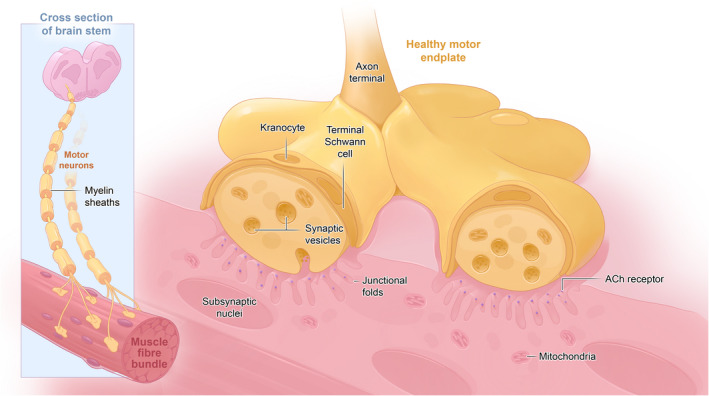
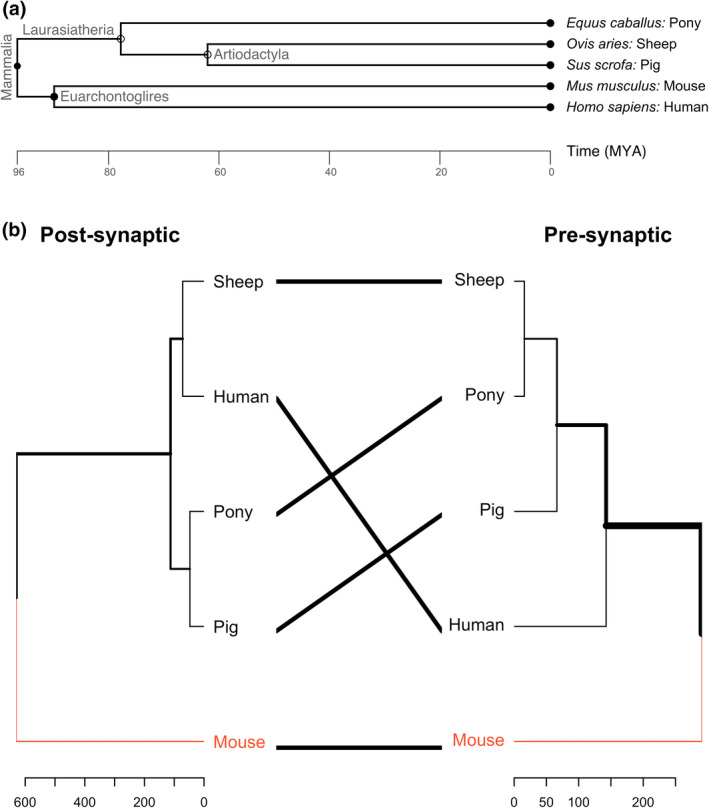
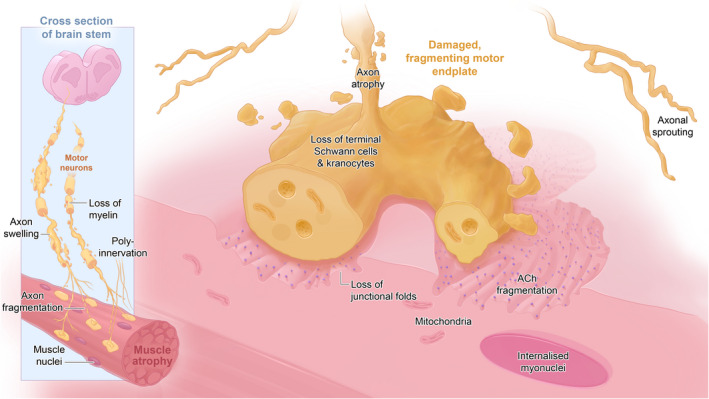
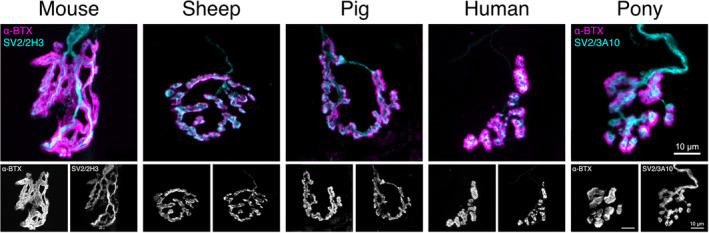
The aetiology and pathophysiology of many diseases of the motor unit remain poorly understood and the role of the neuromuscular junction (NMJ) in this group of disorders is particularly overlooked, especially in humans, when these diseases are comparatively rare. However, elucidating the development, function and degeneration of the NMJ is essential to uncover its contribution to neuromuscular disorders, and to explore potential therapeutic avenues to treat these devastating diseases. Until now, an understanding of the role of the NMJ in disease pathogenesis has been hindered by inherent differences between rodent and human NMJs: stark contrasts in body size and corresponding differences in associated axon length underpin some of the translational issues in animal models of neuromuscular disease. Comparative studies in large mammalian models, including examination of naturally occurring, highly prevalent animal diseases and evaluation of their treatment, might provide more relevant insights into the pathogenesis and therapy of equivalent human diseases. This review argues that large animal models offer great potential to enhance our understanding of the neuromuscular system in health and disease, and in particular, when dealing with diseases for which nerve length dependency might underly the pathogenesis.
许多运动单位疾病的病因和发病机制仍知之甚少,神经肌肉接头(NMJ)在这组疾病中的作用尤其被忽视,尤其是在这些疾病相对罕见的人类中。然而,阐明 NMJ 的发育、功能和退化对于揭示其对神经肌肉疾病的贡献以及探索治疗这些毁灭性疾病的潜在治疗途径至关重要。到目前为止,对 NMJ 在疾病发病机制中的作用的理解一直受到啮齿动物和人类 NMJ 之间固有差异的阻碍:体型的巨大差异以及与之相关的轴突长度的相应差异是动物神经肌肉疾病模型中一些转化问题的基础。在大型哺乳动物模型中的比较研究,包括对自然发生的、高度流行的动物疾病的检查以及对其治疗的评估,可能为理解等效人类疾病的发病机制和治疗提供更相关的见解。本文综述认为,大型动物模型为增强我们对神经肌肉系统在健康和疾病中的理解提供了巨大的潜力,特别是在处理可能基于神经长度依赖性的疾病时。