Angelotti Timothy
Department of Anesthesiology, Perioperative and Pain Medicine Stanford University Medical School, Stanford, CA, United States.
Front Mol Biosci. 2022 Aug 19;9:912848. doi: 10.3389/fmolb.2022.912848. eCollection 2022.
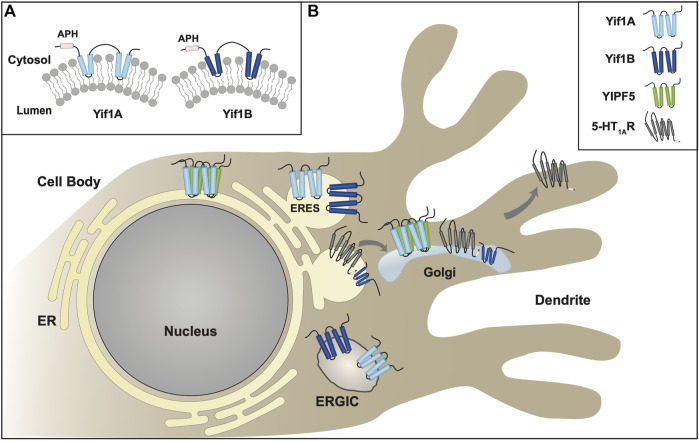
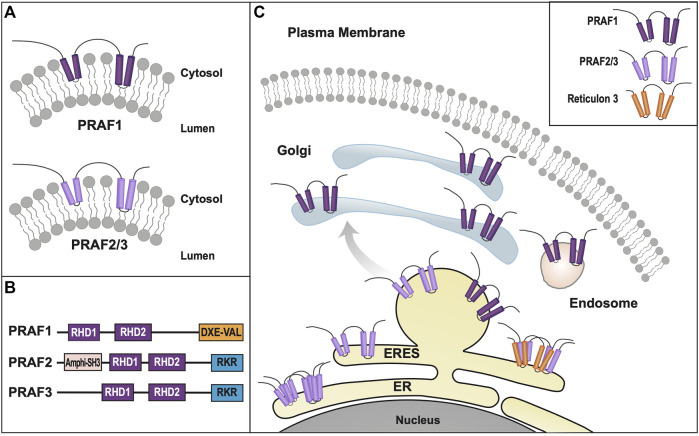
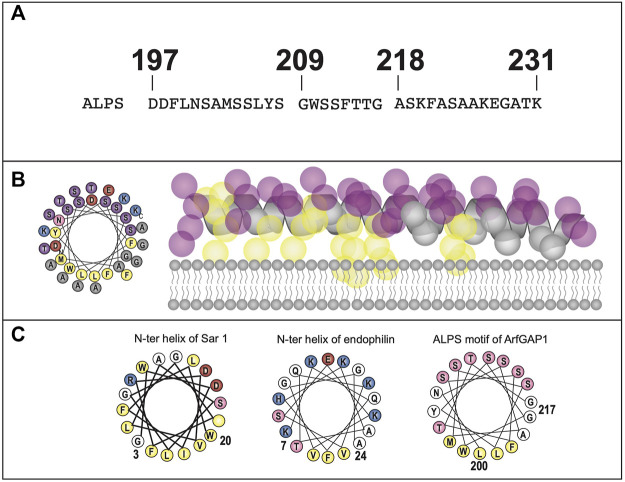
Polytopic cargo proteins are synthesized and exported along the secretory pathway from the endoplasmic reticulum (ER), through the Golgi apparatus, with eventual insertion into the plasma membrane (PM). While searching for proteins that could enhance cell surface expression of olfactory receptors, a new family of proteins termed "receptor expression-enhancing proteins" or REEPs were identified. These membrane-shaping hairpin proteins serve as adapters, interacting with intracellular transport machinery, to regulate cargo protein trafficking. However, REEPs belong to a larger family of proteins, the Yip (Ypt-interacting protein) family, conserved in yeast and higher eukaryotes. To date, eighteen mammalian Yip family members, divided into four subfamilies (Yipf, REEP, Yif, and PRAF), have been identified. Yeast research has revealed many intriguing aspects of yeast Yip function, functions that have not completely been explored with mammalian Yip family members. This review and analysis will clarify the different Yip family nomenclature that have encumbered prior comparisons between yeast, plants, and eukaryotic family members, to provide a more complete understanding of their interacting proteins, membrane topology, organelle localization, and role as regulators of cargo trafficking and localization. In addition, the biological role of membrane shaping and sensing hairpin and amphipathic helical domains of various Yip proteins and their potential cellular functions will be described. Lastly, this review will discuss the concept of Yip proteins as members of a larger superfamily of membrane-shaping adapter proteins (MSAPs), proteins that both shape membranes via membrane-sensing and hairpin insertion, and well as act as adapters for protein-protein interactions. MSAPs are defined by their localization to specific membranes, ability to alter membrane structure, interactions with other proteins via specific domains, and specific interactions/effects on cargo proteins.
多结构域货物蛋白沿着分泌途径在内质网(ER)中合成并输出,经过高尔基体,最终插入质膜(PM)。在寻找能够增强嗅觉受体细胞表面表达的蛋白质时,发现了一个新的蛋白质家族,称为“受体表达增强蛋白”或REEP。这些形成膜结构的发夹状蛋白质作为衔接子,与细胞内运输机制相互作用,以调节货物蛋白的运输。然而,REEP属于一个更大的蛋白质家族,即Yip(Ypt相互作用蛋白)家族,在酵母和高等真核生物中保守。迄今为止,已鉴定出18个哺乳动物Yip家族成员,分为四个亚家族(Yipf、REEP、Yif和PRAF)。酵母研究揭示了酵母Yip功能的许多有趣方面,而这些功能尚未在哺乳动物Yip家族成员中得到充分探索。这篇综述和分析将澄清不同的Yip家族命名法,这些命名法阻碍了之前对酵母、植物和真核生物家族成员之间的比较,以便更全面地了解它们的相互作用蛋白、膜拓扑结构、细胞器定位以及作为货物运输和定位调节因子的作用。此外,还将描述各种Yip蛋白的膜形成和感知发夹结构域及两亲性螺旋结构域的生物学作用及其潜在的细胞功能。最后,本综述将讨论Yip蛋白作为更大的膜形成衔接蛋白(MSAP)超家族成员的概念,这些蛋白既能通过膜感知和发夹插入来塑造膜,又能作为蛋白质-蛋白质相互作用的衔接子。MSAP的定义是它们定位于特定膜、改变膜结构的能力、通过特定结构域与其他蛋白质的相互作用以及对货物蛋白的特定相互作用/影响。