Zhang Xiao, Wang Tao
Guangdong Provincial Key Laboratory of Stem Cell and Regenerative Medicine, Guangdong-Hong Kong Joint, Laboratory for Stem Cell and Regenerative Medicine, Guangzhou Institutes of Biomedicine and Health, Chinese Academy of Sciences, Guangzhou, China.
GIBH-HKU Guangdong-Hong Kong Stem Cell and Regenerative Medicine Research Centre, Guangzhou, China.
Cell Biosci. 2024 Sep 5;14(1):114. doi: 10.1186/s13578-024-01300-x.
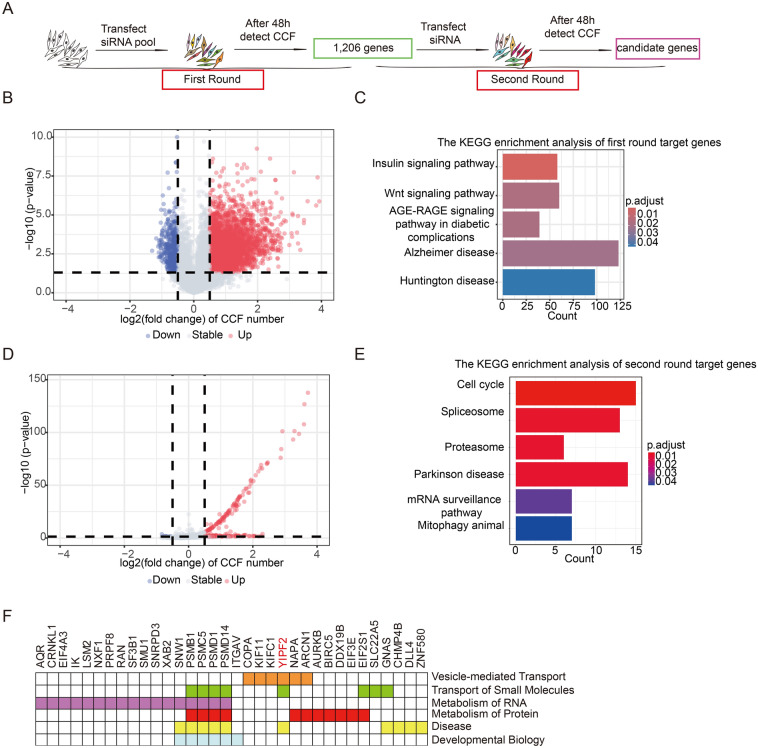
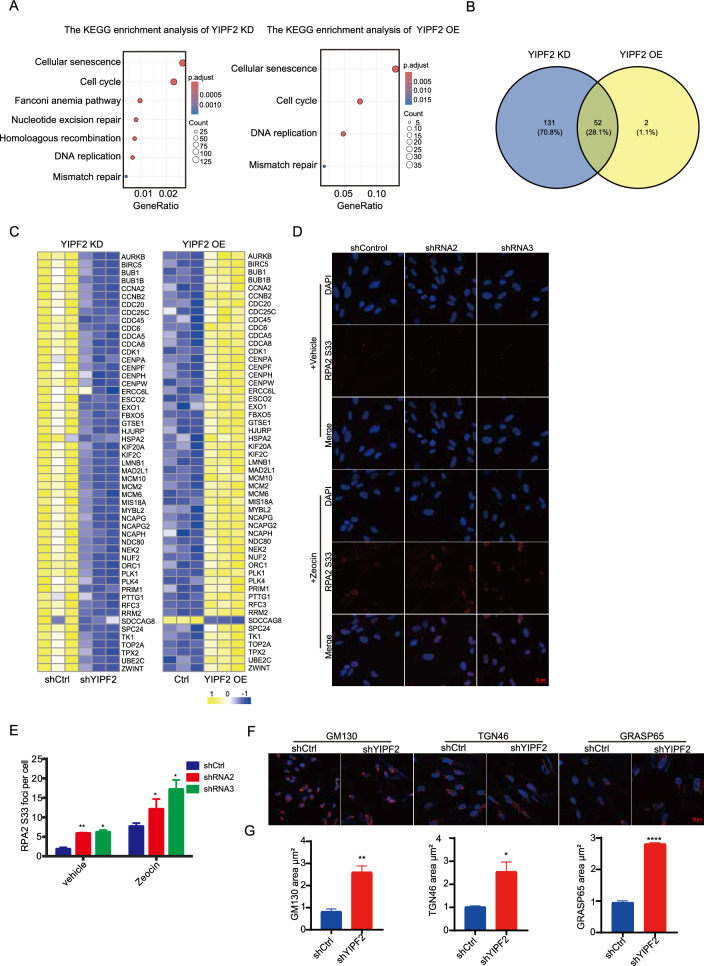
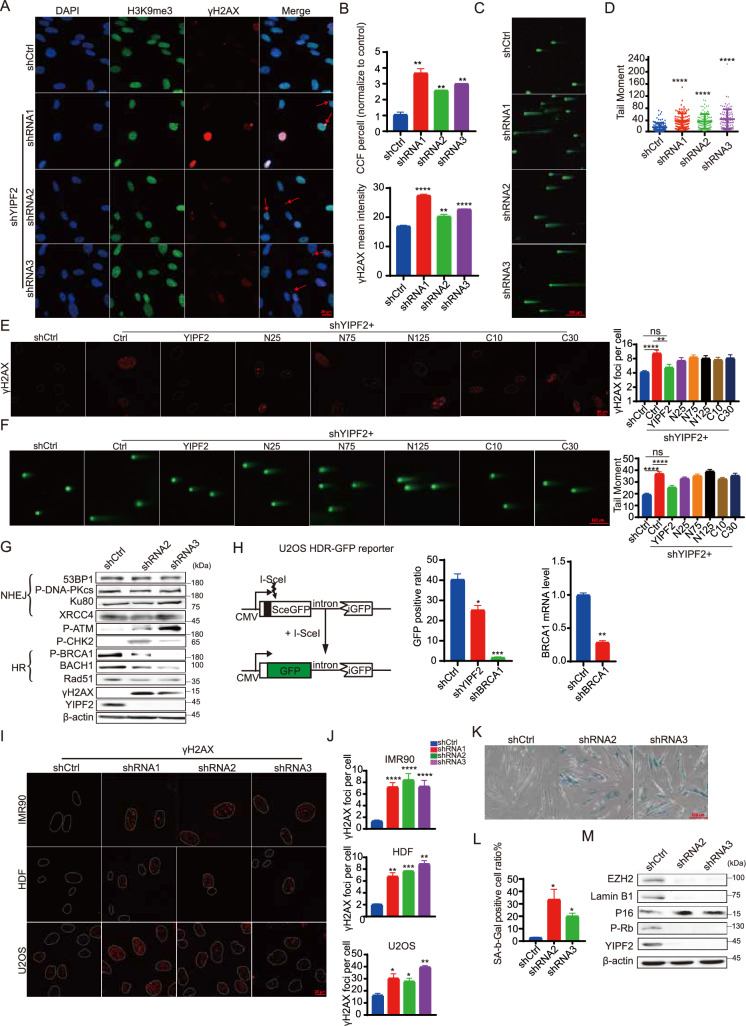
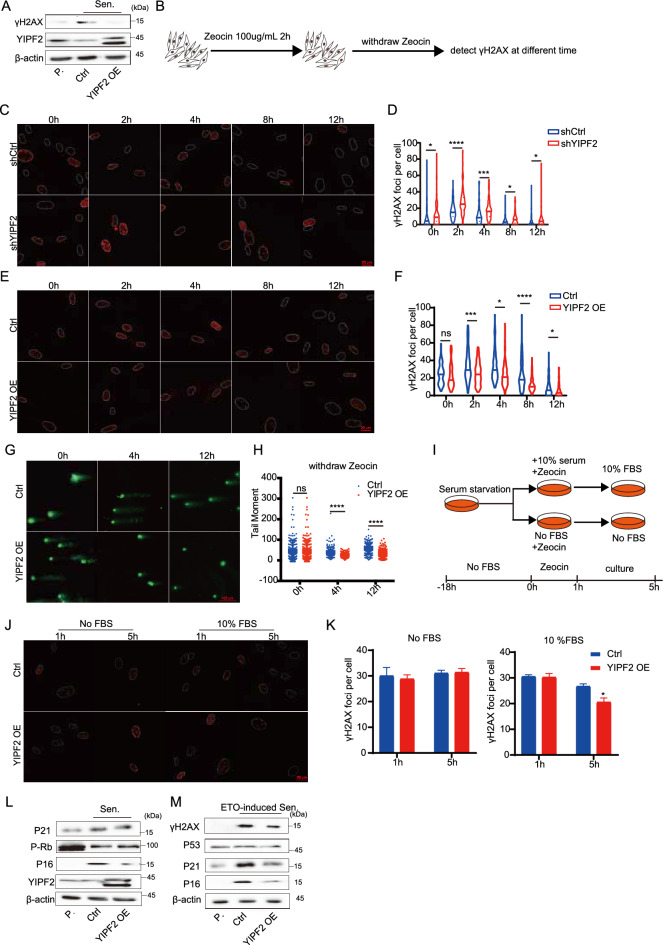
Understanding of the mechanisms for genome integrity maintenance can help in developing effective intervention strategies to combat aging. A whole-genome RNAi screen was conducted to identify novel factors involved in maintaining genome stability. The potential target genes identified in the screening are related to the cell cycle, proteasome, and spliceosomes. Unexpectedly, the Golgi protein YIPF2 has been found to play a critical role in maintaining genome stability. The depletion of YIPF2 hinders the process of homologous recombination (HR) repair, which then triggers DNA damage response mechanisms, ultimately leading to cellular senescence. The overexpression of YIPF2 facilitated cellular recovery from DNA damage induced by chemotherapy agents or replicative senescence-associated DNA damage. Our findings indicate that only the intact Golgi apparatus containing YIPF2 provides a protective effect on genome integrity.
了解基因组完整性维持机制有助于制定有效的干预策略来对抗衰老。进行了全基因组RNA干扰筛选,以鉴定参与维持基因组稳定性的新因子。筛选中确定的潜在靶基因与细胞周期、蛋白酶体和剪接体有关。出乎意料的是,发现高尔基体蛋白YIPF2在维持基因组稳定性中起关键作用。YIPF2的缺失会阻碍同源重组(HR)修复过程,进而触发DNA损伤反应机制,最终导致细胞衰老。YIPF2的过表达促进细胞从化疗药物诱导的DNA损伤或复制性衰老相关的DNA损伤中恢复。我们的研究结果表明,只有含有YIPF2的完整高尔基体对基因组完整性具有保护作用。