Al Bilad Bank Scholarly Chair for Food Security in Saudi Arabia, The Deanship of Scientific Research, The Vice Presidency for Graduate Studies and Scientific Research, King Faisal University, Al Ahsa 31982, Saudi Arabia.
Deanship of E-learning and Distance Education King Faisal Unversity, P.O. Box 380, Al-Ahsa 31982, Saudi Arabia.
J Environ Public Health. 2022 Aug 24;2022:8425798. doi: 10.1155/2022/8425798. eCollection 2022.
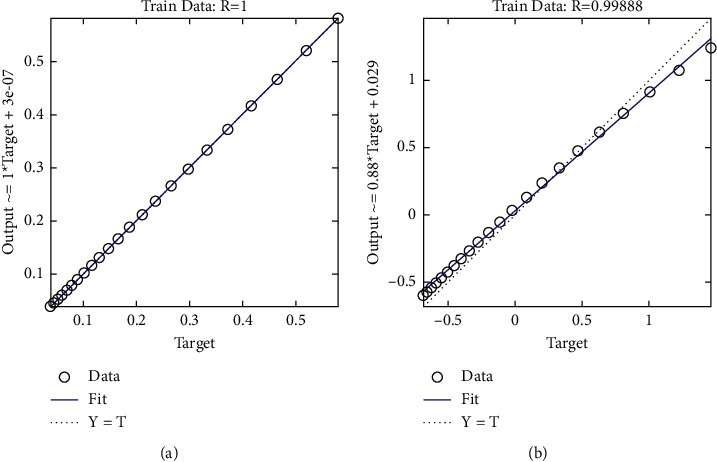
Humans and all other living things depend on having access to clean water, as it is an indispensable essential resource. Therefore, the development of a model that can predict water quality conditions in the future will have substantial societal and economic value. This can be accomplished by using a model that can predict future water quality circumstances. In this study, we employed a sophisticated artificial neural network (ANN) model. This study intends to develop a hybrid model of single exponential smoothing (SES) with bidirectional long short-term memory (BiLSTM) and an adaptive neurofuzzy inference system (ANFIS) to predict water quality (WQ) in different groundwater in the Al-Baha region of Saudi Arabia. Single exponential smoothing (SES) was employed as a preprocessing method to adjust the weight of the dataset, and the output from SES was processed using the BiLSTM and ANFIS models for predicting water quality. The data were randomly divided into two phases, training (70%) and testing (30%). Efficiency statistics were used to evaluate the SES-BiLSTM and SES-ANFIS models' prediction abilities. The results showed that while both the SES-BiLSTM and SES-ANFIS models performed well in predicting the water quality index (WQI), the SES-BiLSTM model performed best with accuracy ( = 99.95% and RMSE = 0.00910) at the testing phase, where the performance of the SES-ANFIS model was = 99.95% and RMSE = 2.2941 × 100-07. The findings support the idea that the SES-BilSTM and SES-ANFIS models can be used to predict the WQI with high accuracy, which will help to enhance WQ. The results demonstrated that the SES-BiLSTM and SES-ANFIS models' forecasts are accurate and that both seasons' performances are consistent. Similar investigations of groundwater quality prediction for drinking purposes should benefit from the proposed SES-BiLSTM and SES-ANFIS models. Consequently, the results demonstrate that the proposed SES-BiLSTM and SES-ANFIS models are useful tools for predicting whether the groundwater in Al-Baha city is suitable for drinking and irrigation purposes.
人类和所有其他生物都依赖于获得清洁水,因为它是一种不可或缺的基本资源。因此,开发一种能够预测未来水质状况的模型将具有重要的社会和经济价值。这可以通过使用能够预测未来水质情况的模型来实现。在本研究中,我们采用了一种复杂的人工神经网络(ANN)模型。本研究旨在开发一种沙特阿拉伯 Al-Baha 地区不同地下水水质(WQ)的单指数平滑(SES)与双向长短期记忆(BiLSTM)和自适应神经模糊推理系统(ANFIS)混合模型。单指数平滑(SES)被用作预处理方法来调整数据集的权重,SES 的输出被 BiLSTM 和 ANFIS 模型处理用于预测水质。数据被随机分为两个阶段,训练(70%)和测试(30%)。效率统计用于评估 SES-BiLSTM 和 SES-ANFIS 模型的预测能力。结果表明,虽然 SES-BiLSTM 和 SES-ANFIS 模型在预测水质指数(WQI)方面都表现良好,但 SES-BiLSTM 模型在测试阶段的准确率最高( = 99.95%和 RMSE = 0.00910),而 SES-ANFIS 模型的性能为 = 99.95%和 RMSE = 2.2941 × 100-07。研究结果支持 SES-BiLSTM 和 SES-ANFIS 模型可以用于高精度预测 WQI 的观点,这将有助于提高 WQ。结果表明,SES-BiLSTM 和 SES-ANFIS 模型的预测结果准确,两个季节的表现一致。对于饮用水目的的地下水质量预测的类似研究应该受益于所提出的 SES-BiLSTM 和 SES-ANFIS 模型。因此,结果表明,所提出的 SES-BiLSTM 和 SES-ANFIS 模型是预测 Al-Baha 市地下水是否适合饮用和灌溉目的的有用工具。