Jibrin Abdulhayat M, Al-Suwaiyan Mohammad, Aldrees Ali, Dan'azumi Salisu, Usman Jamilu, Abba Sani I, Yassin Mohamed A, Scholz Miklas, Sammen Saad Sh
Civil and Environmental Engineering Department, King Fahd University of Petroleum and Minerals, 31261, Dhahran, Saudi Arabia.
Department of Civil Engineering, College of Engineering in Al-Kharaj, Prince Sattam Bin Abdulaziz University, 11942, Al-Kharaj, Saudi Arabia.
Sci Rep. 2024 Aug 28;14(1):20031. doi: 10.1038/s41598-024-70610-4.
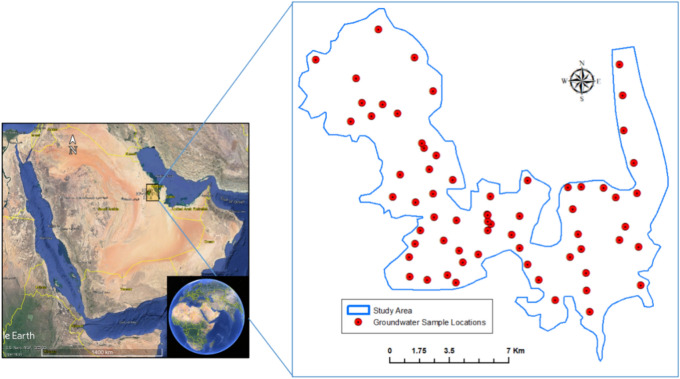
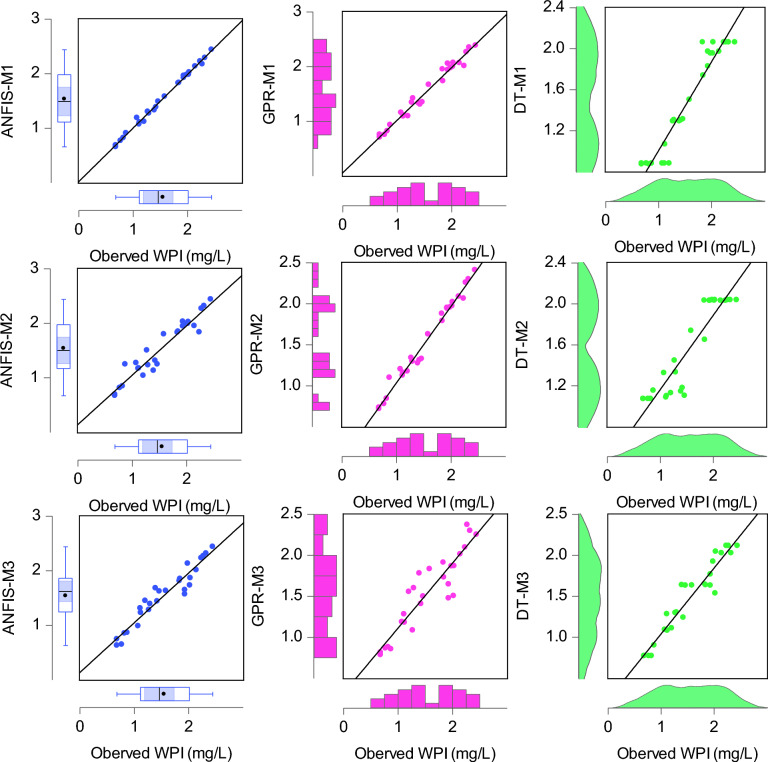
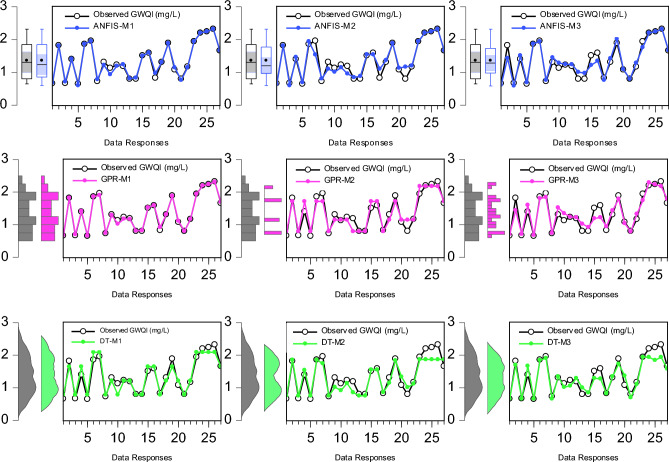
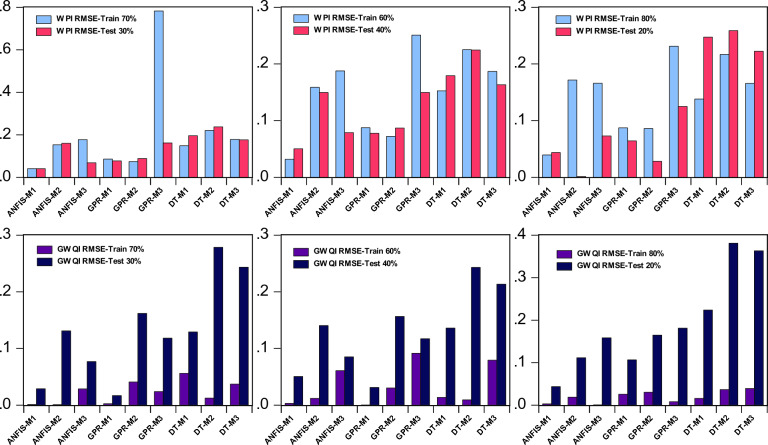
This study presents an innovative approach for predicting water and groundwater quality indices (WQI and GWQI) in the Eastern Province of Saudi Arabia, addressing critical challenges of scarcity and pollution in arid regions. Recent literature highlights the increasing attention towards WQI based on water pollution index (WPI) and GWQI as essential tools for simplifying complex hydrogeological data, thereby facilitating effective groundwater management and protection. Unlike previous works, the present research introduces a novel hybrid method that integrates non-parametric kernel Gaussian learning (GPR), adaptive neuro-fuzzy inference system (ANFIS), and decision tree (DT) algorithms. This approach marks the first application of a non-parametric kernel for groundwater quality pollution index prediction in Saudi Arabia, offering a significant advancement in the field. Through laboratory analysis and the combination of various machine learning (ML) techniques, this study enhances prediction capabilities, particularly for unmonitored sites in arid and semi-arid regions. The study's objectives include feature engineering based on dependency sensitivity analysis to identify the most influential variables affecting WQI and GWQI, and the development of predictive models using ANFIS, GPR, and DT for both indices. Furthermore, it aims to assess the impact of different data portions on WQI and GWQI predictions, exploring data divisions such as (70% / 30%), (60% / 40%), and (80% / 20%) for training and testing phase, respectively. By filling a critical gap in water resource management, this research offers significant implications for the prediction of water quality in regions facing similar environmental challenges. Through its innovative methodology and comprehensive analysis, this study contributes to the broader effort of managing and protecting water resources in arid and semi-arid areas. The result proved that GPR-M1 exhibited exceptional testing phase accuracy with RMSE = 0.0169 for GWQI. Similarly, for WPI, the ANFIS-M1 achieved high testing predictive skills with RMSE = 0.0401. The results emphasize the critical role of data quality and quantity in training for enhancing model robustness and prediction precision in water quality assessment.
本研究提出了一种创新方法,用于预测沙特阿拉伯东部省份的水质和地下水质量指数(WQI和GWQI),以应对干旱地区水资源稀缺和污染的严峻挑战。近期文献强调,基于水污染指数(WPI)的WQI和GWQI作为简化复杂水文地质数据的重要工具,越来越受到关注,从而有助于有效的地下水管理和保护。与以往的研究不同,本研究引入了一种新颖的混合方法,该方法集成了非参数核高斯学习(GPR)、自适应神经模糊推理系统(ANFIS)和决策树(DT)算法。这种方法标志着非参数核在沙特阿拉伯地下水质量污染指数预测中的首次应用,为该领域带来了重大进展。通过实验室分析和各种机器学习(ML)技术的结合,本研究提高了预测能力,特别是对于干旱和半干旱地区未监测站点的预测能力。该研究的目标包括基于依赖性敏感性分析进行特征工程,以识别影响WQI和GWQI的最具影响力的变量,并使用ANFIS、GPR和DT为这两个指数开发预测模型。此外,它旨在评估不同数据部分对WQI和GWQI预测的影响,分别探索用于训练和测试阶段的数据划分,如(70% / 30%)、(60% / 40%)和(80% / 20%)。通过填补水资源管理中的关键空白,本研究对面临类似环境挑战地区的水质预测具有重要意义。通过其创新的方法和全面的分析,本研究为干旱和半干旱地区水资源的管理和保护做出了更广泛的贡献。结果证明,GPR-M1在GWQI的测试阶段表现出卓越的准确性,RMSE = 0.0169。同样,对于WPI,ANFIS-M1在测试预测技能方面表现出色,RMSE = 0.0401。结果强调了数据质量和数量在训练中对提高水质评估模型的稳健性和预测精度的关键作用。