Seixas Azizi A, Rajabli Farid, Pericak-Vance Margaret A, Jean-Louis Girardin, Harms Robbert L, Tarnanas Ioannis
Department of Psychiatry and Behavioral Sciences, University of Miami Miller School of Medicine, Miami, FL, United States.
John P. Hussman Institute for Human Genomics, University of Miami Miller School of Medicine, Miami, FL, United States.
Front Psychiatry. 2022 Aug 9;13:899080. doi: 10.3389/fpsyt.2022.899080. eCollection 2022.
Mixed results in the predictive ability of traditional biomarkers to determine cognitive functioning and changes in older adults have led to misdiagnosis and inappropriate treatment plans to address mild cognitive impairment and dementia among older adults. To address this critical gap, the primary goal of the current study is to investigate whether a digital neuro signature (DNS-br) biomarker predicted global cognitive functioning and change over time relative among cognitively impaired and cognitive healthy older adults. The secondary goal is to compare the effect size of the DNS-br biomarker on global cognitive functioning compared to traditional imaging and genomic biomarkers. The tertiary goal is to investigate which demographic and clinical factors predicted DNS-br in cognitively impaired and cognitively healthy older adults.
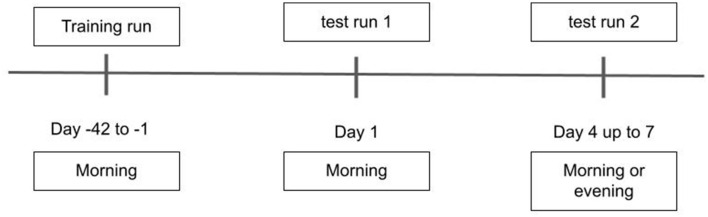
We conducted two experiments (Study A and Study B) to assess DNS for brain resilience (DNS-br) against the established FDG-PET brain imaging signature for brain resilience, based on a 10 min digital cognitive assessment tool. Study A was a semi-naturalistic observational study that included 29 participants, age 65+, with mild to moderate mild cognitive impairment and AD diagnosis. Study B was also a semi-naturalistic observational multicenter study which included 496 participants (213 mild cognitive impairment (MCI) and 283 cognitively healthy controls (HC), a total of 525 participants-cognitively healthy ( = 283) or diagnosed with MCI ( = 213) or AD ( = 29).
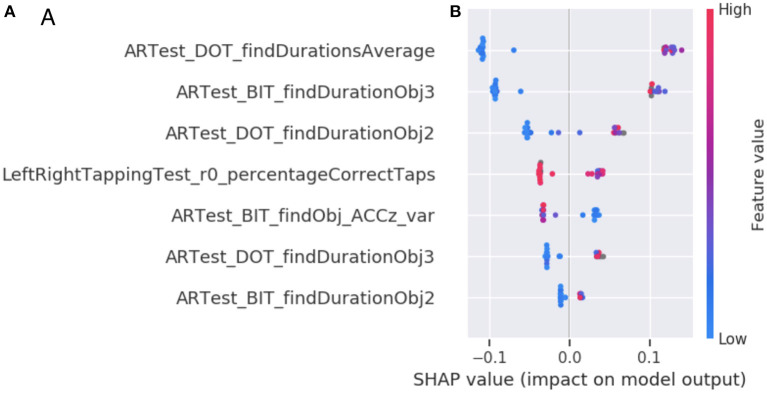
DNS-br total score and majority of the 11 DNS-br neurocognitive subdomain scores were significantly associated with FDG-PET resilience signature, PIB ratio, cerebral gray matter and white matter volume after adjusting for multiple testing. DNS-br total score predicts cognitive impairment for the 80+ individuals in the Altoida large cohort study. We identified a significant interaction between the DNS-br total score and time, indicating that participants with higher DNS-br total score or FDG-PET in the resilience signature would show less cognitive decline over time.
Our findings highlight that a digital biomarker predicted cognitive functioning and change, which established biomarkers are unable to reliably do. Our findings also offer possible etiologies of MCI and AD, where education did not protect against cognitive decline.
传统生物标志物在预测老年人认知功能及变化方面结果不一,导致对老年人轻度认知障碍和痴呆的误诊及不恰当治疗方案。为填补这一关键空白,本研究的主要目标是调查数字神经特征(DNS-br)生物标志物是否能预测认知受损和认知健康老年人的整体认知功能及随时间的变化。次要目标是比较DNS-br生物标志物与传统成像和基因组生物标志物对整体认知功能的效应大小。第三个目标是调查在认知受损和认知健康的老年人中,哪些人口统计学和临床因素可预测DNS-br。
我们基于一个10分钟的数字认知评估工具,进行了两项实验(研究A和研究B),以评估用于脑弹性的DNS(DNS-br)与既定的用于脑弹性的FDG-PET脑成像特征。研究A是一项半自然观察性研究,包括29名年龄在65岁及以上、患有轻度至中度轻度认知障碍和AD诊断的参与者。研究B也是一项半自然观察性多中心研究,包括496名参与者(213名轻度认知障碍(MCI)和283名认知健康对照(HC),总共525名参与者——认知健康(=283)或被诊断为MCI(=213)或AD(=29)。
在进行多重检验校正后,DNS-br总分及11个DNS-br神经认知子域分数中的大多数与FDG-PET弹性特征、PIB比率、脑灰质和白质体积显著相关。在Altoida大型队列研究中,DNS-br总分可预测80岁及以上个体的认知障碍。我们发现DNS-br总分与时间之间存在显著交互作用。这表明,在弹性特征中,DNS-br总分或FDG-PET较高的参与者随时间的认知衰退会较少。
我们的研究结果突出表明,一种数字生物标志物能够预测认知功能及变化,而现有生物标志物无法可靠做到这一点。我们的研究结果还为MCI和AD提供了可能的病因,其中教育并不能预防认知衰退。