
与重度抑郁症未来复发状态相关的循环微RNA
Circulating microRNA associated with future relapse status in major depressive disorder.
作者信息
Li Qingqin S, Galbraith David, Morrison Randall L, Trivedi Madhukar H, Drevets Wayne C
机构信息
Neuroscience Therapeutic Area, Janssen Research and Development, LLC, Titusville, NJ, United States.
JRD Data Science, Janssen Research and Development, LLC, Titusville, NJ, United States.
出版信息
Front Psychiatry. 2022 Aug 17;13:937360. doi: 10.3389/fpsyt.2022.937360. eCollection 2022.
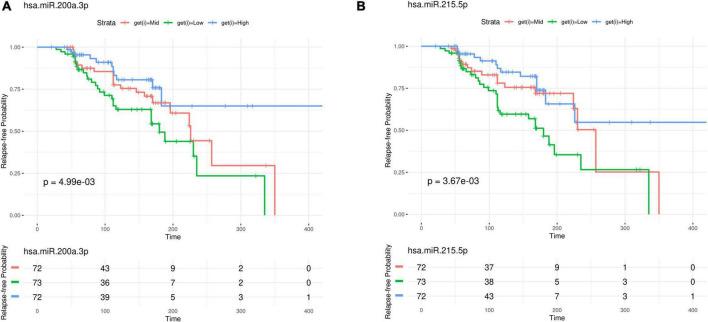
Major depressive disorder (MDD) is an episodic condition with relapsing and remitting disease course. Elucidating biomarkers that can predict future relapse in individuals responding to an antidepressant treatment holds the potential to identify those patients who are prone to illness recurrence. The current study explored relationships between relapse risk in recurrent MDD and circulating microRNAs (miRNAs) that participate in RNA silencing and post-transcriptional regulation of gene expression. Serum samples were acquired from individuals with a history of recurrent MDD who were followed longitudinally in the observational study, OBSERVEMDD0001 (ClinicalTrials.gov Identifier: NCT02489305). Circulating miRNA data were obtained in 63 participants who relapsed ("relapsers") and 154 participants who did not relapse ("non-relapsers") during follow-up. The miRNA was quantified using the ID3EAL™ miRNA Discovery Platform from MiRXES measuring 575 circulating miRNAs using a patented qPCR technology and normalized with a standard curve from spike-in controls in each plate. The association between miRNAs and subsequent relapse was tested using a linear model, adjusting for age, gender, and plate. Four miRNAs were nominally associated with relapse status during the observational follow-up phase with a false discover rate adjusted -value < 0.1. Enrichment analysis of experimentally validated targets revealed 112 significantly enriched pathways, including neurogenesis, response to cytokine, neurotrophin signaling, vascular endothelial growth factor signaling, relaxin signaling, and cellular senescence pathways. These data suggest these miRNAs putatively associated with relapse status may have the potential to regulate genes involved in multiple signaling pathways that have previously been associated with MDD. If shown to be significant in a larger, independent sample, these data may hold potential for developing a miRNA signature to identify patients likely to relapse, allowing for earlier intervention.
重度抑郁症(MDD)是一种具有复发和缓解病程的发作性疾病。阐明能够预测对抗抑郁治疗有反应的个体未来复发的生物标志物,有可能识别出那些易于疾病复发的患者。当前的研究探讨了复发性MDD的复发风险与参与RNA沉默和基因表达转录后调控的循环微小RNA(miRNA)之间的关系。血清样本取自复发性MDD病史的个体,这些个体在观察性研究OBSERVEMDD0001(ClinicalTrials.gov标识符:NCT02489305)中进行纵向随访。在随访期间,获得了63名复发参与者(“复发者”)和154名未复发参与者(“未复发者”)的循环miRNA数据。使用MiRXES的ID3EAL™ miRNA发现平台对miRNA进行定量,该平台使用专利的qPCR技术测量575种循环miRNA,并通过每个板中加标对照的标准曲线进行标准化。使用线性模型测试miRNA与随后复发之间的关联,并对年龄、性别和板进行校正。在观察性随访阶段,有4种miRNA与复发状态名义上相关,错误发现率校正P值<0.1。对实验验证靶点的富集分析揭示了112条显著富集的通路,包括神经发生、对细胞因子的反应、神经营养因子信号传导、血管内皮生长因子信号传导、松弛素信号传导和细胞衰老通路。这些数据表明,这些与复发状态推定相关的miRNA可能具有调节参与多种先前与MDD相关的信号通路的基因的潜力。如果在更大的独立样本中显示具有显著性,这些数据可能具有开发miRNA特征以识别可能复发的患者的潜力,从而实现更早的干预。


 Zotero 插件