Baid Srishti, Hefty P Scott, Morgan Dyan E
Department of Molecular Biosciences, University of Kansas, Lawrence, Kansas, USA.
Undergraduate Biology Program, University of Kansas, Lawrence, Kansas, USA.
J Microbiol Biol Educ. 2022 May 16;23(2). doi: 10.1128/jmbe.00311-21. eCollection 2022 Aug.
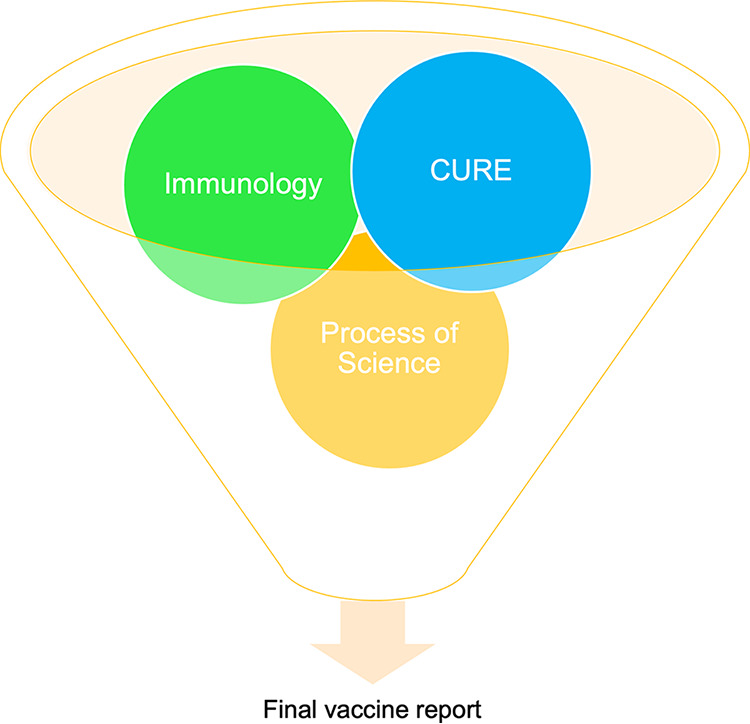
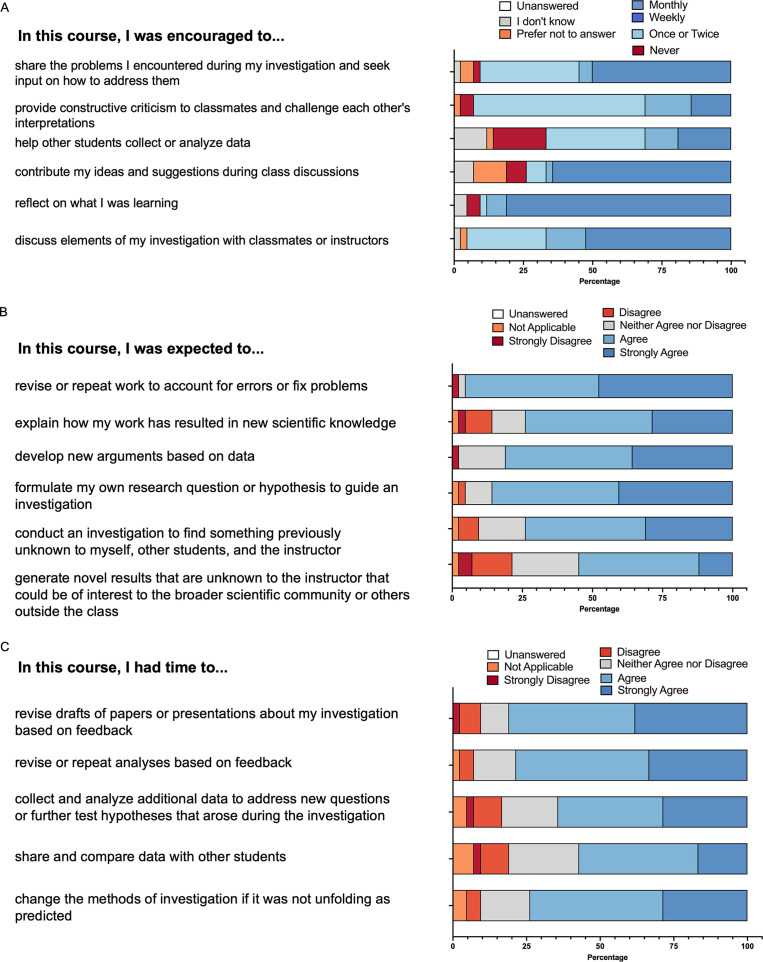
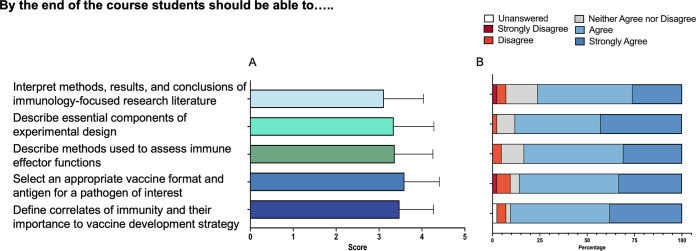
During the COVID-19 pandemic, universities across the globe quickly shifted to online education. Laboratory courses faced unique challenges and were forced to reevaluate learning objectives and identify creative projects to engage students online. This study describes a newly developed online immunology laboratory curriculum focused on vaccine development. The course incorporated learning objectives to teach the scientific process, key experimental design components, and immunology techniques to evaluate vaccine efficacy. The curriculum, a course-based undergraduate research experience (CURE), asked students to engage in the research literature, propose a vaccine design and assessment, and interpret mock results. Instructor evaluation of student work as well as student self-evaluations demonstrated that students met the curriculum's learning objectives. Additionally, results from the laboratory course assessment survey (LCAS) indicate that this curriculum incorporated the CURE elements of collaboration, discovery and relevance, and iteration.
在新冠疫情期间,全球各大学迅速转向在线教育。实验课程面临着独特的挑战,被迫重新评估学习目标,并确定能让学生在线参与的创新性项目。本研究描述了一个新开发的聚焦疫苗研发的在线免疫学实验课程。该课程纳入了学习目标,以教授科学过程、关键实验设计要素以及评估疫苗效力的免疫学技术。该课程作为基于课程的本科研究经历(CURE),要求学生研读研究文献、提出疫苗设计与评估方案,并解读模拟结果。教师对学生作业的评估以及学生的自我评价表明,学生达到了课程的学习目标。此外,实验课程评估调查(LCAS)的结果表明,该课程融入了合作、发现与相关性以及迭代等CURE要素。