Department of Biological Sciences, Federal University Dutse, P.M.B. 7156, Jigawa State, NG.
Department of Public Health and Epidemiology, Nigerian Institute for Medical Research (NIMR), Lagos State, NG.
Ann Glob Health. 2022 Aug 16;88(1):71. doi: 10.5334/aogh.3704. eCollection 2022.
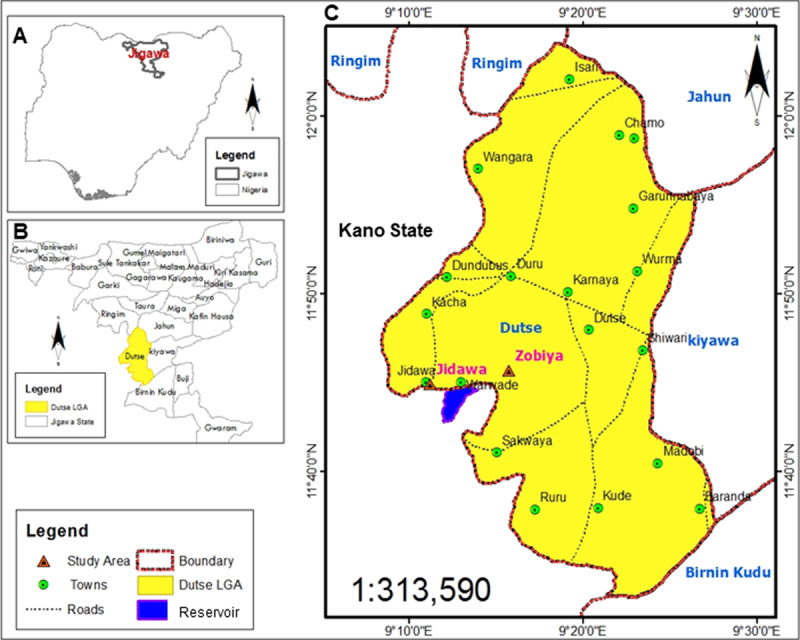
Urogenital schistosomiasis (UgS) is a parasitic disease caused by and can lead to chronic ill-health. Nigeria is endemic for schistosomiasis, but epidemiology of UgS has not been studied in most states. This study was conceived with the aim to contribute towards an accurate national picture of UgS in Nigeria. The prevalence of UgS and the associated risk factors were for the first time investigated among primary school pupils in Jidawa and Zobiya communities of the Dutse Local Government Area (LGAs) of Jigawa State, Nigeria.
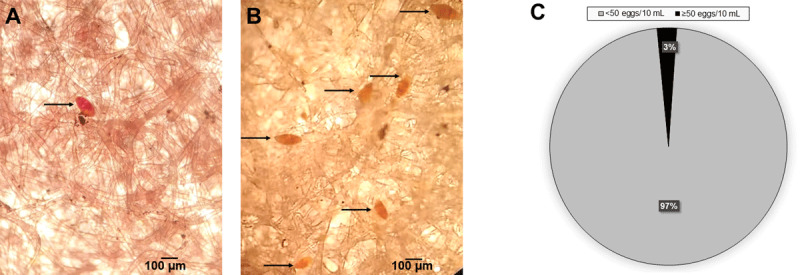
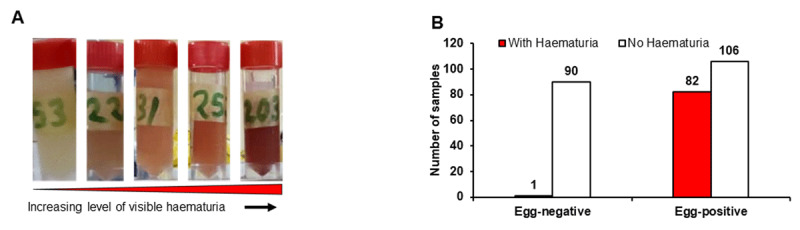
Focus group discussions with teachers and parents were conducted. After obtaining written consent from parents, questionnaires were administered to pupils to obtain socio-demographic data and information on water contact activities. Urine samples (279) were collected and processed by the urine filtration technique to evaluate haematuria and the presence of eggs.
Prevalences of 65.7% (90/137) and 69.0% (98/142) were recorded in the Jidawa and Zobiya communities, respectively. In both communities, there was a significant association between gender and UgS: 63.3% of the infected pupils were males as compared to 36.7% females (χ = 5.42, p = 0.020). Grade 5 students had a significantly higher prevalence (χ = 17.919, p = 0.001) (80.0%) compared to those in grades 2, 3, 4, and 6 (63.8%, 66.7%, 61.5%, and 64.6%, respectively). Water contact activities showed that pupils involved in fishing, irrigation, and swimming were at greater risk of becoming infected in Jidawa and Zobiya, with odds ratios (risk factors) of 5.4 (0.994-28.862) and 4.1 (1.709-9.862), respectively (p = 0.05).
Both the Jidawa and Zobiya communities of the Dutse LGAs of Jigawa State are hyperendemic for UgS. In collaboration with the State Ministry of Health, mass administration of praziquantel was carried out in the Jidawa and Zobiya communities after this study.
尿路血吸虫病(UgS)是一种由 引起的寄生虫病,可导致慢性健康问题。尼日利亚是血吸虫病的流行地区,但大多数州都没有对 UgS 的流行病学进行研究。本研究旨在为尼日利亚 UgS 的全国情况提供准确信息。首次在尼日利亚吉加瓦州杜特塞地方政府区(LGAs)的 Jidawa 和 Zobiya 社区的小学生中调查了 UgS 的流行率和相关危险因素。
对教师和家长进行了焦点小组讨论。在获得家长的书面同意后,向学生发放问卷,以获取社会人口统计学数据和与水接触活动的信息。采集 279 份尿样,采用尿过滤技术评估血尿和 卵的存在。
Jidawa 和 Zobiya 社区的流行率分别为 65.7%(90/137)和 69.0%(98/142)。在这两个社区,性别与 UgS 之间存在显著关联:感染学生中 63.3%为男性,而 36.7%为女性(χ=5.42,p=0.020)。五年级学生的患病率明显更高(χ=17.919,p=0.001)(80.0%),而二年级、三年级、四年级和六年级学生的患病率分别为 63.8%、66.7%、61.5%和 64.6%。水接触活动表明,在 Jidawa 和 Zobiya,从事钓鱼、灌溉和游泳的学生感染风险更高,优势比(危险因素)分别为 5.4(0.994-28.862)和 4.1(1.709-9.862)(p=0.05)。
吉加瓦州杜特塞 LGAs 的 Jidawa 和 Zobiya 社区均为 UgS 的高度流行区。在本研究之后,与州卫生部合作,在 Jidawa 和 Zobiya 社区进行了大规模的吡喹酮治疗。