Department of Pharmacology and Cancer Biology, Duke University School of Medicine, Durham, North Carolina.
Cancer Discov. 2022 Oct 5;12(10):2249-2257. doi: 10.1158/2159-8290.CD-22-0096.
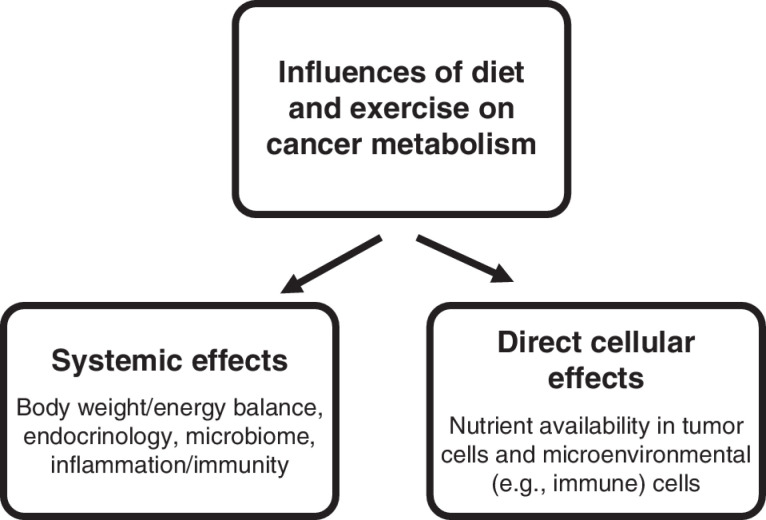
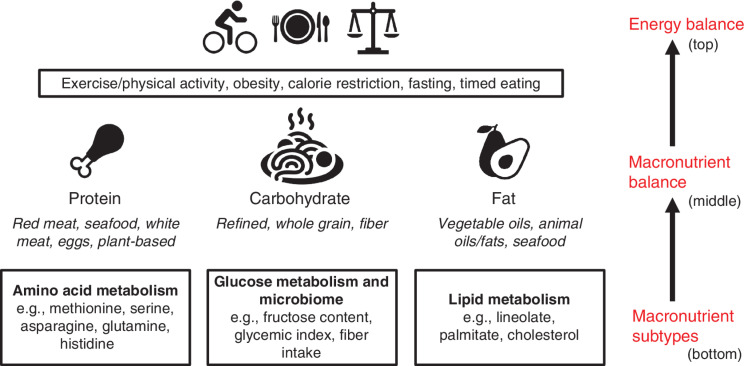
Diet and exercise are modifiable lifestyle factors known to have a major influence on metabolism. Clinical practice addresses diseases of altered metabolism such as diabetes or hypertension by altering these factors. Despite enormous public interest, there are limited defined diet and exercise regimens for patients with cancer. Nevertheless, the molecular basis of cancer has converged over the past 15 years on an essential role for altered metabolism in cancer. However, our understanding of the molecular mechanisms that underlie the impact of diet and exercise on cancer metabolism is in its very early stages. In this perspective, I propose conceptual frameworks for understanding the consequences of diet and exercise on cancer cell metabolism and tumor biology and also highlight recent developments. By advancing our mechanistic understanding, I will discuss actionable ways that such interventions could eventually reach the mainstay of both medical oncology and cancer control and prevention.
饮食和运动是可改变的生活方式因素,已知对新陈代谢有重大影响。临床实践通过改变这些因素来治疗代谢紊乱疾病,如糖尿病或高血压。尽管公众对此非常感兴趣,但针对癌症患者的明确饮食和运动方案却很有限。然而,在过去的 15 年中,癌症的分子基础已经趋于一致,认为代谢紊乱在癌症中起着关键作用。然而,我们对饮食和运动对癌症代谢影响的分子机制的理解还处于起步阶段。在这方面,我提出了理解饮食和运动对癌细胞代谢和肿瘤生物学影响的概念框架,并强调了最近的发展。通过深入了解这些机制,我将讨论这些干预措施最终可能成为肿瘤内科和癌症防控的主要手段的可行方法。