Faculty of Health, Education and Life Sciences, Birmingham City University, Birmingham, B15 3TN, UK.
Biomedical Engineering Department, College of Engineering, Imam Abdulrahman Bin Faisal University, King Faisal Rd, Dammam, 34212, Saudi Arabia.
Med Biol Eng Comput. 2022 Nov;60(11):3057-3068. doi: 10.1007/s11517-022-02658-1. Epub 2022 Sep 5.
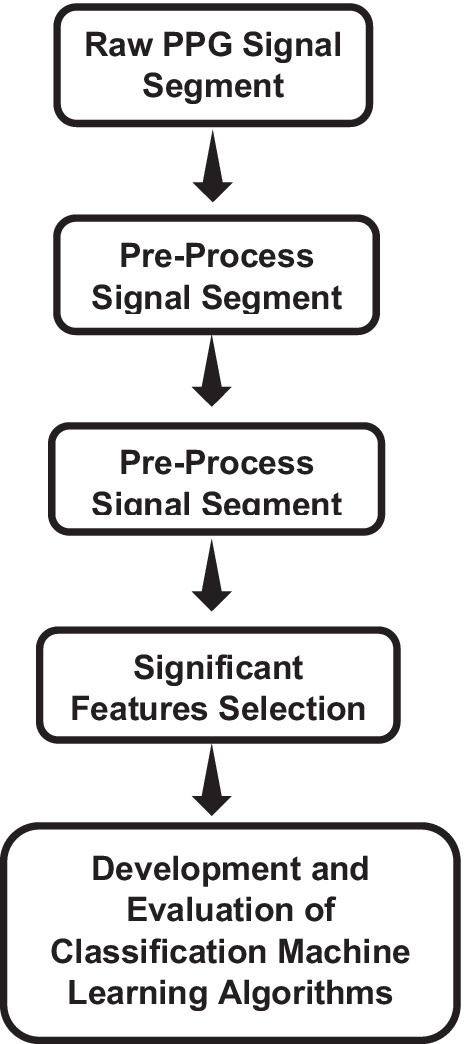
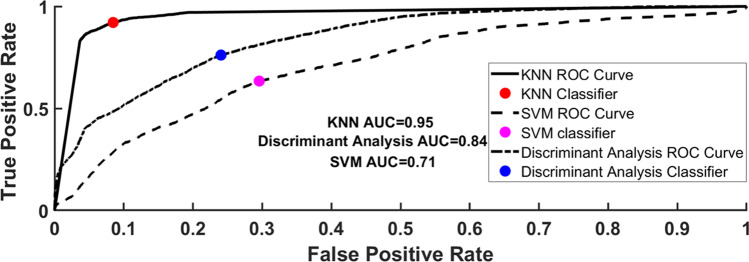
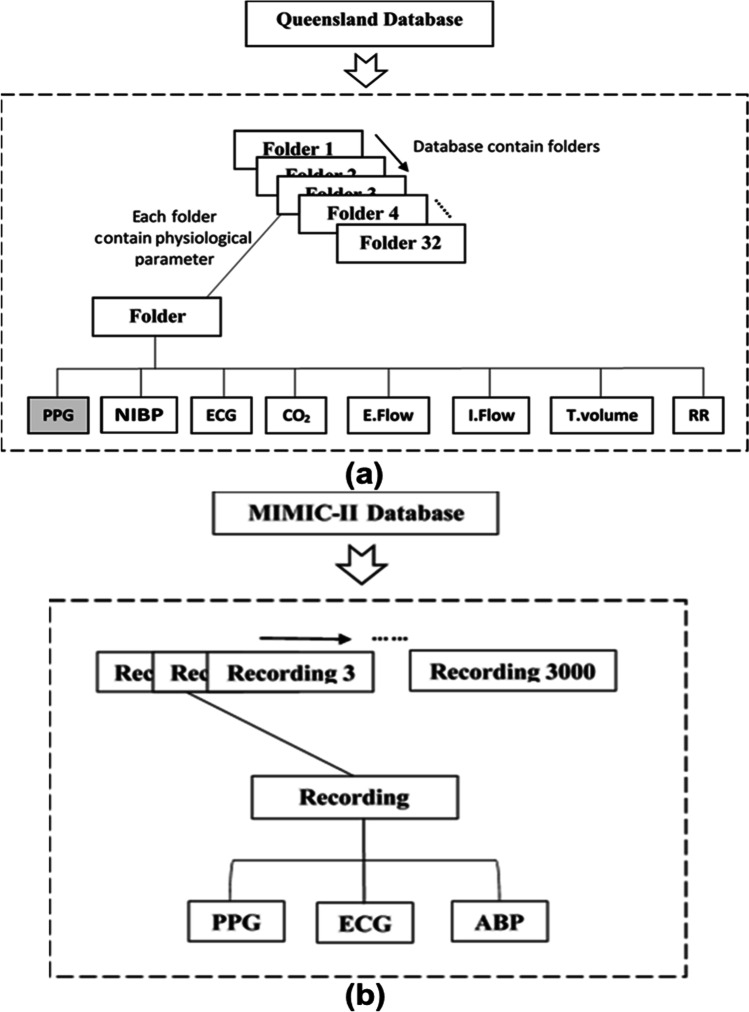
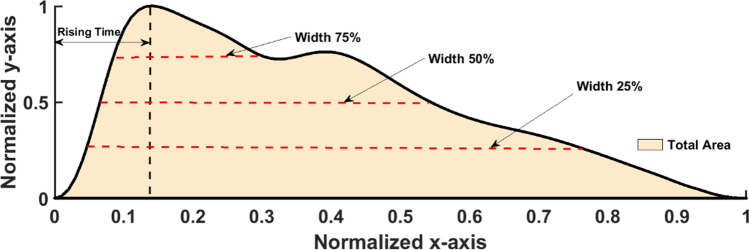
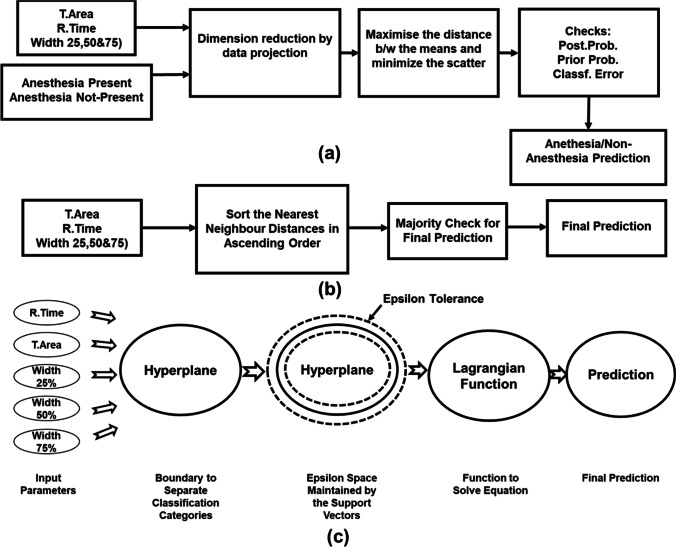
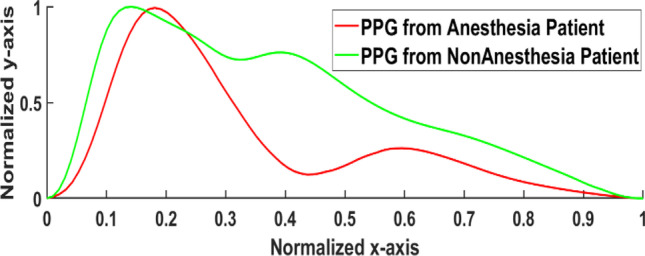
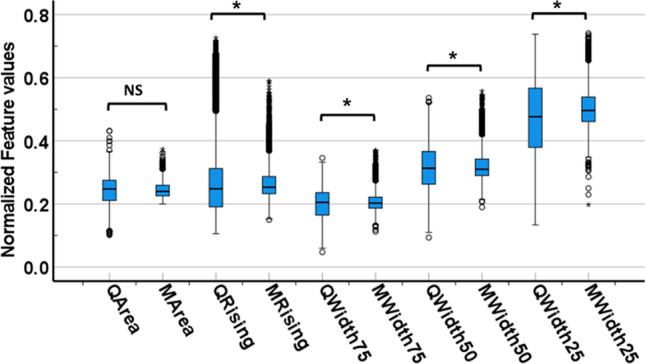
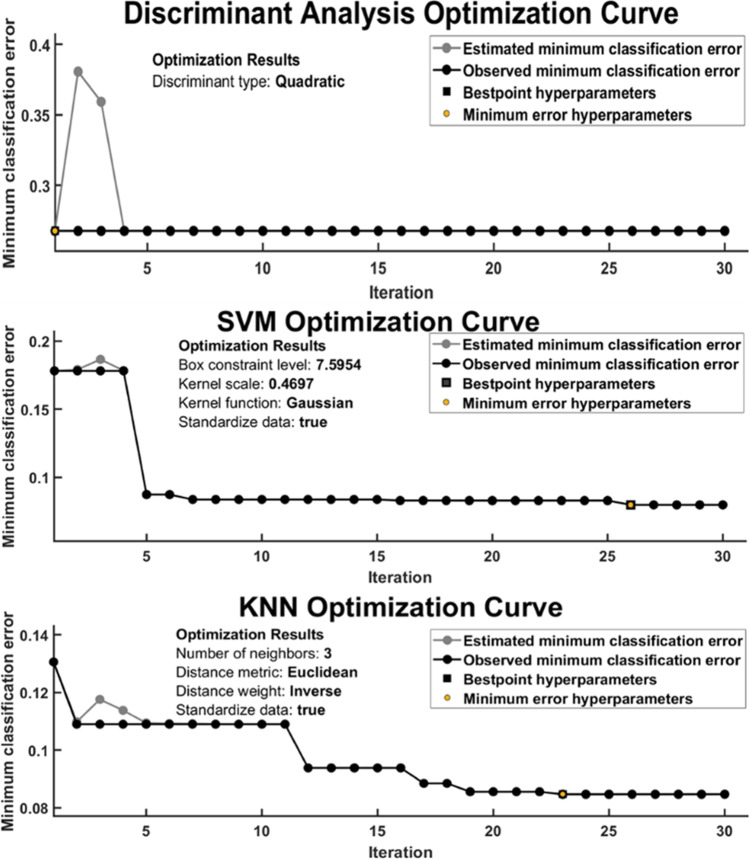
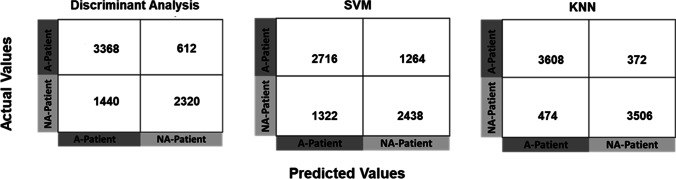
Anesthesia drug overdose hazards and lack of gold standards in anesthesia monitoring lead to an urgent need for accurate anesthesia drug detection. To investigate the PPG waveform features affected by anesthesia drugs and develop a machine-learning classifier with high anesthesia drug sensitivity. This study used 64 anesthesia and non-anesthesia patient data (32 cases each), extracted from Queensland and MIMIC-II databases, respectively. The key waveform features (total area, rising time, width 75%, 50%, and 25%) were extracted from 16,310 signal recordings (5-s duration). Discriminant analysis, support vector machine (SVM), and K-nearest neighbor (KNN) were evaluated by splitting the dataset into halve training (11 patients, 8570 segments) and halve testing dataset (11 patients, 7740 segments). Significant differences exist between PPG waveform features of anesthesia and non-anesthesia groups (p < 0.05) except total area feature (p > 0.05). The KNN classifier achieved 91.7% (AUC = 0.95) anesthesia detection accuracy with the highest sensitivity (0.88) and specificity (0.90) as compared to other classifiers. Kohen's kappa also shows almost perfect agreement (0.79) with the KNN classifier. The KNN classifier trained with significant PPG features has the potential to be used as a reliable, non-invasive, and low-cost method for the detection of anesthesia drugs for depth analysis during surgical operations and postoperative monitoring.
麻醉药物过量的危害以及麻醉监测缺乏金标准,这使得我们迫切需要准确的麻醉药物检测方法。本研究旨在探讨受麻醉药物影响的 PPG 波形特征,并开发出一种对麻醉药物具有高灵敏度的机器学习分类器。该研究使用了分别来自昆士兰和 MIMIC-II 数据库的 64 例麻醉和非麻醉患者数据(每组 32 例)。从 16310 个信号记录(持续 5 秒)中提取了关键的波形特征(总区域、上升时间、宽度 75%、50%和 25%)。通过将数据集分为两半进行训练(11 名患者,8570 个片段)和测试数据集(11 名患者,7740 个片段),对判别分析、支持向量机(SVM)和 K-最近邻(KNN)进行了评估。麻醉和非麻醉组的 PPG 波形特征存在显著差异(p<0.05),除了总区域特征(p>0.05)。与其他分类器相比,KNN 分类器的麻醉检测准确率达到 91.7%(AUC=0.95),具有最高的灵敏度(0.88)和特异性(0.90)。科恩氏kappa 还显示与 KNN 分类器具有几乎完美的一致性(0.79)。使用具有显著 PPG 特征的 KNN 分类器进行训练,有可能成为一种可靠、非侵入性且低成本的方法,用于在手术过程中和术后监测中对麻醉药物进行深度分析。