Lund Brain Injury Laboratory for Neurosurgical Research, Department of Clinical Sciences, Lund University, Lund, Sweden.
Insititute for Tissue Engineering and Regenerative Medicine (iTERM), Helmholtz Zentrum München, Neuherberg, Germany.
Acta Neuropathol Commun. 2022 Sep 5;10(1):129. doi: 10.1186/s40478-022-01435-3.
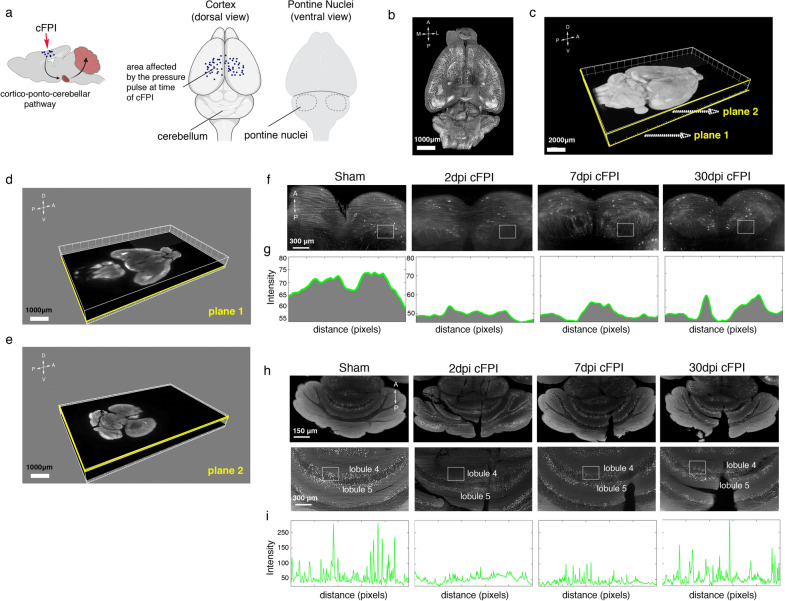
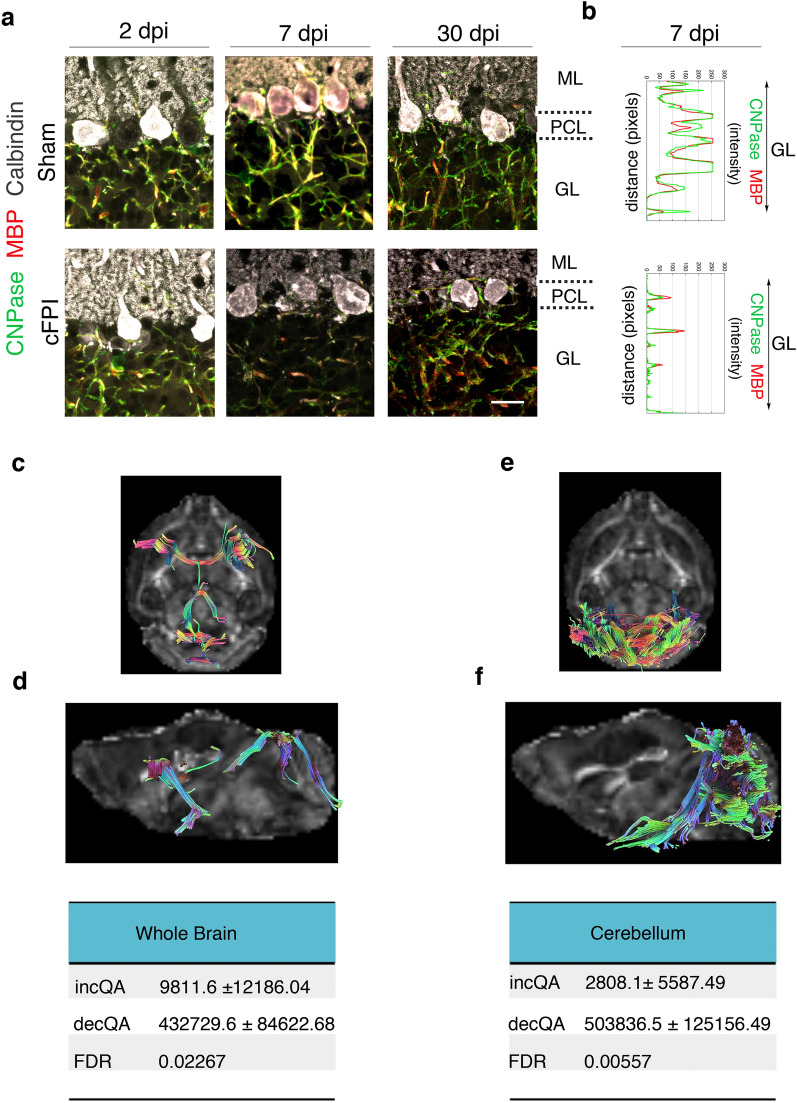
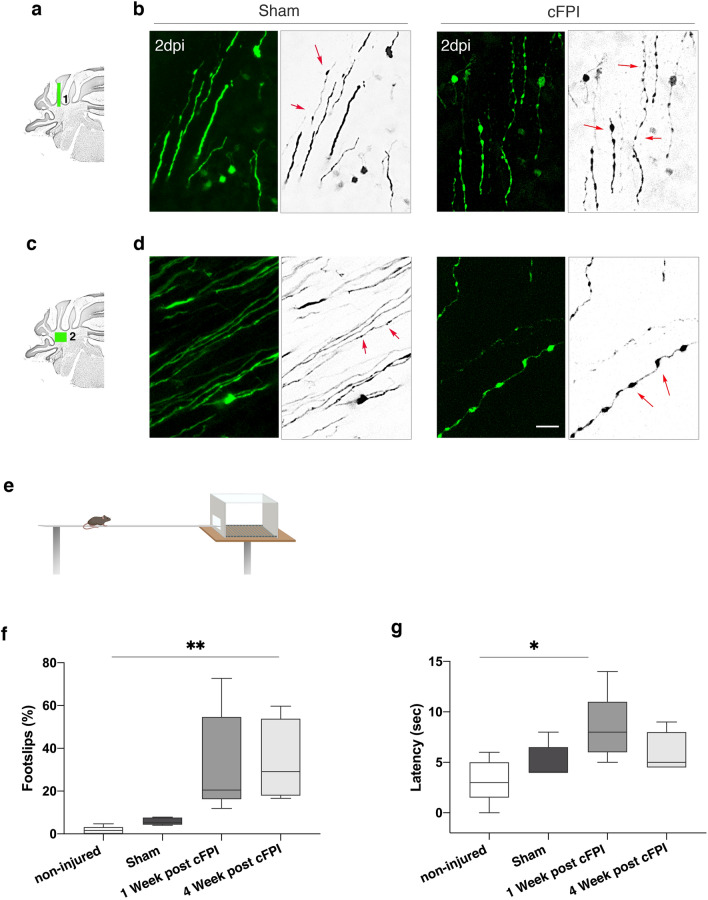
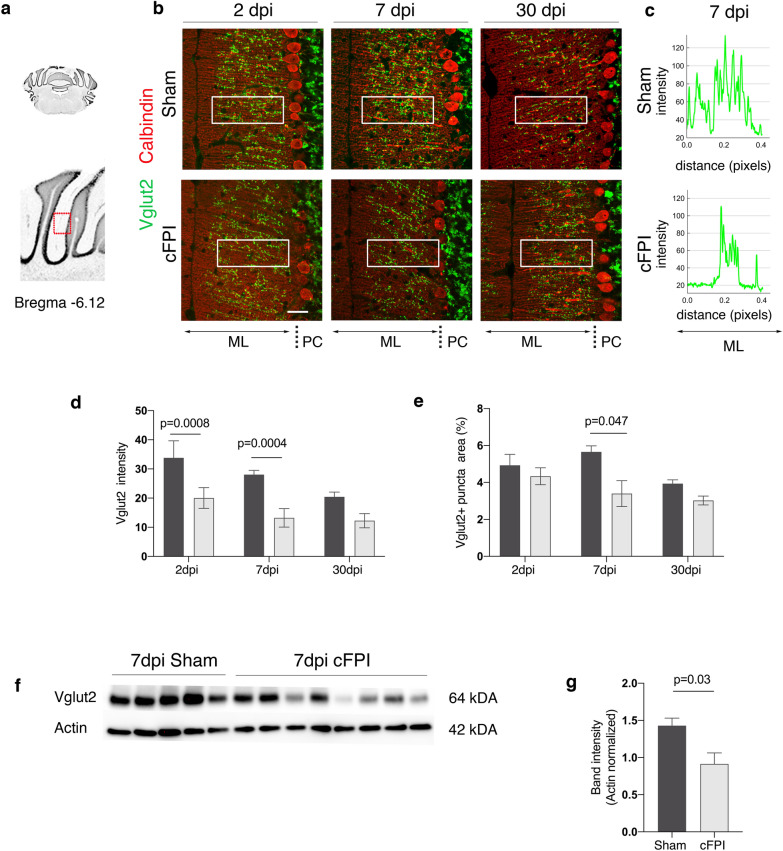
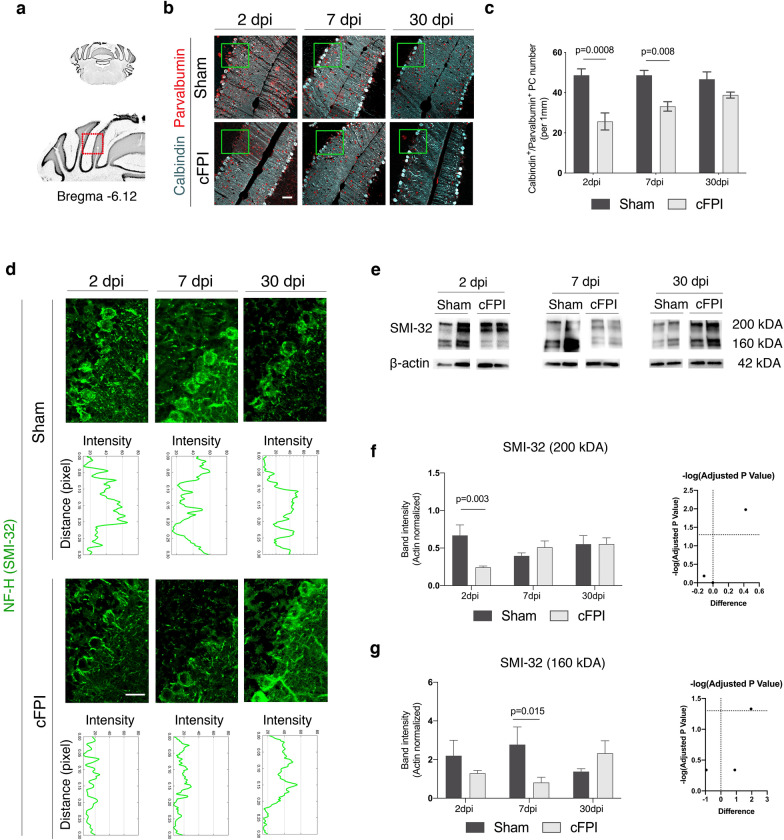
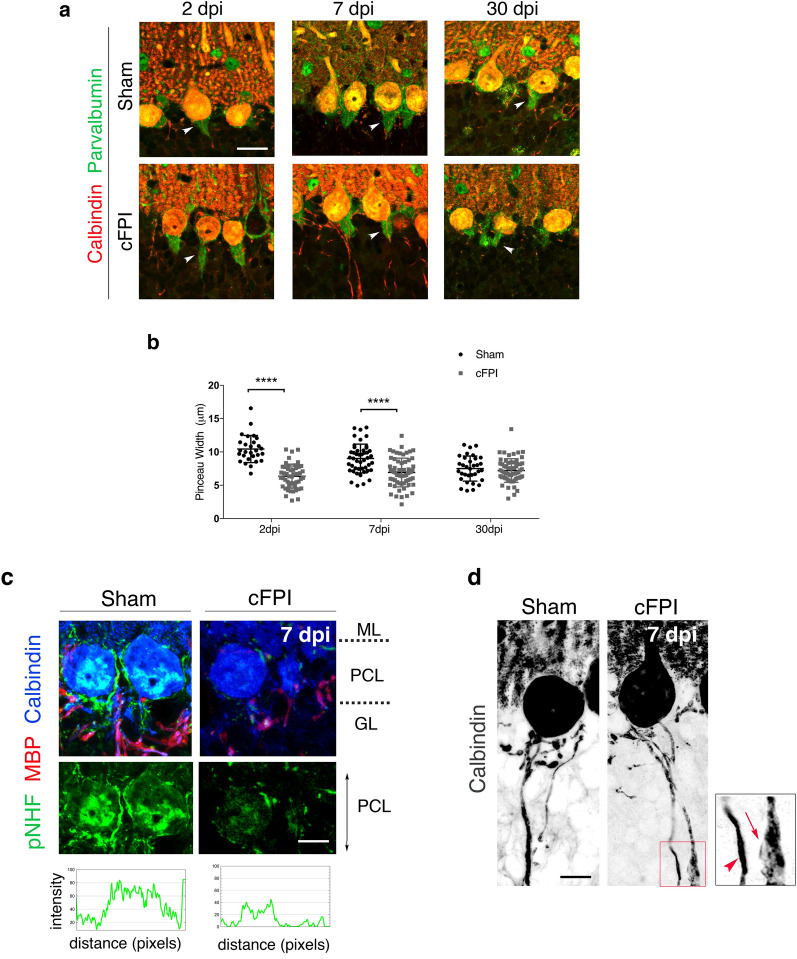
Cerebellar dysfunction is commonly observed following traumatic brain injury (TBI). While direct impact to the cerebellum by TBI is rare, cerebellar pathology may be caused by indirect injury via cortico-cerebellar pathways. To address the hypothesis that degeneration of Purkinje cells (PCs), which constitute the sole output from the cerebellum, is linked to long-range axonal injury and demyelination, we used the central fluid percussion injury (cFPI) model of widespread traumatic axonal injury in mice. Compared to controls, TBI resulted in early PC loss accompanied by alterations in the size of pinceau synapses and levels of non-phosphorylated neurofilament in PCs. A combination of vDISCO tissue clearing technique and immunohistochemistry for vesicular glutamate transporter type 2 show that diffuse TBI decreased mossy and climbing fiber synapses on PCs. At 2 days post-injury, numerous axonal varicosities were found in the cerebellum supported by fractional anisotropy measurements using 9.4 T MRI. The disruption and demyelination of the cortico-cerebellar circuits was associated with poor performance of brain-injured mice in the beam-walk test. Despite a lack of direct input from the injury site to the cerebellum, these findings argue for novel long-range mechanisms causing Purkinje cell injury that likely contribute to cerebellar dysfunction after TBI.
小脑功能障碍在创伤性脑损伤(TBI)后很常见。虽然 TBI 很少直接影响小脑,但小脑病理可能是通过皮质-小脑通路的间接损伤引起的。为了验证浦肯野细胞(PCs)退化与长程轴突损伤和脱髓鞘有关的假设,我们使用了广泛的创伤性轴突损伤的小鼠中枢性液压冲击伤(cFPI)模型。与对照组相比,TBI 导致 PC 早期丢失,同时伴有pinceau 突触大小和 PCs 中未磷酸化神经丝水平的改变。vDISCO 组织清除技术和囊泡谷氨酸转运体 2 的免疫组织化学的组合表明,弥漫性 TBI 减少了 PCs 上的苔藓纤维和攀援纤维突触。在损伤后 2 天,通过 9.4T MRI 进行各向异性分数测量,发现小脑中有许多轴突膨体。皮质-小脑回路的破坏和脱髓鞘与脑损伤小鼠在平衡木试验中的表现不佳有关。尽管损伤部位没有直接输入到小脑,但这些发现表明存在导致浦肯野细胞损伤的新的长程机制,这可能导致 TBI 后小脑功能障碍。