van der Kruk Eline, Strutton Paul, Koizia Louis J, Fertleman Michael, Reilly Peter, Bull Anthony M J
Biomechatronics & Human-Machine control, Department of Biomechanical Engineering, Faculty of Mechanical Engineering (3me), Delft University of Technology, Delft, the Netherlands.
Musculoskeletal Mechanics group, Department of Bioengineering, Faculty of Engineering, Imperial College London, London, UK.
NPJ Aging. 2022 Sep 5;8(1):13. doi: 10.1038/s41514-022-00094-x.
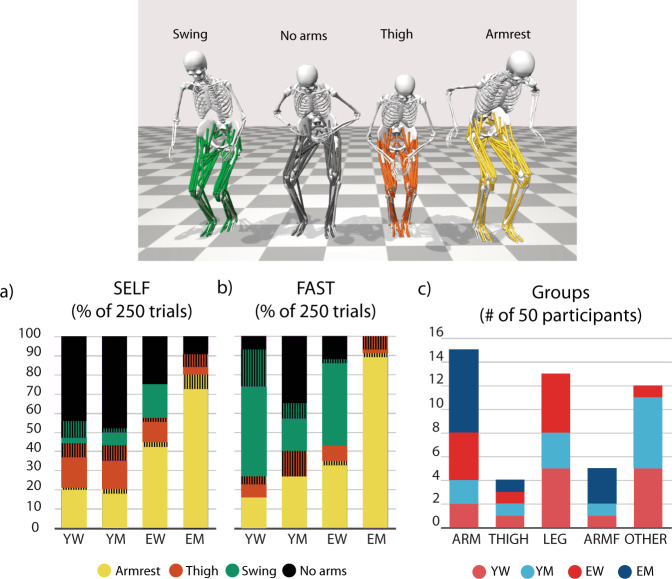
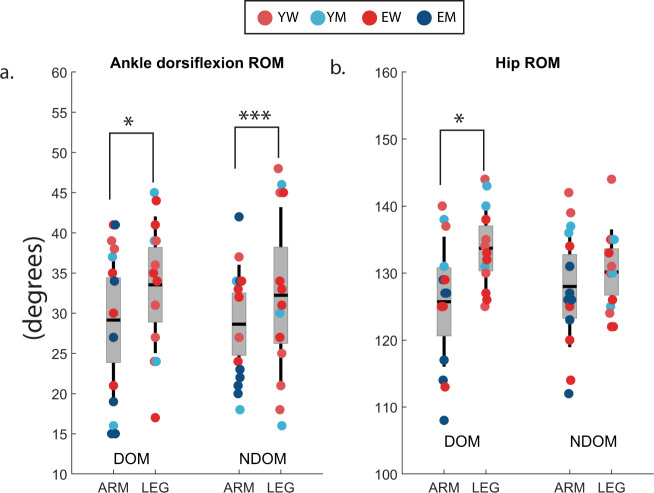
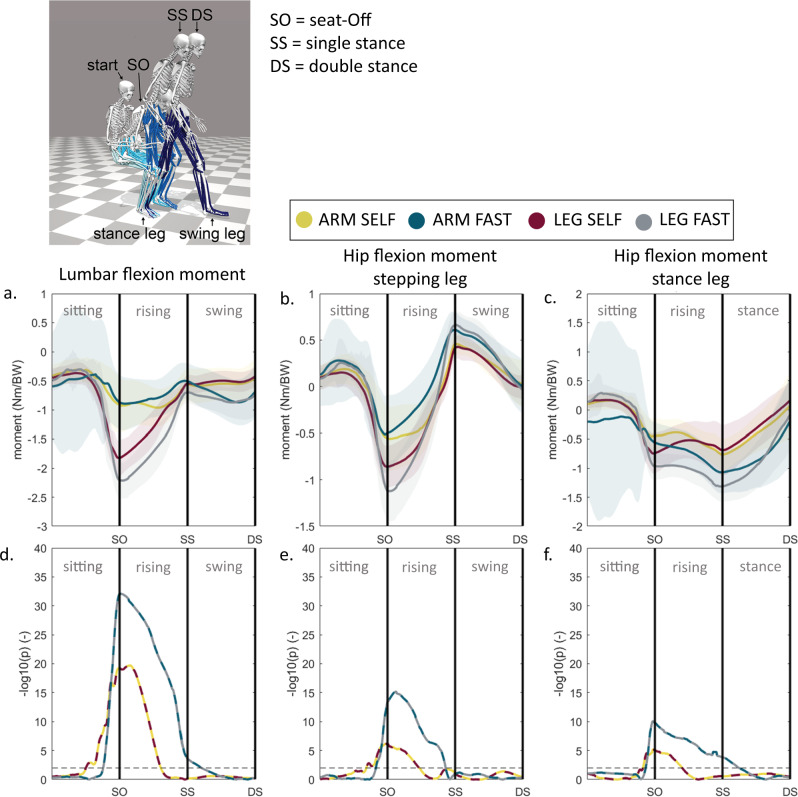
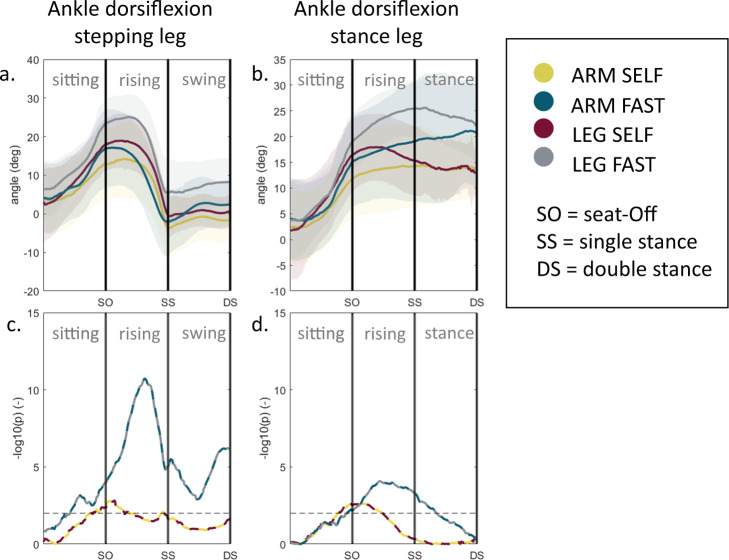
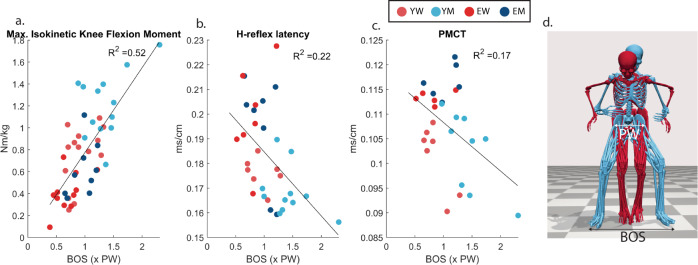
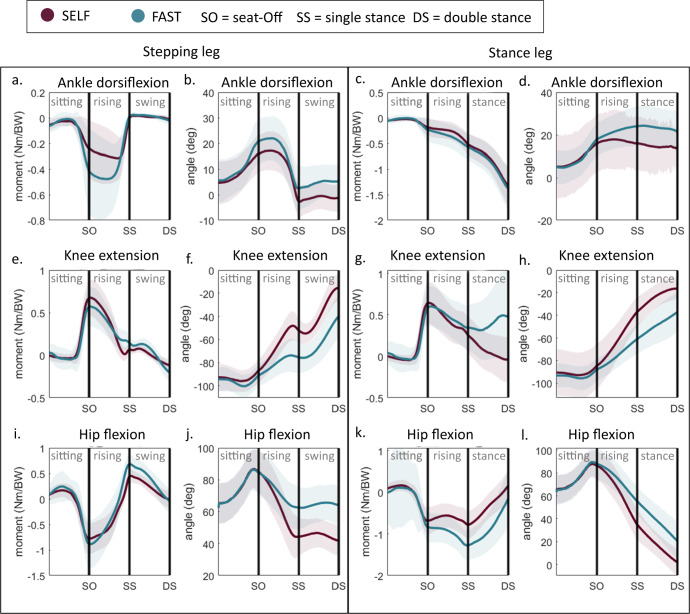
Functional motor redundancy enables humans to move with distinct muscle activation patterns while achieving a similar outcome. Since humans select similar strategies, there seems to be an optimal control. However, older adults move differently to young adults. The question is whether this is this due to an altered reinforcement scheme, altered sensory inputs, or due to alterations in the neuromusculoskeletal systems, so that it is no longer optimal or possible to execute the same movement strategies. The aim of this study was to analyse natural compensation strategies in the vital daily-life-task, sit-to-walk, in relation to neuromuscular capacity and movement objectives in younger (27.2 ± 4.6 years, N = 27, 14♀) and elderly (75.9 ± 6.3 years, N = 23, 12♀) adults. Aspects of the neuromuscular system that are prone to age-related decline and feasible to quantify were assessed (i.e. strength, nerve conductivity, fear of falling). Kinematics and muscle activity were recorded and joint kinetics were estimated using biomechanical models. Elderly men consistently used their arms when standing up. This strategy was not associated with a lack of or a reduction in strength, but with a reduction, but no lack of, ankle joint range of motion, and with increased fear of falling. The results show that humans preferentially maintain a minimum threshold of neuromuscular reserve to cope with uncertainties which results in compensation prior to coming up against physical limitations. Smaller base of support while standing up, a compensatory strategy with possibly greater risk of falls, was associated with muscular weakness, and longer nerve conduction latencies.
功能性运动冗余使人类能够以不同的肌肉激活模式进行运动,同时实现相似的结果。由于人类会选择相似的策略,似乎存在一种最优控制。然而,老年人与年轻人的运动方式不同。问题在于,这是由于强化方案改变、感觉输入改变,还是由于神经肌肉骨骼系统的改变,以至于不再能够以最优方式或根本无法执行相同的运动策略。本研究的目的是分析在重要的日常生活任务——从坐到走中,与年轻(27.2±4.6岁,N = 27,14名女性)和老年(75.9±6.3岁,N = 23,12名女性)成年人的神经肌肉能力及运动目标相关的自然补偿策略。对易于出现与年龄相关衰退且可量化的神经肌肉系统方面进行了评估(即力量、神经传导性、跌倒恐惧)。记录了运动学和肌肉活动,并使用生物力学模型估计了关节动力学。老年男性在起身时始终会使用手臂。这种策略与力量不足或减弱无关,而是与踝关节活动范围减小(但并非缺乏)以及跌倒恐惧增加有关。结果表明,人类优先维持神经肌肉储备的最低阈值以应对不确定性,这导致在遇到身体限制之前就进行补偿。起身时支撑面较小,这是一种可能具有更高跌倒风险的补偿策略,与肌肉无力以及更长的神经传导潜伏期有关。