Department of Psychiatry and Psychotherapy, Faculty of Medicine, University of Cologne, Cologne, Germany.
Department of Psychiatry and Psychotherapy, Faculty of Medicine, Technical University of Dresden, Dresden, Germany.
Transl Psychiatry. 2022 Sep 5;12(1):362. doi: 10.1038/s41398-022-02121-7.
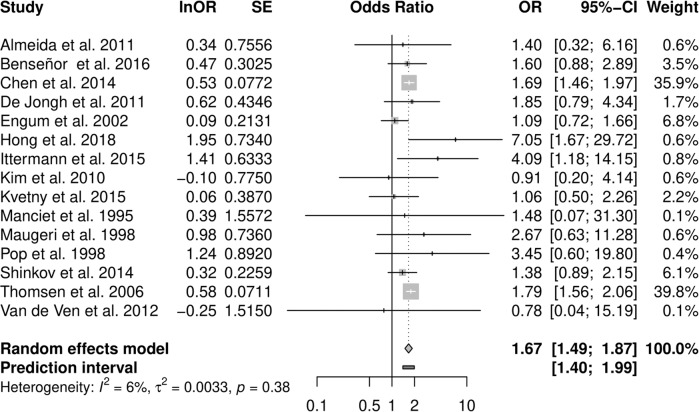
Hyperthyroidism and clinical depression are common, and there is preliminary evidence of substantial comorbidity. The extent of the association in the general population, however, has not yet been estimated meta-analytically. Therefore we conducted this systematic review and meta-analysis (registered in PROSPERO: CRD42020164791). Until May 2020, Medline (via PubMed), PsycINFO, and Embase databases were systematically searched for studies on the association of hyperthyroidism and clinical depression, without language or date restrictions. Two reviewers independently selected epidemiological studies providing laboratory or ICD-based diagnoses of hyperthyroidism and diagnoses of depression according to operationalized criteria (e.g. DSM) or to cut-offs in established rating scales. All data, including study quality based on the Newcastle-Ottawa Scale, were independently extracted by two authors. Odds ratios for the association of clinical depression and hyperthyroidism were calculated in a DerSimonian-Laird random-effects meta-analysis. Out of 3372 papers screened we selected 15 studies on 239 608 subjects, with 61% women and a mean age of 50. Relative to euthyroid individuals, patients with hyperthyroidism had a higher chance of being diagnosed with clinical depression: OR 1.67 ([95% CI: 1.49; 1.87], I: 6%; prediction interval: 1.40 to 1.99), a result supported in a number of sensitivity and subgroup analyses. The OR was slightly less pronounced for subclinical as opposed to overt hyperthyroidism (1.36 [1.06; 1.74] vs. 1.70 [1.49; 1.93]). This comorbidity calls for clinical awareness and its reasons need investigation and may include neurobiological mechanisms, common genetic vulnerability and a generally heightened risk for clinical depression in patients with chronic somatic disorders.
甲状腺功能亢进症和临床抑郁症较为常见,并且有初步证据表明两者之间存在实质性的共病现象。然而,一般人群中两者关联的程度尚未进行过荟萃分析评估。因此,我们进行了这项系统性综述和荟萃分析(在 PROSPERO 中注册:CRD42020164791)。截至 2020 年 5 月,我们系统性地检索了 Medline(通过 PubMed)、PsycINFO 和 Embase 数据库,以获取关于甲状腺功能亢进症和临床抑郁症之间关联的研究,无语言或日期限制。两位审查员独立筛选了提供实验室或基于 ICD 的甲状腺功能亢进症诊断以及根据操作性标准(例如 DSM)或既定评定量表中的切点进行的抑郁症诊断的流行病学研究。两位作者独立提取所有数据,包括基于纽卡斯尔-渥太华量表的研究质量。使用 DerSimonian-Laird 随机效应荟萃分析计算临床抑郁症与甲状腺功能亢进症关联的比值比。在筛选出的 3372 篇论文中,我们选择了 15 项研究,涉及 239608 名受试者,其中 61%为女性,平均年龄为 50 岁。与甲状腺功能正常的个体相比,甲状腺功能亢进症患者被诊断为临床抑郁症的几率更高:比值比 1.67([95%CI:1.49;1.87],I²:6%;预测区间:1.40 至 1.99),这一结果在多项敏感性和亚组分析中得到了支持。亚临床甲状腺功能亢进症与显性甲状腺功能亢进症相比,比值比略低(1.36 [1.06;1.74] 与 1.70 [1.49;1.93])。这种共病现象需要临床意识,其原因需要调查,可能包括神经生物学机制、共同的遗传易感性以及慢性躯体疾病患者中临床抑郁症的普遍风险增加。