D'Gama Alissa M, Del Rosario Maya C, Bresnahan Mairead A, Yu Timothy W, Wojcik Monica H, Agrawal Pankaj B
Neonatal Genomics Program, Division of Newborn Medicine, Boston Children's Hospital, Boston, MA, USA.
Epilepsy Genetics Program, Division of Epilepsy and Neurophysiology, Department of Neurology, Boston Children's Hospital, Boston, MA, USA.
NPJ Genom Med. 2022 Sep 5;7(1):51. doi: 10.1038/s41525-022-00326-9.
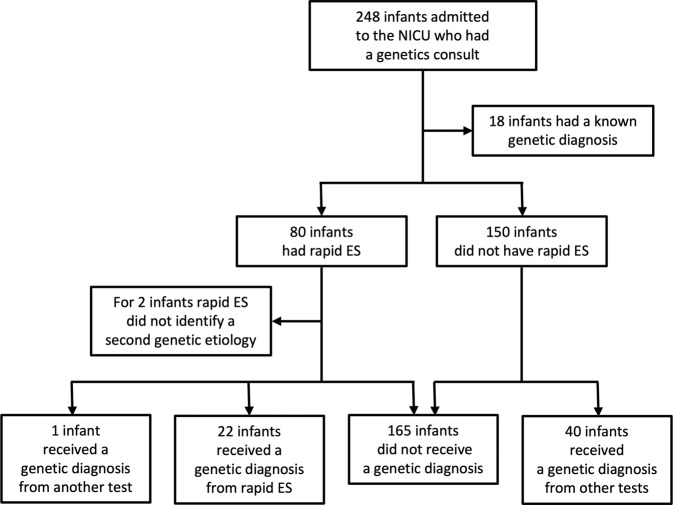
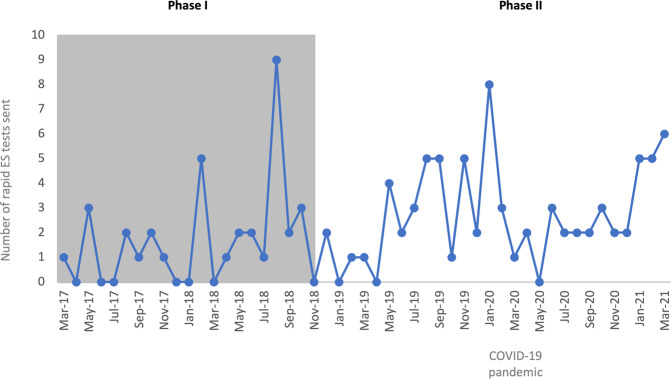
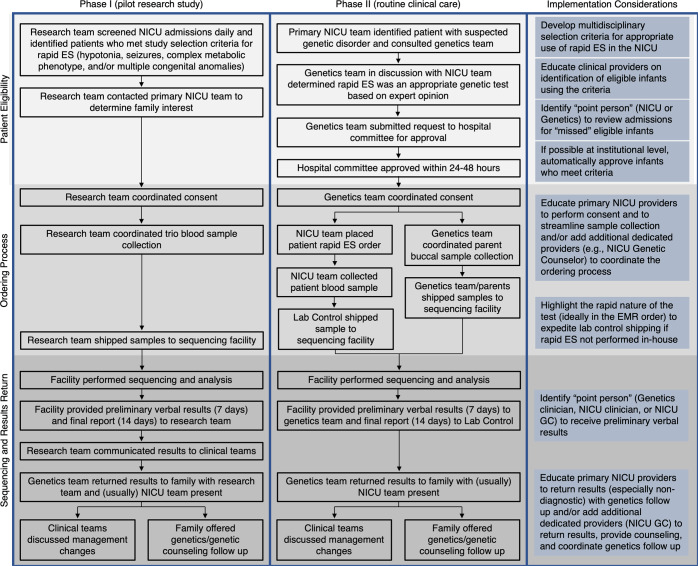
Genomic sequencing is a powerful diagnostic tool in critically ill infants, but performing exome or genome sequencing (ES/GS) in the context of a research study is different from implementing these tests clinically. We investigated the integration of rapid ES into routine clinical care after a pilot research study in a Level IV Neonatal Intensive Care Unit (NICU). We performed a retrospective cohort analysis of infants admitted with suspected genetic disorders to the NICU from December 1, 2018 to March 31, 2021 and compared results to those obtained from a previous research study cohort (March 1, 2017 to November 30, 2018). Clinical rapid ES was performed in 80/230 infants (35%) with a suspected genetic disorder and identified a genetic diagnosis in 22/80 infants (28%). The majority of diagnoses acutely impacted clinical management (14/22 (64%)). Compared to the previous research study, clinically integrated rapid ES had a significantly lower diagnostic yield and increased time from NICU admission and genetics consult to ES report, but identified four genetic diagnoses that may have been missed by the research study selection criteria. Compared to other genetic tests, rapid ES had similar or higher diagnostic yield and similar or decreased time to result. Overall, rapid ES was utilized in the NICU after the pilot research study, often as the first-tier sequencing test, and could identify the majority of disease-causing variants, shorten the diagnostic odyssey, and impact clinical care. Based on our experience, we have identified strategies to optimize the clinical implementation of rapid ES in the NICU.
基因组测序是危重症婴儿的一种强大诊断工具,但在研究背景下进行外显子组或基因组测序(ES/GS)与临床应用这些检测有所不同。我们在一家四级新生儿重症监护病房(NICU)进行试点研究后,调查了快速ES纳入常规临床护理的情况。我们对2018年12月1日至2021年3月31日入住NICU且疑似患有遗传疾病的婴儿进行了回顾性队列分析,并将结果与之前研究队列(2017年3月1日至2018年11月30日)获得的结果进行比较。在80/230名(35%)疑似患有遗传疾病的婴儿中进行了临床快速ES检测,在22/80名(28%)婴儿中确定了基因诊断。大多数诊断对临床管理产生了急性影响(14/22(64%))。与之前的研究相比,临床整合的快速ES诊断率显著降低,从NICU入院和基因咨询到ES报告的时间增加,但确定了四个可能因研究选择标准而被遗漏的基因诊断。与其他基因检测相比,快速ES的诊断率相似或更高,得出结果的时间相似或减少。总体而言,在试点研究后,NICU使用了快速ES,通常作为一线测序检测,并且可以识别大多数致病变异,缩短诊断过程,并影响临床护理。基于我们的经验,我们确定了优化NICU中快速ES临床应用的策略。