Julius Center for Health Sciences and Primary Care, University Medical Center Utrecht, Utrecht University, Utrecht, Netherlands.
Department of Human Genetics, Radboud University Medical Center, Radboud Institute for Health Sciences, Nijmegen, Netherlands.
Eur J Pediatr. 2023 Jun;182(6):2683-2692. doi: 10.1007/s00431-023-04909-1. Epub 2023 Mar 31.
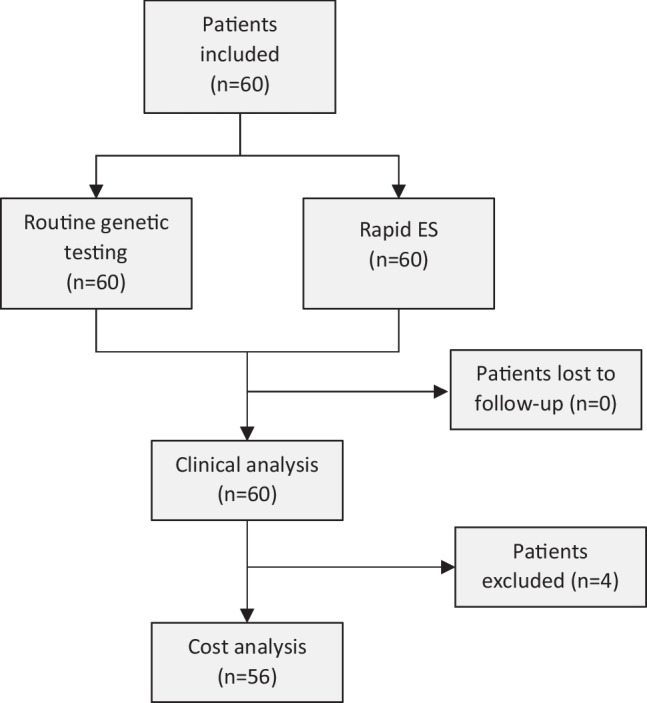
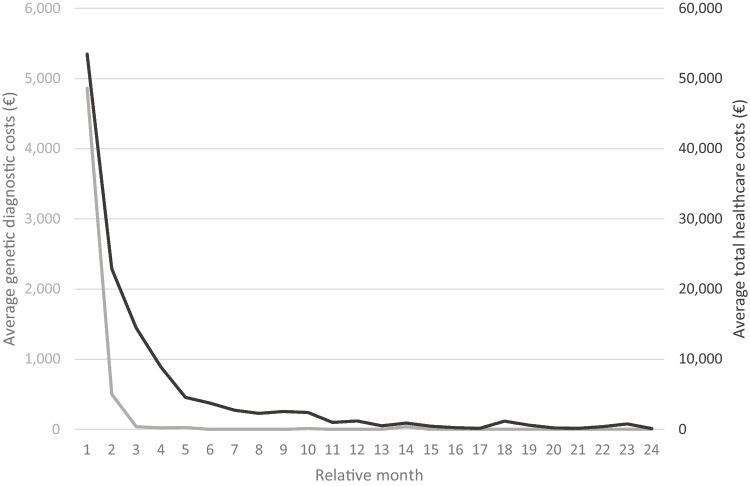
The introduction of rapid exome sequencing (rES) for critically ill neonates admitted to the neonatal intensive care unit has made it possible to impact clinical decision-making. Unbiased prospective studies to quantify the impact of rES over routine genetic testing are, however, scarce. We performed a clinical utility study to compare rES to conventional genetic diagnostic workup for critically ill neonates with suspected genetic disorders. In a multicenter prospective parallel cohort study involving five Dutch NICUs, we performed rES in parallel to routine genetic testing for 60 neonates with a suspected genetic disorder and monitored diagnostic yield and the time to diagnosis. To assess the economic impact of rES, healthcare resource use was collected for all neonates. rES detected more conclusive genetic diagnoses than routine genetic testing (20% vs. 10%, respectively), in a significantly shorter time to diagnosis (15 days (95% CI 10-20) vs. 59 days (95% CI 23-98, p < 0.001)). Moreover, rES reduced genetic diagnostic costs by 1.5% (€85 per neonate).
Our findings demonstrate the clinical utility of rES for critically ill neonates based on increased diagnostic yield, shorter time to diagnosis, and net healthcare savings. Our observations warrant the widespread implementation of rES as first-tier genetic test in critically ill neonates with disorders of suspected genetic origin.
• Rapid exome sequencing (rES) enables diagnosing rare genetic disorders in a fast and reliable manner, but retrospective studies with neonates admitted to the neonatal intensive care unit (NICU) indicated that genetic disorders are likely underdiagnosed as rES is not routinely used. • Scenario modeling for implementation of rES for neonates with presumed genetic disorders indicated an expected increase in costs associated with genetic testing.
• This unique prospective national clinical utility study of rES in a NICU setting shows that rES obtained more and faster diagnoses than conventional genetic tests. • Implementation of rES as replacement for all other genetic tests does not increase healthcare costs but in fact leads to a reduction in healthcare costs.
探讨快速外显子组测序(rES)在危重新生儿重症监护病房(NICU)中的应用对临床决策的影响。然而,目前缺乏关于 rES 对常规遗传检测影响的无偏前瞻性研究。本研究旨在比较 rES 与常规遗传诊断在疑似遗传疾病危重新生儿中的临床应用价值。
本研究为多中心前瞻性平行队列研究,纳入荷兰 5 家 NICU 的 60 例疑似遗传疾病的危重新生儿,在进行常规遗传检测的同时平行进行 rES,并监测诊断结果和时间。为评估 rES 的经济影响,收集了所有新生儿的医疗资源使用情况。
rES 比常规遗传检测能更明确地诊断出遗传疾病(20%比 10%),诊断时间也明显缩短(15 天(95%CI 10-20)比 59 天(95%CI 23-98,p<0.001))。此外,rES 还降低了 1.5%的遗传诊断费用(每个新生儿 85 欧元)。
本研究结果表明,rES 对危重新生儿具有较高的诊断效能,能缩短诊断时间,节省医疗费用。我们的观察结果支持在具有疑似遗传病因的危重新生儿中广泛应用 rES 作为一线遗传检测方法。
快速外显子组测序(rES)可以快速可靠地诊断罕见的遗传疾病,但针对 NICU 中新生儿的回顾性研究表明,遗传疾病的诊断可能不足,因为 rES 尚未常规应用。针对疑似遗传疾病新生儿实施 rES 的情景建模表明,遗传检测相关费用预计会增加。
本研究为 NICU 环境中 rES 的前瞻性临床应用研究,结果表明 rES 比常规遗传检测获得更多更快的诊断结果。rES 替代所有其他遗传检测并不会增加医疗费用,反而会降低医疗费用。