Department of Biochemistry and Molecular Biology, Graduate School and Faculty of Medicine, The University of Tokyo, Tokyo, Japan.
Department of Molecular Oncology, Institute for Advanced Medical Sciences, Nippon Medical School, Tokyo, Japan.
J Cell Biol. 2022 Oct 3;221(10). doi: 10.1083/jcb.202203102. Epub 2022 Sep 6.
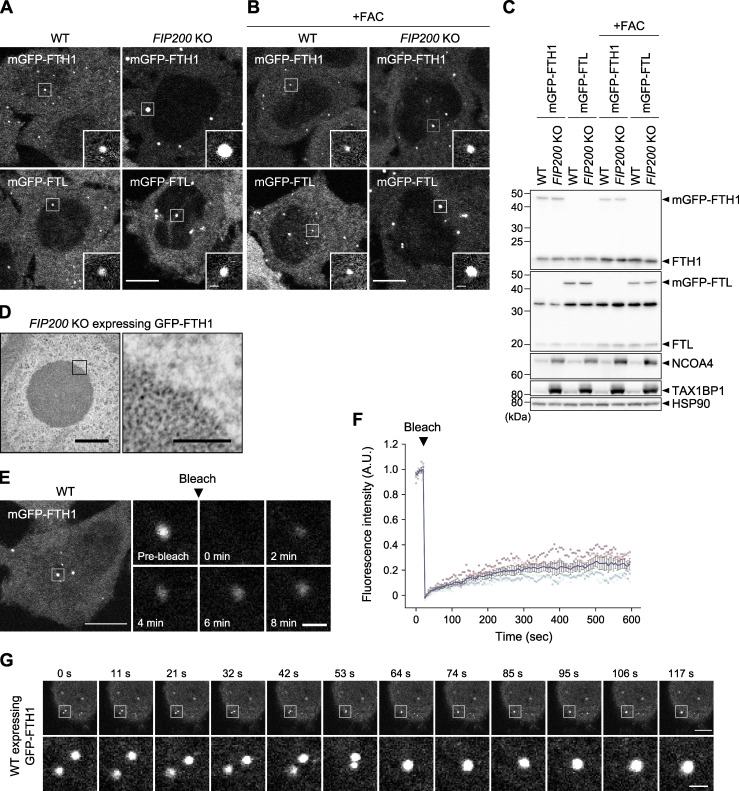
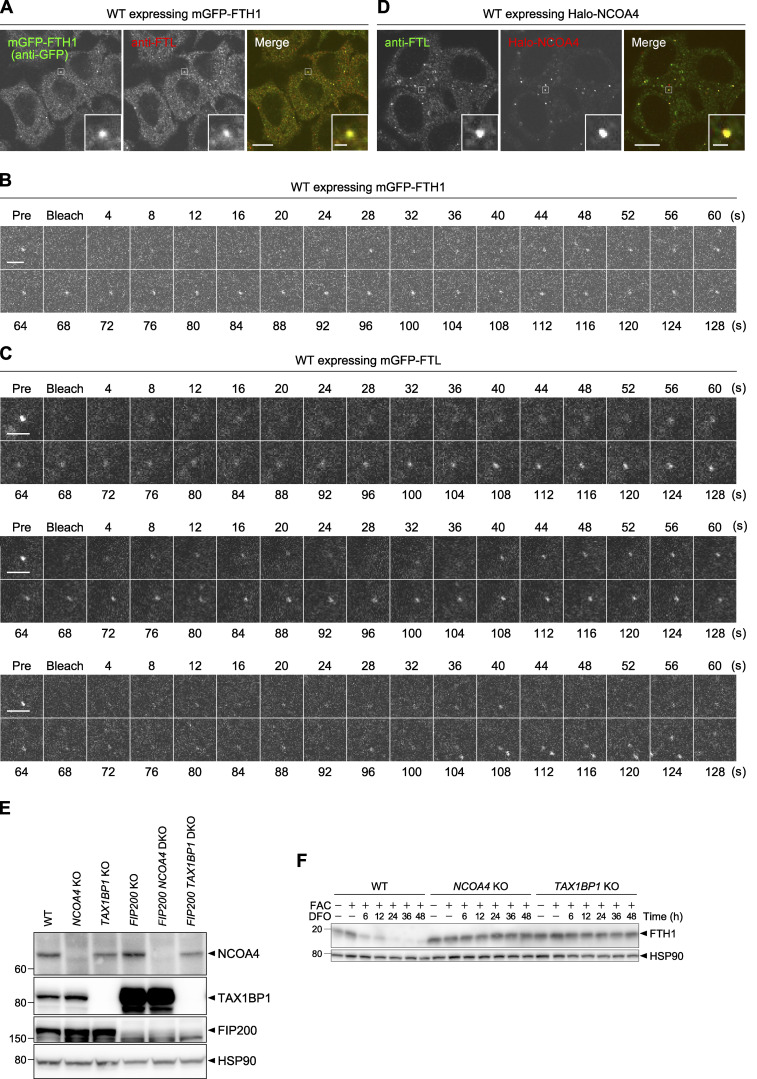
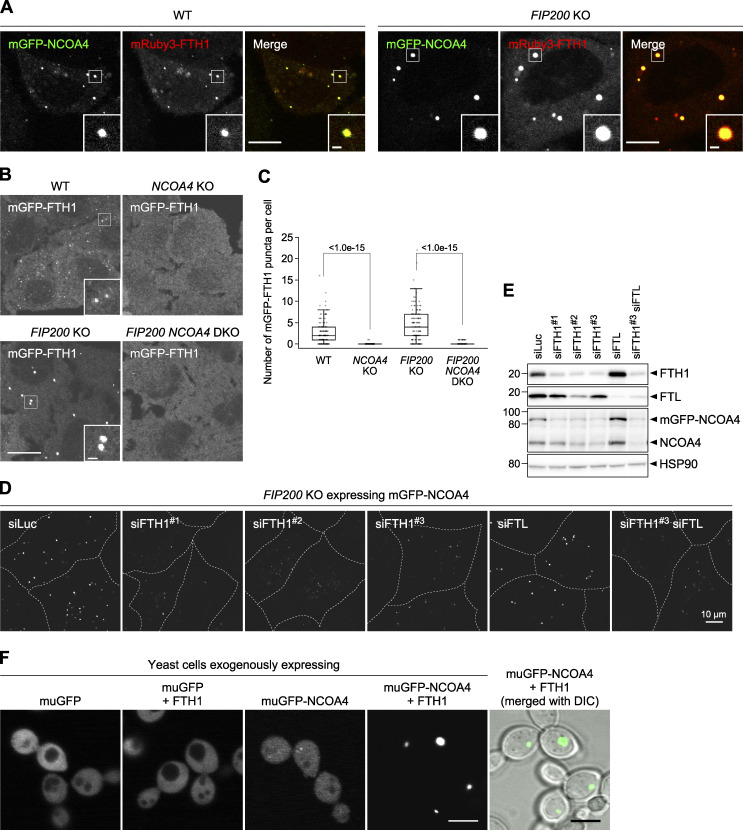
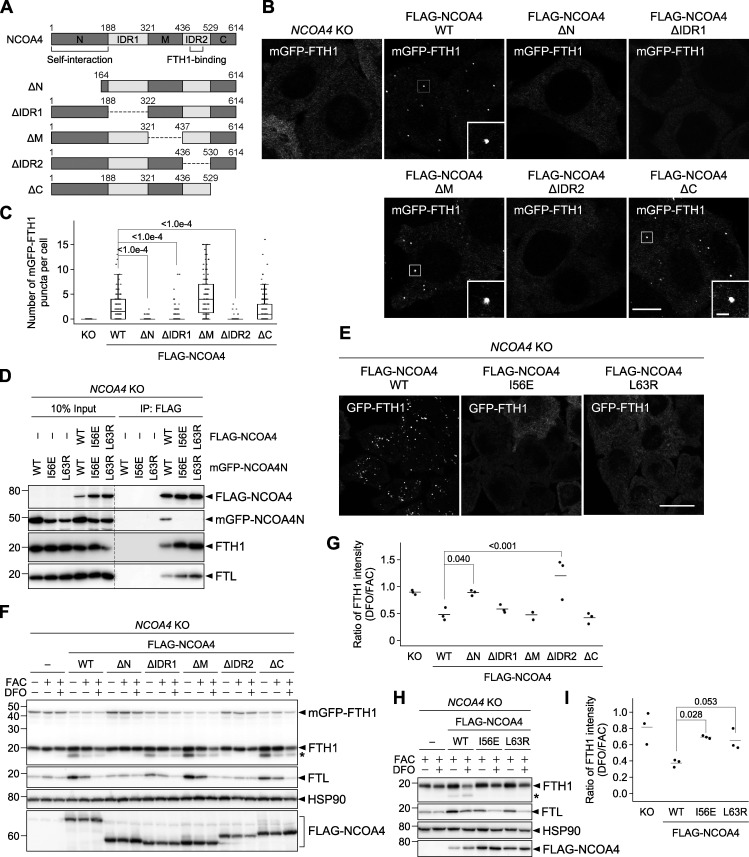
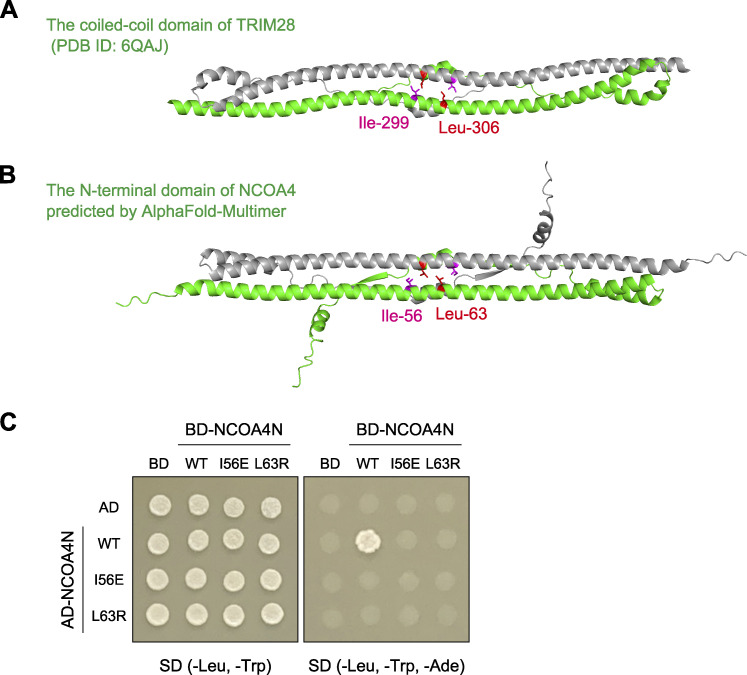
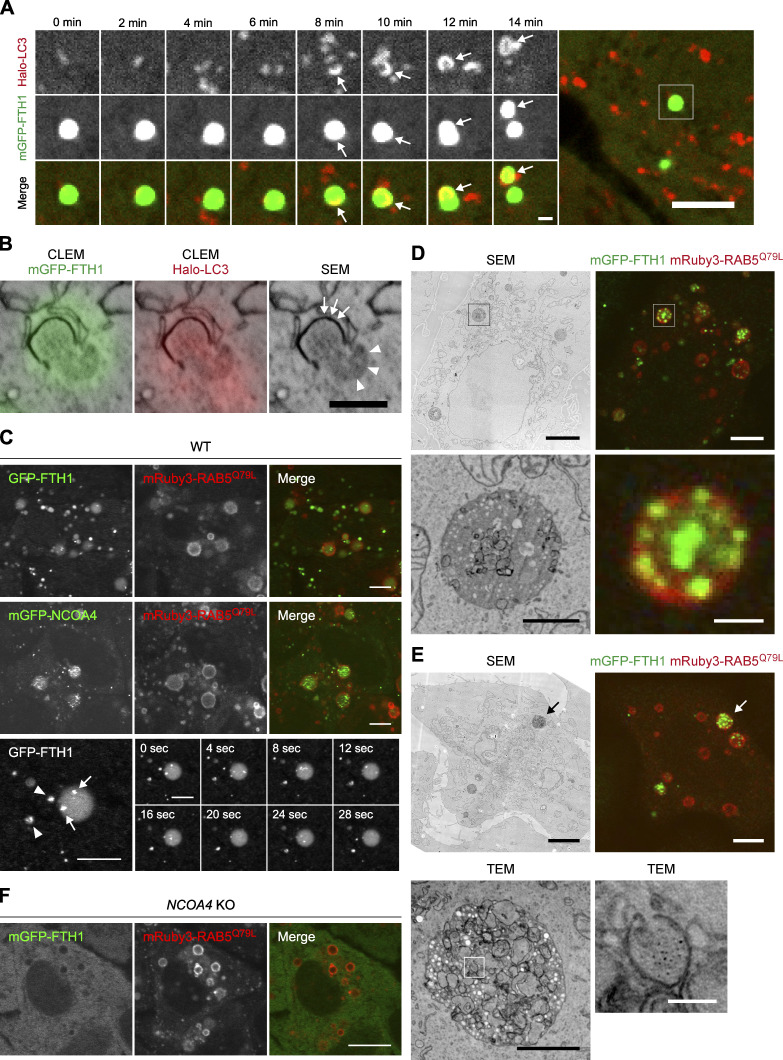
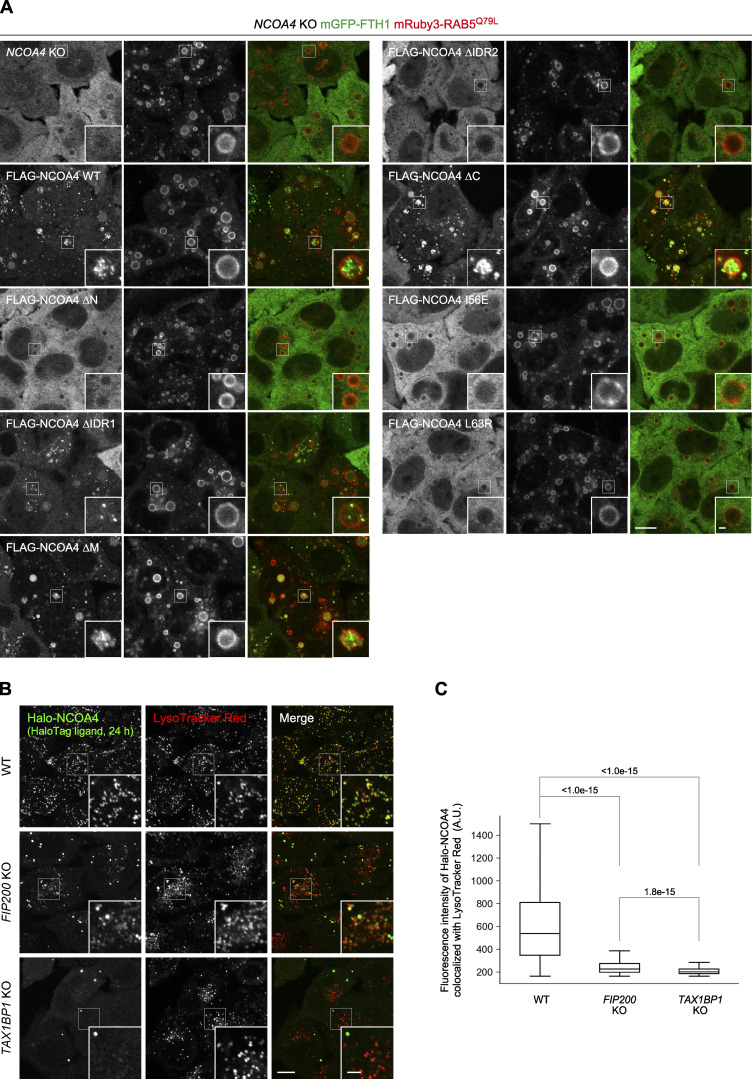
A ferritin particle consists of 24 ferritin proteins (FTH1 and FTL) and stores iron ions within it. During iron deficiency, ferritin particles are transported to lysosomes to release iron ions. Two transport pathways have been reported: macroautophagy and ESCRT-dependent endosomal microautophagy. Although the membrane dynamics of these pathways differ, both require NCOA4, which is thought to be an autophagy receptor for ferritin. However, it is unclear whether NCOA4 only acts as an autophagy receptor in ferritin degradation. Here, we found that ferritin particles form liquid-like condensates in a NCOA4-dependent manner. Homodimerization of NCOA4 and interaction between FTH1 and NCOA4 (i.e., multivalent interactions between ferritin particles and NCOA4) were required for the formation of ferritin condensates. Disruption of these interactions impaired ferritin degradation. Time-lapse imaging and three-dimensional correlative light and electron microscopy revealed that these ferritin-NCOA4 condensates were directly engulfed by autophagosomes and endosomes. In contrast, TAX1BP1 was not required for the formation of ferritin-NCOA4 condensates but was required for their incorporation into autophagosomes and endosomes. These results suggest that NCOA4 acts not only as a canonical autophagy receptor but also as a driver to form ferritin condensates to facilitate the degradation of these condensates by macroautophagy (i.e., macroferritinophagy) and endosomal microautophagy (i.e., microferritinophagy).
一个铁蛋白颗粒由 24 个铁蛋白蛋白(FTH1 和 FTL)组成,并在其中储存铁离子。在缺铁时,铁蛋白颗粒被运送到溶酶体以释放铁离子。已经报道了两种运输途径:巨自噬和 ESCRT 依赖性内体微自噬。虽然这些途径的膜动力学不同,但都需要 NCOA4,它被认为是铁蛋白的自噬受体。然而,尚不清楚 NCOA4 是否仅作为铁蛋白降解的自噬受体发挥作用。在这里,我们发现铁蛋白颗粒以 NCOA4 依赖的方式形成液态凝聚物。NCOA4 的同源二聚化以及 FTH1 和 NCOA4 之间的相互作用(即铁蛋白颗粒和 NCOA4 之间的多价相互作用)是形成铁蛋白凝聚物所必需的。这些相互作用的破坏会损害铁蛋白的降解。延时成像和三维共聚焦光电子显微镜显示,这些铁蛋白-NCOA4 凝聚物被自噬体和内体直接吞噬。相比之下,TAX1BP1 不需要形成铁蛋白-NCOA4 凝聚物,但需要将其纳入自噬体和内体中。这些结果表明,NCOA4 不仅作为经典的自噬受体发挥作用,而且作为形成铁蛋白凝聚物的驱动子,以促进这些凝聚物通过巨自噬(即巨铁蛋白自噬)和内体微自噬(即微铁蛋白自噬)的降解。