Department of Immunology, University Hospital Zurich, Zurich, Switzerland.
Faculty of Medicine, University of Zurich, Zurich, Switzerland.
Allergy. 2022 Dec;77(12):3567-3583. doi: 10.1111/all.15505. Epub 2022 Sep 16.
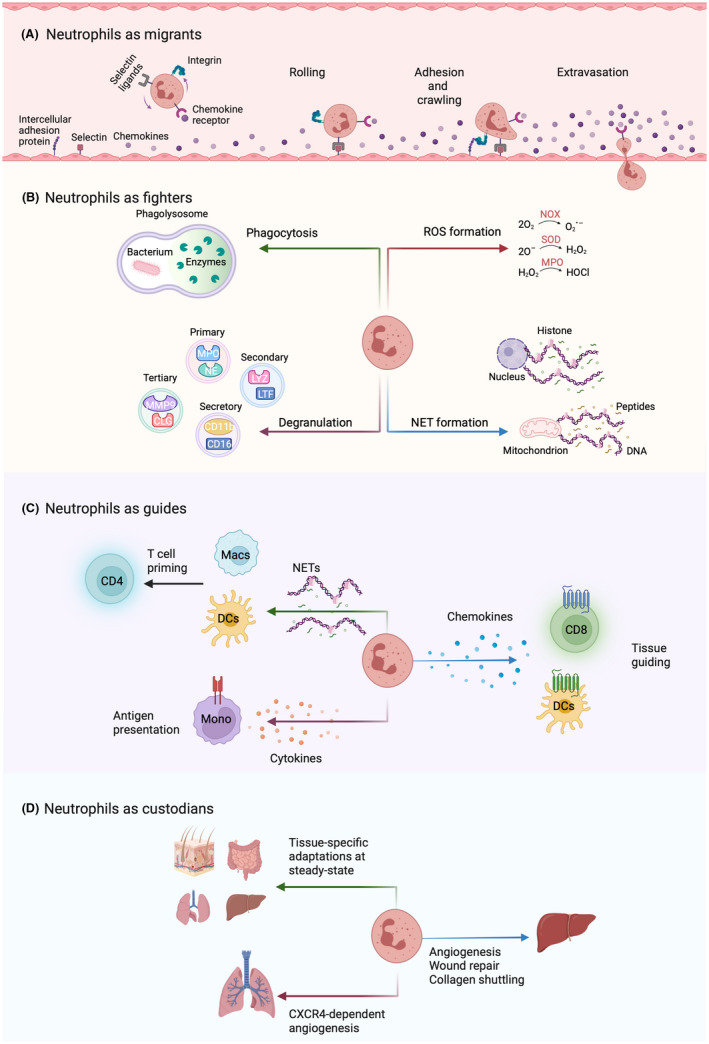
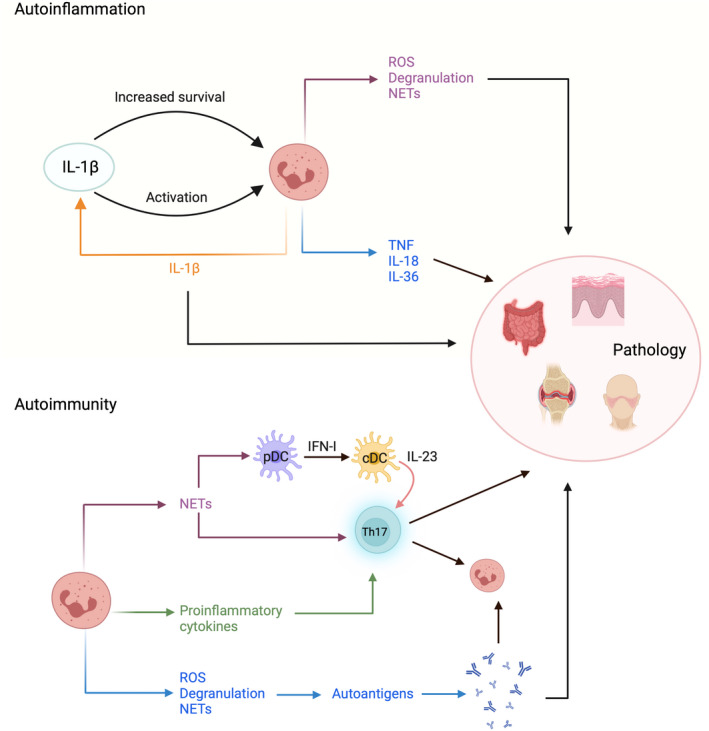
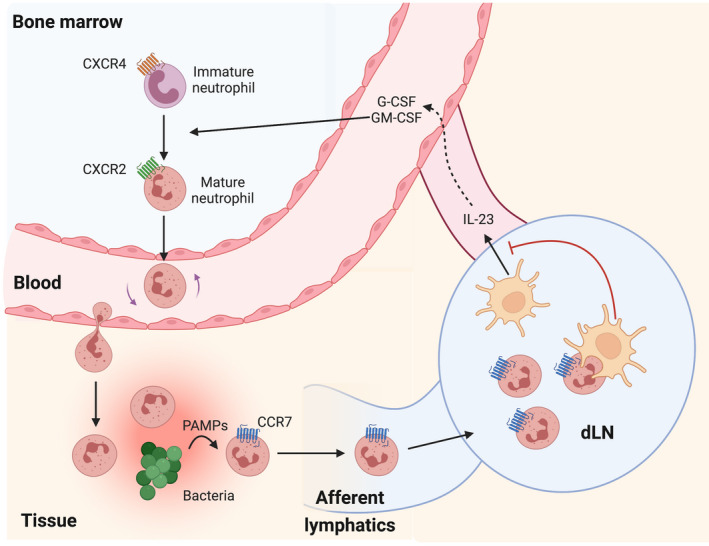
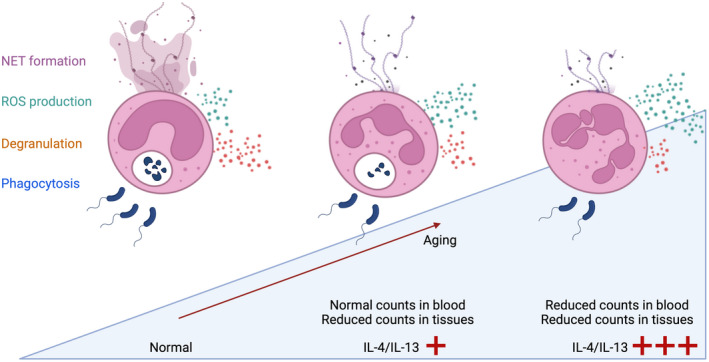
Neutrophil granulocytes, or neutrophils, are the most abundant circulating leukocytes in humans and indispensable for antimicrobial immunity, as exemplified in patients with inborn and acquired defects of neutrophils. Neutrophils were long regarded as the foot soldiers of the immune system, solely destined to execute a set of effector functions against invading pathogens before undergoing apoptosis, the latter of which was ascribed to their short life span. This simplistic understanding of neutrophils has now been revised on the basis of insights gained from the use of mouse models and single-cell high-throughput techniques, revealing tissue- and context-specific roles of neutrophils in guiding immune responses. These studies also demonstrated that neutrophil responses were controlled by sophisticated feedback mechanisms, including directed chemotaxis of neutrophils to tissue-draining lymph nodes resulting in modulation of antimicrobial immunity and inflammation. Moreover, findings in mice and humans showed that neutrophil responses adapted to different deterministic cytokine signals, which controlled their migration and effector function as well as, notably, their biologic clock by affecting the kinetics of their aging. These mechanistic insights have important implications for health and disease in humans, particularly, in allergic diseases, such as atopic dermatitis and allergic asthma bronchiale, as well as in autoinflammatory and autoimmune diseases. Hence, our improved understanding of neutrophils sheds light on novel therapeutic avenues, focusing on molecularly defined biologic agents.
中性粒细胞,或称为中性粒细胞,是人类循环白细胞中最丰富的一种,对于抗菌免疫是不可或缺的,这在先天和后天中性粒细胞缺陷的患者中得到了例证。中性粒细胞长期以来被视为免疫系统的步兵,仅仅注定要在凋亡之前执行一系列针对入侵病原体的效应功能,后者归因于它们的短寿命。这种对中性粒细胞的简单理解现在已经根据从使用小鼠模型和单细胞高通量技术中获得的见解进行了修订,揭示了中性粒细胞在指导免疫反应方面的组织和特定背景的作用。这些研究还表明,中性粒细胞反应受到复杂的反馈机制的控制,包括中性粒细胞向引流淋巴结的定向趋化性,从而调节抗菌免疫和炎症。此外,在小鼠和人类中的研究结果表明,中性粒细胞反应适应于不同的确定性细胞因子信号,这些信号控制它们的迁移和效应功能,以及特别地,通过影响它们衰老的动力学来控制它们的生物钟。这些机制上的见解对于人类的健康和疾病具有重要意义,特别是在过敏疾病(如特应性皮炎和过敏性哮喘支气管)以及自身炎症和自身免疫性疾病中。因此,我们对中性粒细胞的理解的提高揭示了新的治疗途径,重点是分子定义的生物制剂。