Institute of Regenerative Biology and Medicine, Helmholtz Zentrum München Deutsches Forschungszentrum für Gesundheit und Umwelt (GmbH), München, Germany.
Hubrecht Institute,, Developmental Biology and Stem Cell Research, Utrecht, the Netherlands.
Nat Immunol. 2022 Apr;23(4):518-531. doi: 10.1038/s41590-022-01166-6. Epub 2022 Mar 30.
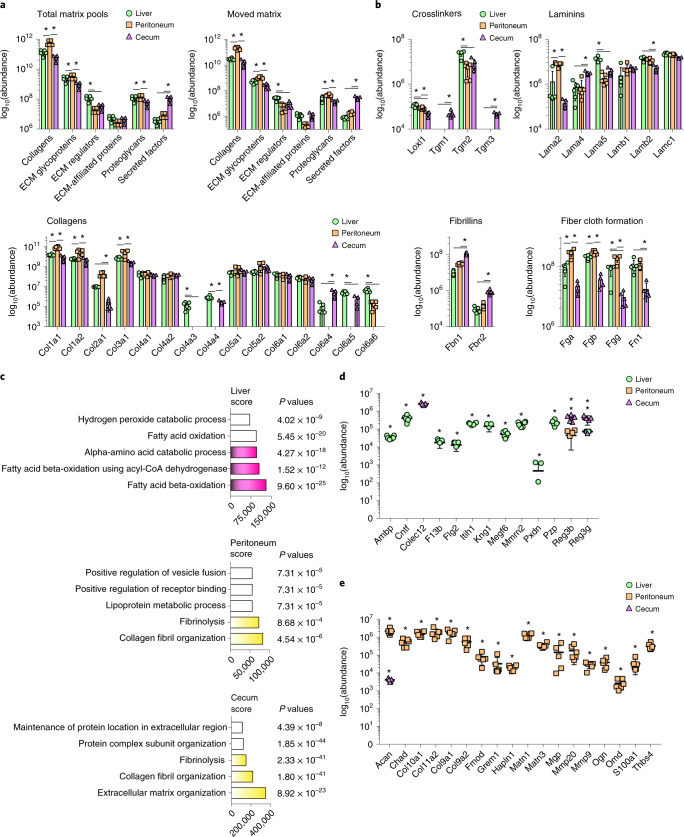
Internal organs heal injuries with new connective tissue, but the cellular and molecular events of this process remain obscure. By tagging extracellular matrix around the mesothelium lining in mouse peritoneum, liver and cecum, here we show that preexisting matrix was transferred across organs into wounds in various injury models. Using proteomics, genetic lineage-tracing and selective injury in juxtaposed organs, we found that the tissue of origin for the transferred matrix likely dictated the scarring or regeneration of the healing tissue. Single-cell RNA sequencing and genetic and chemical screens indicated that the preexisting matrix was transferred by neutrophils dependent on the HSF-integrin AM/B2-kindlin3 cascade. Pharmacologic inhibition of this axis prevented matrix transfer and the formation of peritoneal adhesions. Matrix transfer was thus an early event of wound repair and provides a therapeutic window to dampen scaring across a range of conditions.
内脏器官用新的结缔组织来修复损伤,但这一过程中的细胞和分子事件仍不清楚。通过标记小鼠腹膜、肝脏和盲肠间皮衬里周围的细胞外基质,我们在这里表明,预先存在的基质被转移到各种损伤模型中的伤口中。通过蛋白质组学、遗传谱系追踪和毗邻器官的选择性损伤,我们发现转移基质的组织来源可能决定了愈合组织的瘢痕形成或再生。单细胞 RNA 测序以及基因和化学筛选表明,预先存在的基质是由中性粒细胞依赖于热休克因子-整合素 AM/B2-韧黏蛋白 3 级联转移的。该轴的药理学抑制阻止了基质转移和腹膜粘连的形成。因此,基质转移是伤口修复的早期事件,并为在多种情况下抑制瘢痕形成提供了一个治疗窗口。