Cambridge, Public Health, 2152University of Cambridge, Cambridge, UK.
Centre for Research in Public Health and Community, 3769University of Hertfordshire, Hatfield, UK.
Dementia (London). 2022 Nov;21(8):2381-2401. doi: 10.1177/14713012221106634. Epub 2022 Sep 6.
In the context of a growing number of dementia friendly communities (DFCs) globally, a need remains for robust evaluation, and for tools to capture relevant evidence. This paper reports the development of a suite of evaluation resources for DFCs through a national study in England.
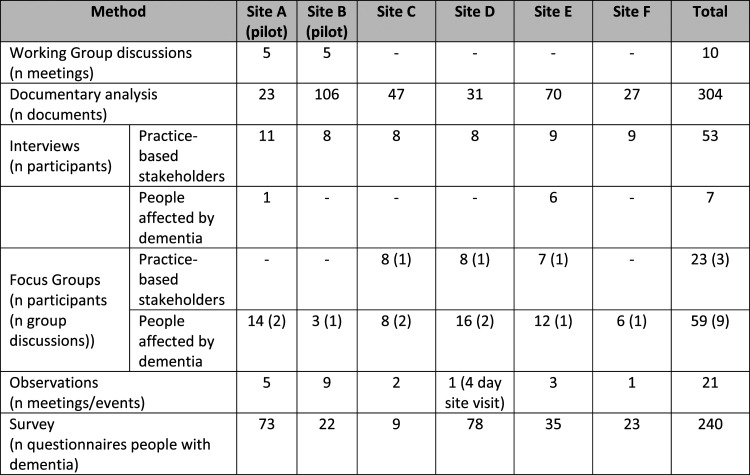
Fieldwork took place in six diverse case study sites across England. A mixed methods design was adopted that entailed documentary analysis, focus groups, interviews, observations, and a survey. Participants were people affected by dementia and practice-based stakeholders. A national stakeholder workshop was held to obtain input beyond the research sites. A workshop at the end of the study served to check the resonance of the findings and emerging outputs with stakeholders from the case study DFCs.
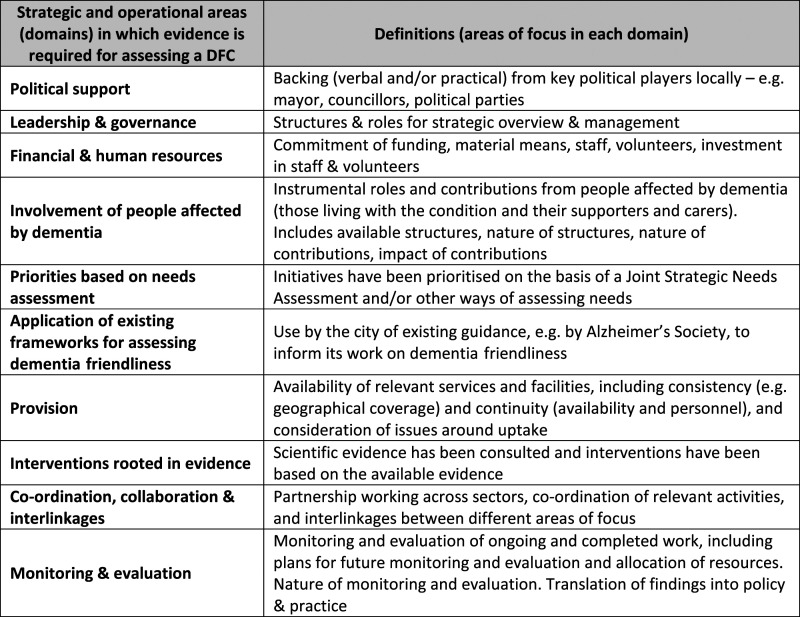
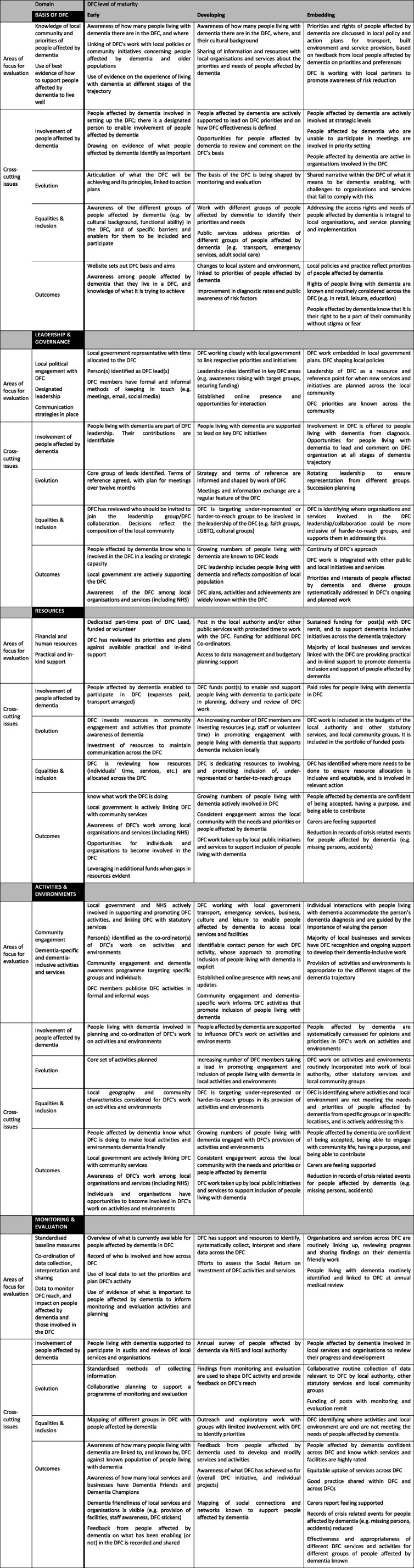
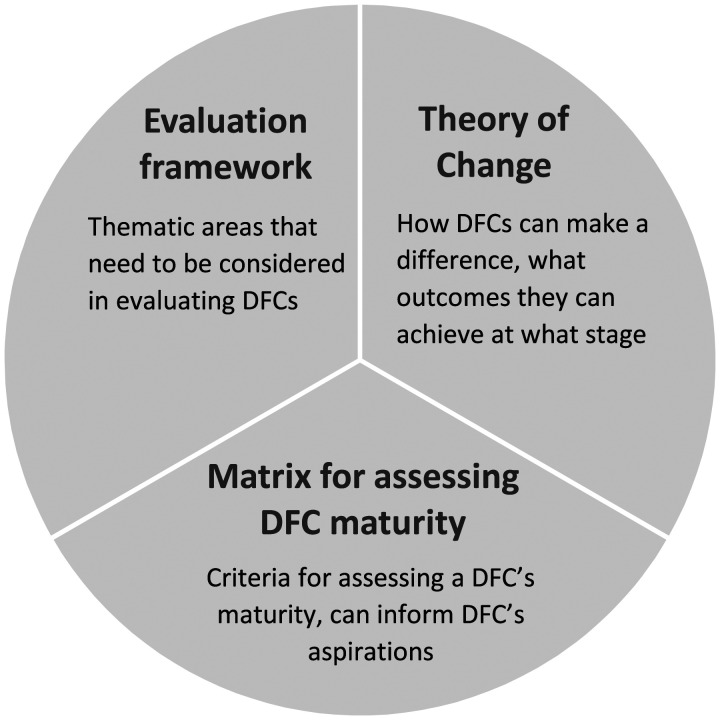
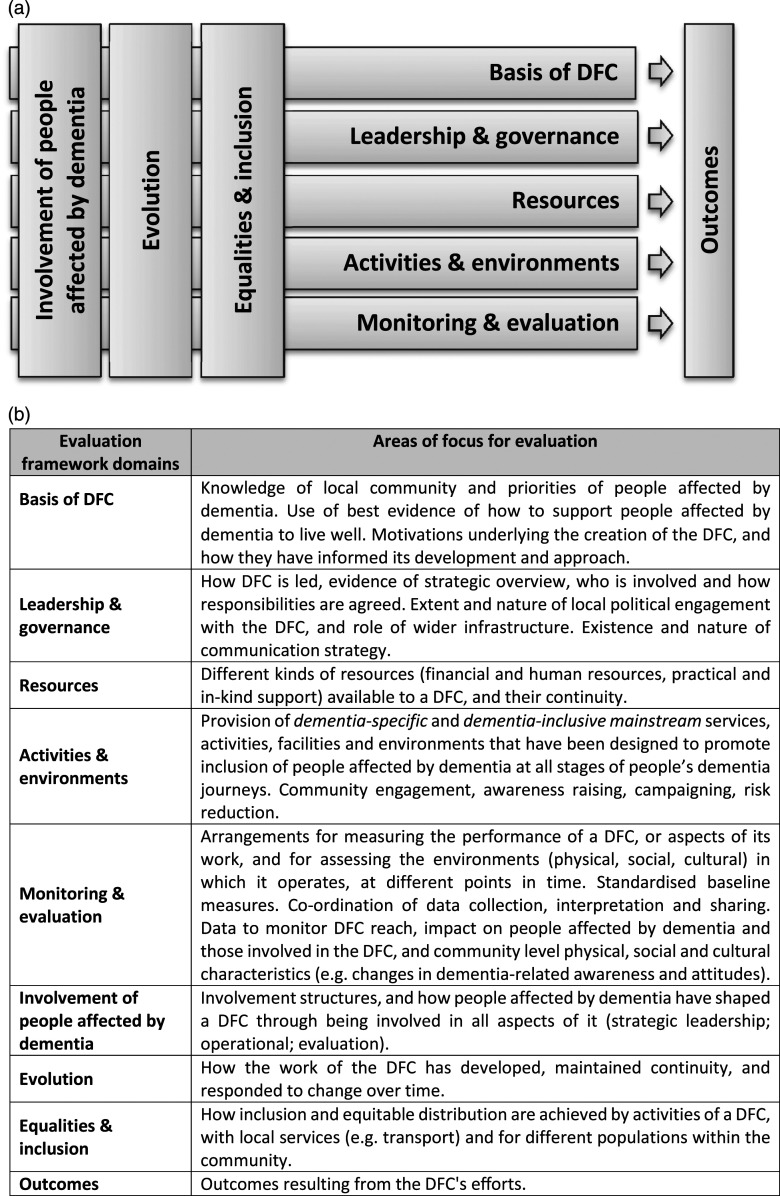
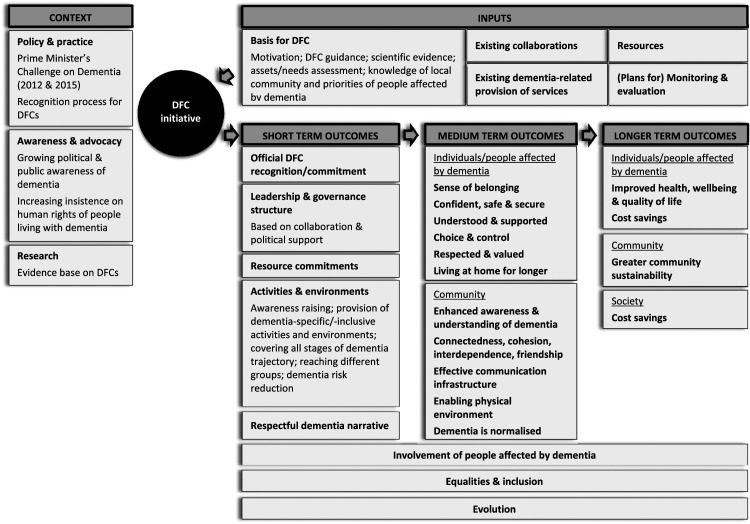
The study had three key outputs for the evaluation of DFCs: First, an evaluation framework that highlights thematic areas to be considered in evaluating DFCs. Second, a Theory of Change that presents inputs into a DFC and short, medium and longer term outcomes. Third, a matrix for assessing a DFC's degree of maturity, which enables a sense of the kinds of outcomes a DFC might realistically aspire to. These three outputs form a suite of interlinking and complementary evaluation resources for DFCs.
The study has contributed evidence-based resources for monitoring and evaluation that complement existing frameworks. They can be applied to arrive at a detailed assessment of how well a DFC works for people affected by dementia, and at insights into the underlying factors that can guide future policy and practice.
在全球范围内,痴呆症友好社区(DFC)的数量不断增加,因此仍然需要对其进行强有力的评估,并需要相关工具来获取相关证据。本文通过在英格兰进行的一项全国性研究,报告了一套用于 DFC 评估的资源的开发情况。
实地考察在英格兰六个不同的案例研究地点进行。采用了混合方法设计,包括文献分析、焦点小组、访谈、观察和调查。参与者是受痴呆症影响的人和基于实践的利益相关者。举办了一次全国性的利益相关者研讨会,以获取研究地点之外的意见。在研究结束时举行了一次研讨会,以检查研究结果和新出现的产出与案例研究 DFC 的利益相关者之间的共鸣。
该研究为 DFC 的评估提供了三个关键产出:首先,一个评估框架,突出了评估 DFC 时需要考虑的主题领域。其次,一个变革理论,提出了 DFC 的投入以及短期、中期和长期结果。第三,一个评估 DFC 成熟度的矩阵,使人们能够了解 DFC 可能真正追求的结果类型。这三个产出构成了一套相互关联和互补的 DFC 评估资源。
该研究提供了基于证据的监测和评估资源,补充了现有的框架。它们可用于对 DFC 对受痴呆症影响的人的工作效果进行详细评估,并深入了解可以指导未来政策和实践的潜在因素。