Cunha Daniel M, Gauquelin Nicolas, Xia Rui, Verbeeck Johan, Huijben Mark
MESA+ Institute for Nanotechnology, University of Twente, 7500 AE Enschede, Netherlands.
Electron Microscopy for Materials Science (EMAT), University of Antwerp, 2020 Antwerp, Belgium.
ACS Appl Mater Interfaces. 2022 Sep 21;14(37):42208-42214. doi: 10.1021/acsami.2c09474. Epub 2022 Sep 6.
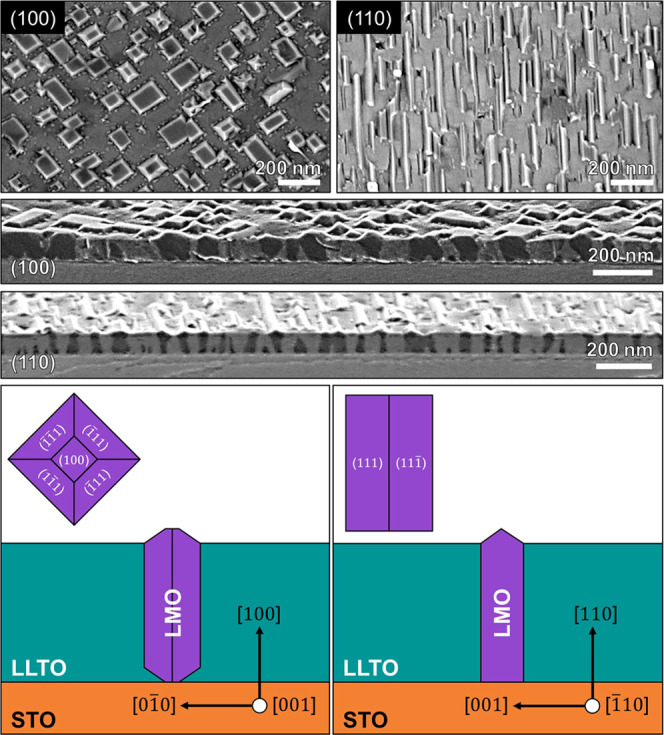
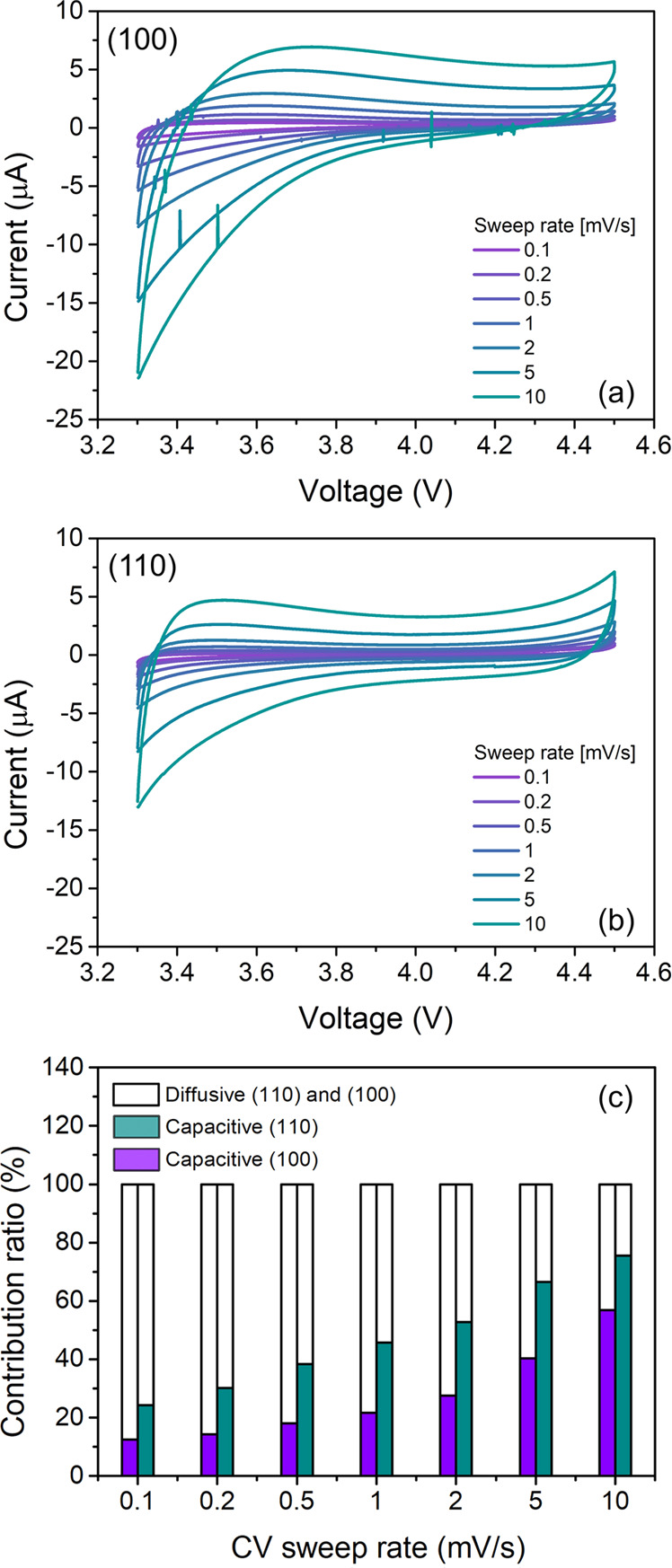
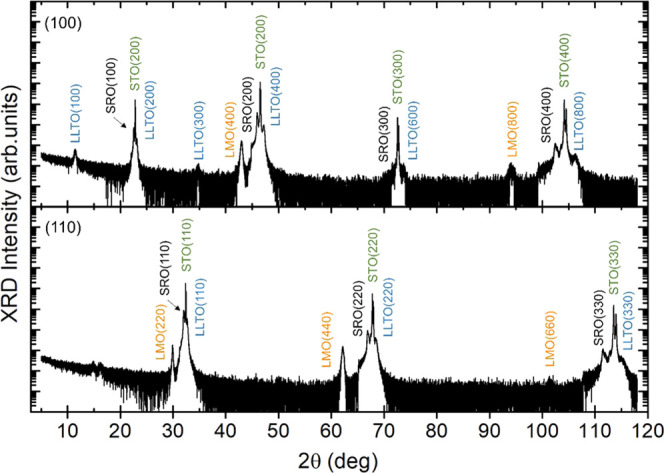
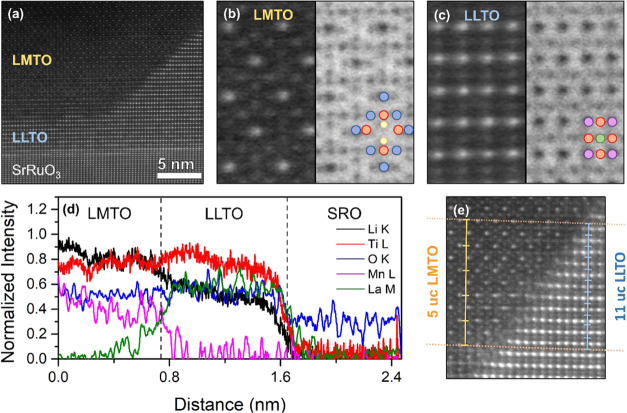
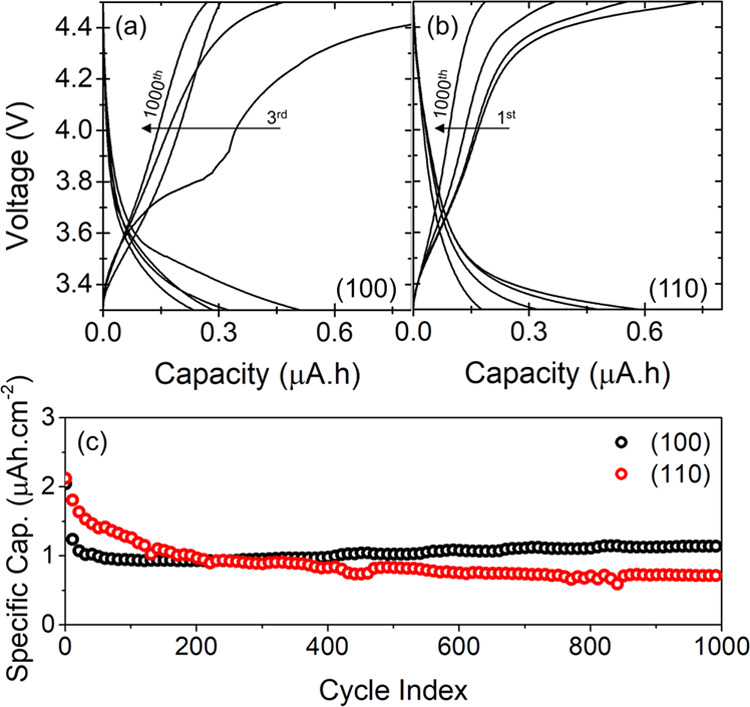
The downscaling of electronic devices requires rechargeable microbatteries with enhanced energy and power densities. Here, we evaluate self-assembled vertically aligned nanocomposite (VAN) thin films as a platform to create high-performance three-dimensional (3D) microelectrodes. This study focuses on controlling the VAN formation to enable interface engineering between the LiMnO cathode and the (Li,La)TiO solid electrolyte. Electrochemical analysis in a half cell against lithium metal showed the absence of sharp redox peaks due to the confinement in the electrode pillars at the nanoscale. The (100)-oriented VAN thin films showed better rate capability and stability during extensive cycling due to the better alignment to the Li-diffusion channels. However, an enhanced pseudocapacitive contribution was observed for the increased total surface area within the (110)-oriented VAN thin films. These results demonstrate for the first time the electrochemical behavior of cathode-electrolyte VANs for lithium-ion 3D microbatteries while pointing out the importance of control over the vertical interfaces.
电子设备的小型化需要具有更高能量和功率密度的可充电微型电池。在此,我们评估自组装垂直排列的纳米复合材料(VAN)薄膜作为创建高性能三维(3D)微电极的平台。本研究着重于控制VAN的形成,以实现LiMnO阴极与(Li,La)TiO固体电解质之间的界面工程。在与锂金属组成的半电池中进行的电化学分析表明,由于纳米级电极柱中的限制,不存在尖锐的氧化还原峰。(100)取向的VAN薄膜由于与锂扩散通道的更好对齐,在长时间循环过程中表现出更好的倍率性能和稳定性。然而,对于(110)取向的VAN薄膜中增加的总表面积,观察到了增强的赝电容贡献。这些结果首次证明了用于锂离子3D微型电池的阴极-电解质VAN的电化学行为,同时指出了控制垂直界面的重要性。