Department of Biological Sciences, Vanderbilt University, Nashville, TN, USA.
Bakar Computational Health Sciences Institute and Department of Epidemiology and Biostatistics, University of California San Francisco, San Francisco, CA, USA.
Open Biol. 2022 Sep;12(9):220111. doi: 10.1098/rsob.220111. Epub 2022 Sep 7.
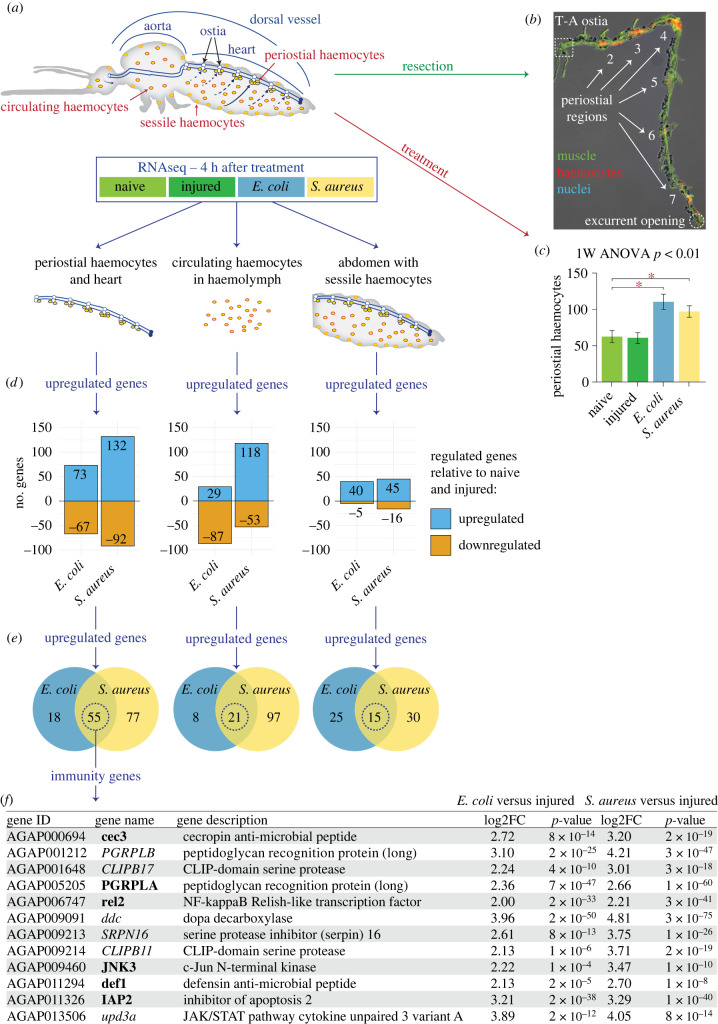
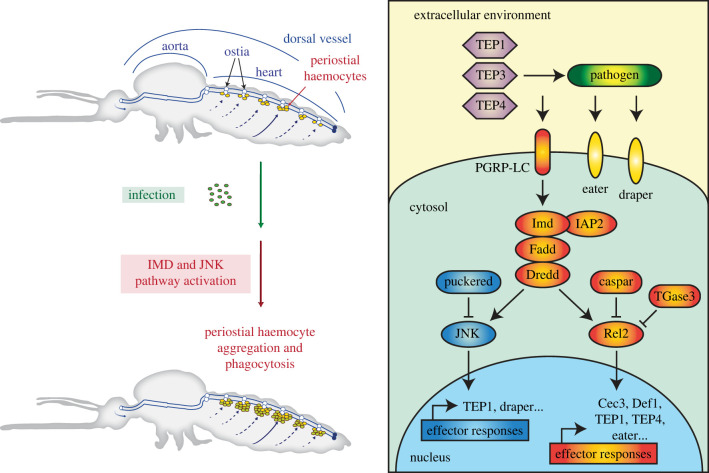
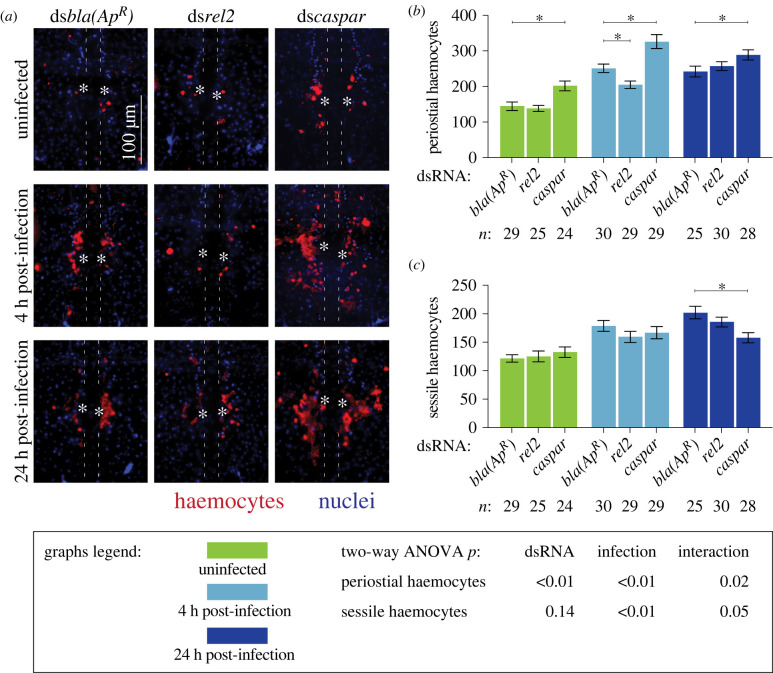
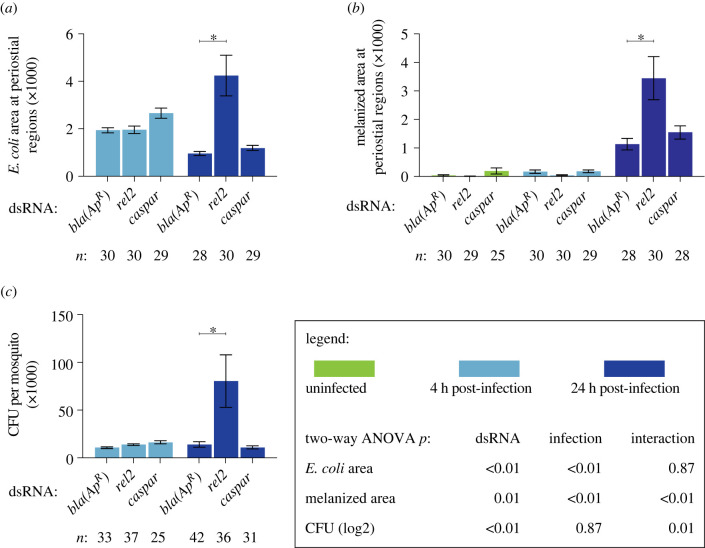
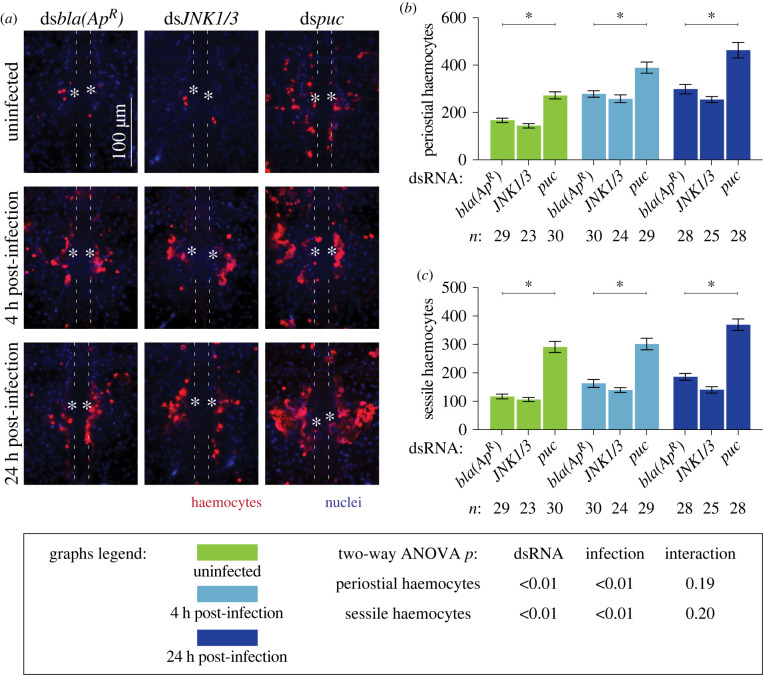
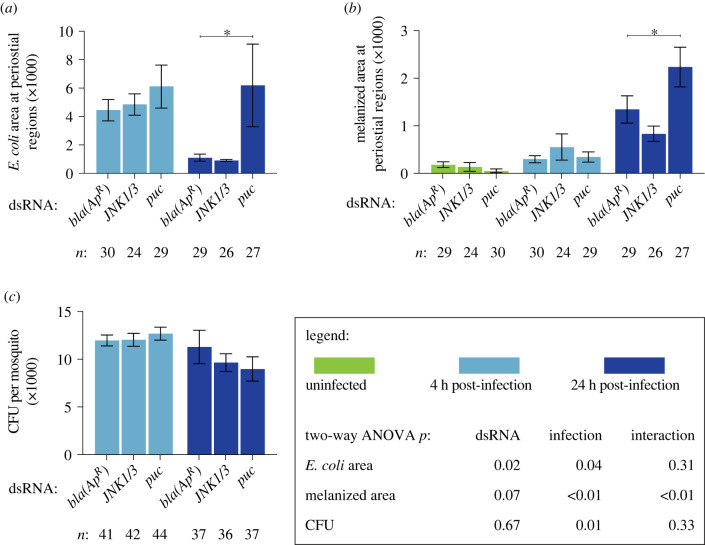
The immune and circulatory systems of animals are functionally integrated. In mammals, the spleen and lymph nodes filter and destroy microbes circulating in the blood and lymph, respectively. In insects, immune cells that surround the heart valves (ostia), called periostial haemocytes, destroy pathogens in the areas of the body that experience the swiftest haemolymph (blood) flow. An infection recruits additional periostial haemocytes, amplifying heart-associated immune responses. Although the structural mechanics of periostial haemocyte aggregation have been defined, the genetic factors that regulate this process remain less understood. Here, we conducted RNA sequencing in the African malaria mosquito, , and discovered that an infection upregulates multiple components of the immune deficiency (IMD) and c-Jun N-terminal kinase (JNK) pathways in the heart with periostial haemocytes. This upregulation is greater in the heart with periostial haemocytes than in the circulating haemocytes or the entire abdomen. RNA interference-based knockdown then showed that the IMD and JNK pathways drive periostial haemocyte aggregation and alter phagocytosis and melanization on the heart, thereby demonstrating that these pathways regulate the functional integration between the immune and circulatory systems. Understanding how insects fight infection lays the foundation for novel strategies that could protect beneficial insects and harm detrimental ones.
动物的免疫系统和循环系统在功能上是相互整合的。在哺乳动物中,脾脏和淋巴结分别过滤和破坏循环血液中的微生物。在昆虫中,环绕心脏瓣膜(ostia)的免疫细胞,称为periostial haemocytes,可破坏身体中经历最快血流的部位的病原体。感染会招募更多的periostial haemocytes,从而放大与心脏相关的免疫反应。尽管已经确定了 periostial haemocyte 聚集的结构力学,但调节此过程的遗传因素仍知之甚少。在这里,我们对非洲疟蚊进行了 RNA 测序,发现感染会在上皮细胞中上调免疫缺陷 (IMD) 和 c-Jun N-末端激酶 (JNK) 途径的多个组成部分。与循环血细胞或整个腹部相比,periostial haemocytes 中的这种上调更为明显。基于 RNA 干扰的敲低表明 IMD 和 JNK 途径驱动 periostial haemocyte 聚集,并改变心脏的吞噬作用和黑化,从而表明这些途径调节了免疫系统和循环系统之间的功能整合。了解昆虫如何对抗感染为保护有益昆虫和伤害有害昆虫的新策略奠定了基础。