League Garrett P, Hillyer Julián F
Department of Biological Sciences, Vanderbilt University, VU Station B 35-1634, Nashville, TN, 37235, USA.
BMC Biol. 2016 Sep 19;14:78. doi: 10.1186/s12915-016-0305-y.
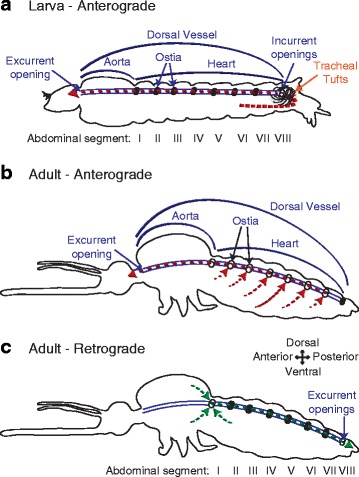
As both larvae and adults, mosquitoes encounter a barrage of immune insults, ranging from microbe-rich communities in larval habitats to ingested blood-borne pathogens in adult blood meals. Given that mosquito adults have evolved an efficient means of eliminating infections in their hemocoel (body cavity) via the coordinated action of their immune and circulatory systems, the goal of the present study was to determine whether such functional integration is also present in larvae.
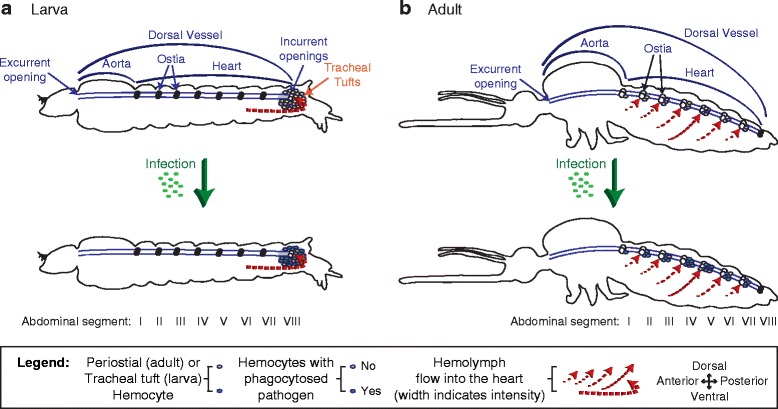
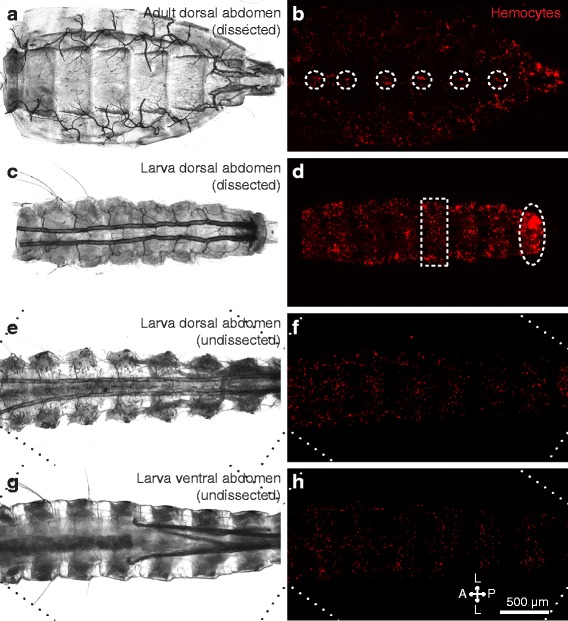
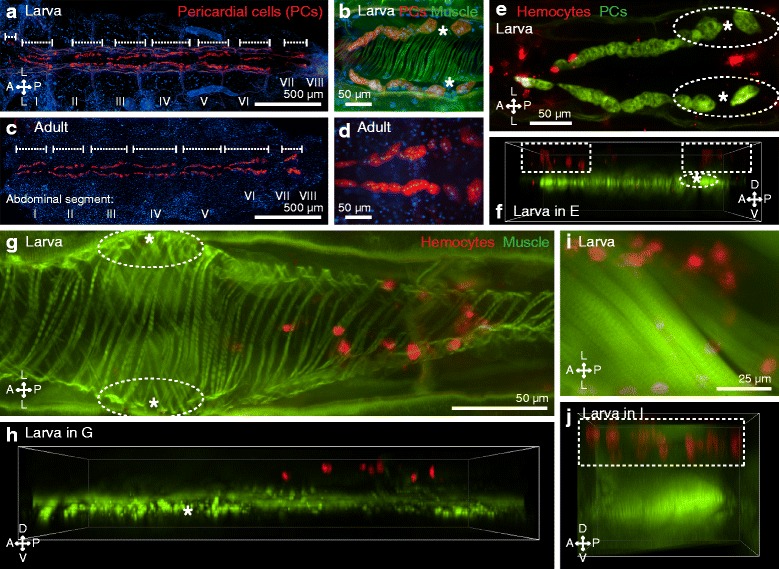
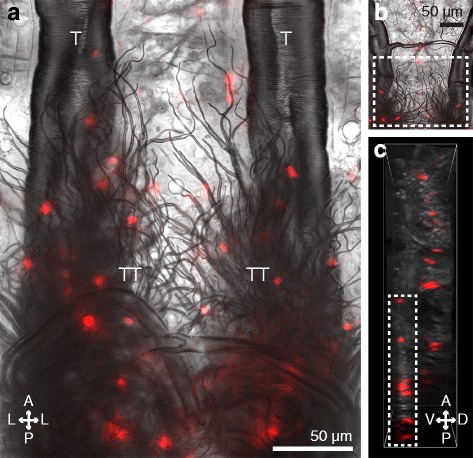
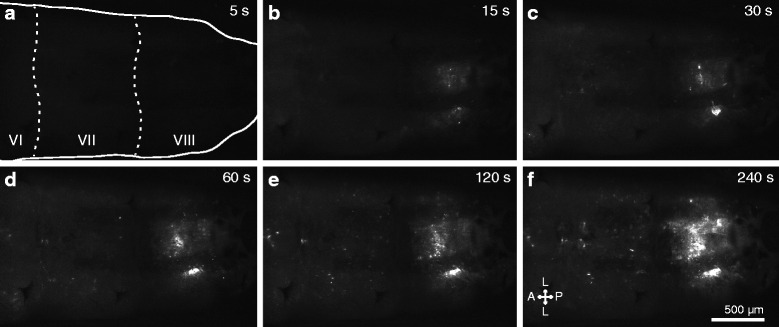
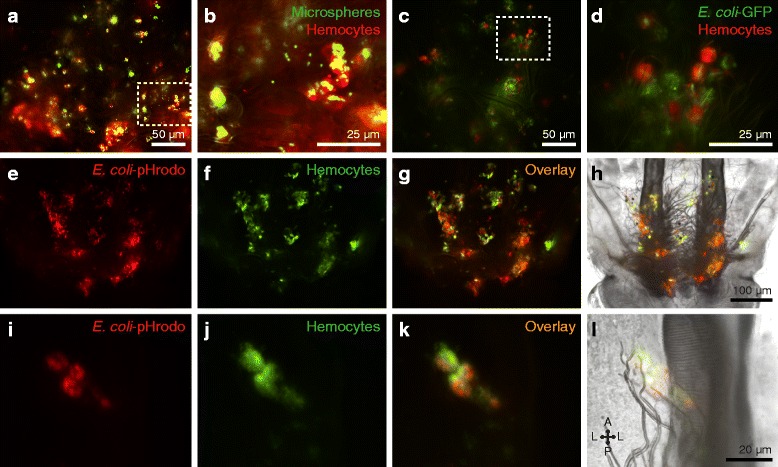
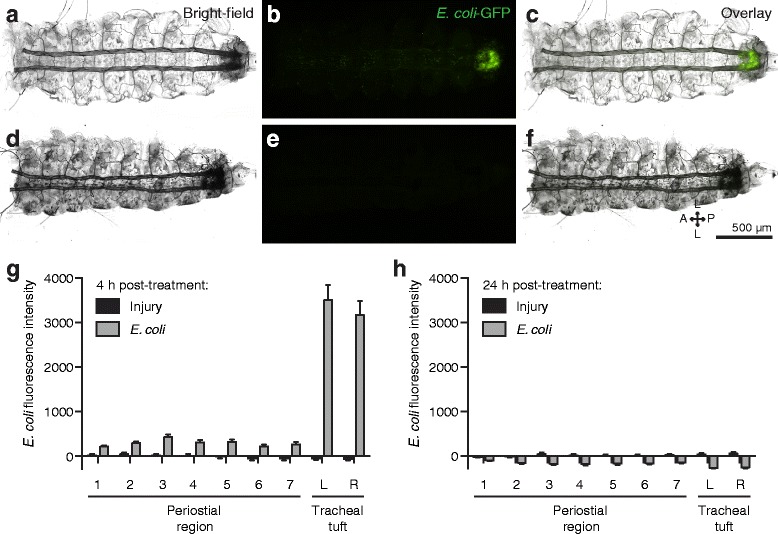
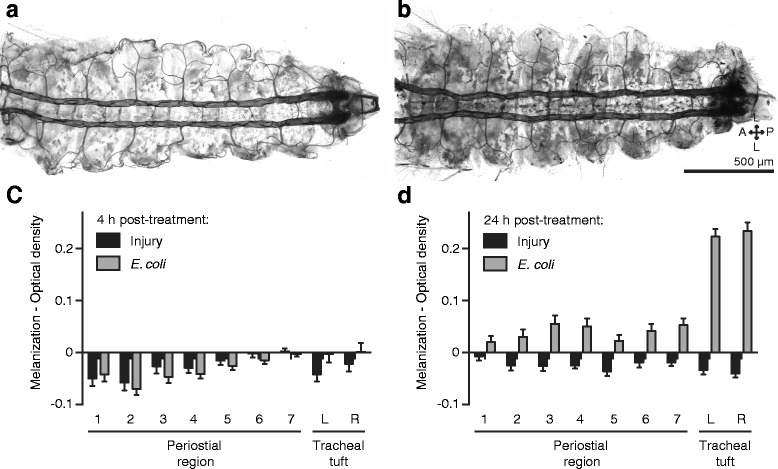
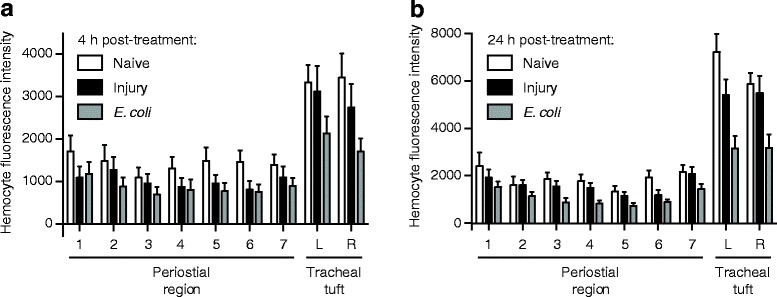
By fluorescently labeling hemocytes (immune cells), pericardial cells, and the heart, we discovered that fourth instar larvae, unlike adults, contain segmental hemocytes but lack the periostial hemocytes that surround the ostia (heart valves) in abdominal segments 2-7. Instead, larvae contain an abundance of sessile hemocytes at the tracheal tufts, which are respiratory structures that are unique to larvae, are located in the posterior-most abdominal segment, and surround what in larvae are the sole incurrent openings for hemolymph entry into the heart. Injection of fluorescent immune elicitors and bacteria into the larval hemocoel then showed that tracheal tuft hemocytes mount rapid and robust immune responses against foreign insults. Indeed, green fluorescent protein-labeled Escherichia coli flowing with the hemolymph rapidly aggregate exclusively at the tracheal tufts, where they are killed within 24 h post-infection via both phagocytosis and melanization.
Together, these findings show that the functional integration of the circulatory, respiratory, and immune systems of mosquitoes varies drastically across life stages.
蚊子在幼虫和成虫阶段都会遭遇一系列免疫攻击,从幼虫栖息地富含微生物的群落到成虫血餐中摄入的血源性病原体。鉴于成年蚊子已进化出一种有效的方式,通过其免疫系统和循环系统的协同作用消除其血腔(体腔)中的感染,本研究的目的是确定这种功能整合在幼虫中是否也存在。
通过对血细胞(免疫细胞)、心包细胞和心脏进行荧光标记,我们发现四龄幼虫与成虫不同,含有节段性血细胞,但在腹部2-7节缺乏围绕气门(心脏瓣膜)的围气门血细胞。相反,幼虫在气管簇处含有大量固定血细胞,气管簇是幼虫特有的呼吸结构,位于腹部最后一节,围绕着幼虫中血淋巴进入心脏的唯一入流开口。然后向幼虫血腔注射荧光免疫激发剂和细菌,结果表明气管簇血细胞对外来攻击会迅速产生强烈的免疫反应。事实上,随着血淋巴流动的绿色荧光蛋白标记的大肠杆菌会迅速聚集在气管簇处,在感染后24小时内通过吞噬作用和黑化作用将它们杀死。
总之,这些发现表明蚊子的循环、呼吸和免疫系统的功能整合在不同生命阶段有很大差异。