Department of Microbiology, Immunology, and Molecular Genetics, University of Kentucky, Lexington, Kentucky, USA.
Department of Computer Science, University of Kentucky, Lexington, Kentucky, USA.
Obesity (Silver Spring). 2022 Oct;30(10):1983-1994. doi: 10.1002/oby.23528. Epub 2022 Sep 7.
Myeloid cells dominate metabolic disease-associated inflammation (metaflammation) in mouse obesity, but the contributions of myeloid cells to the peripheral inflammation that fuels sequelae of human obesity are untested. This study used unbiased approaches to rank contributions of myeloid and T cells to peripheral inflammation in people with obesity across the spectrum of metabolic health.
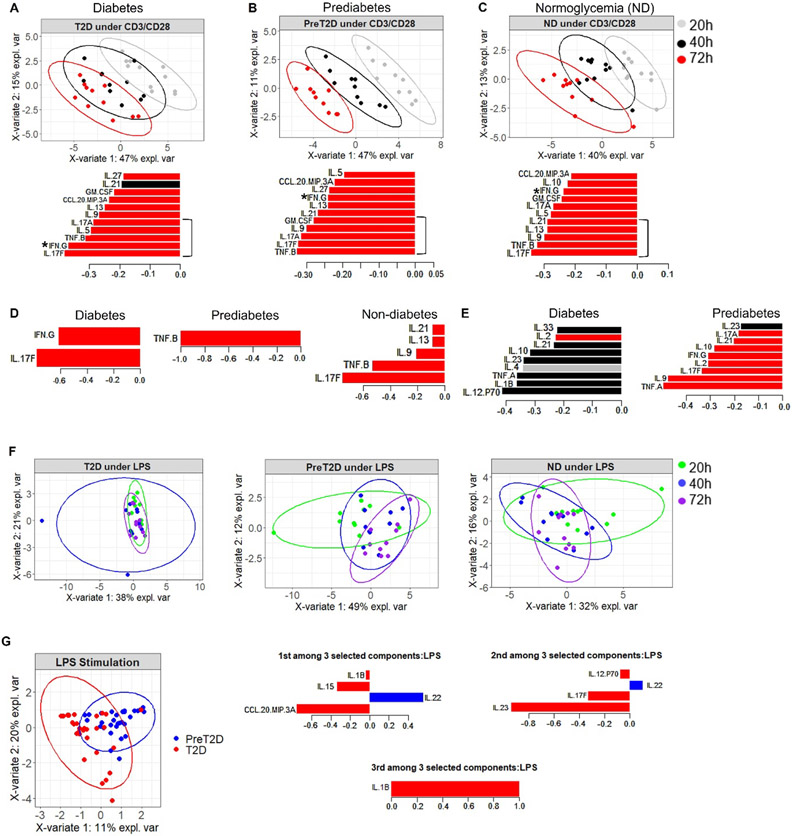
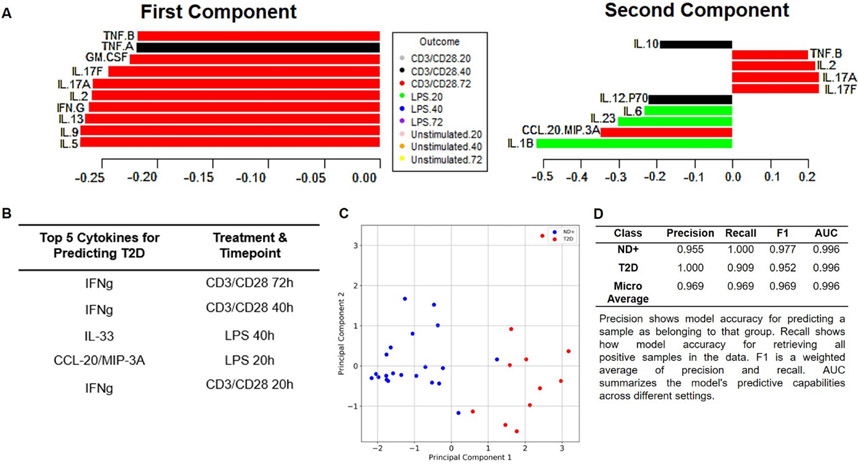
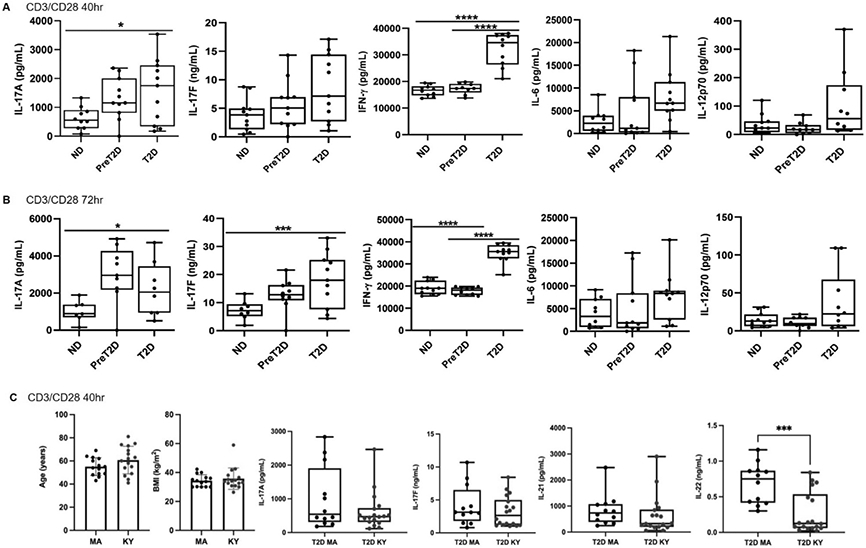
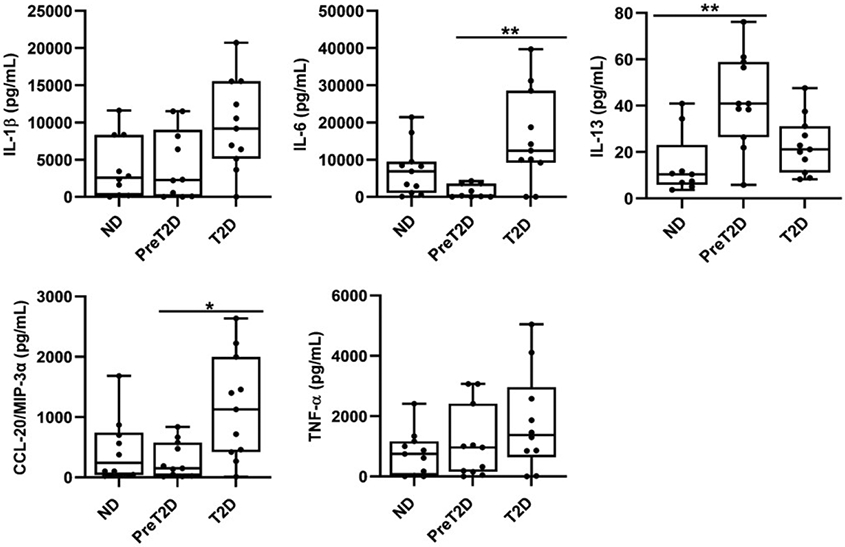
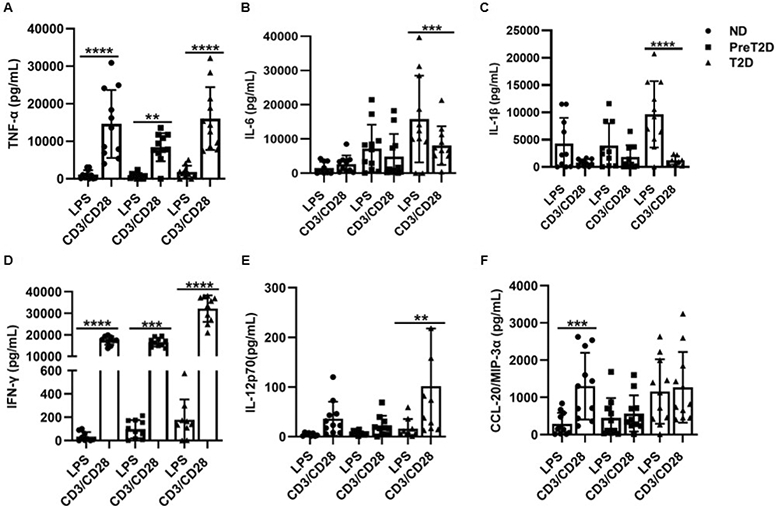
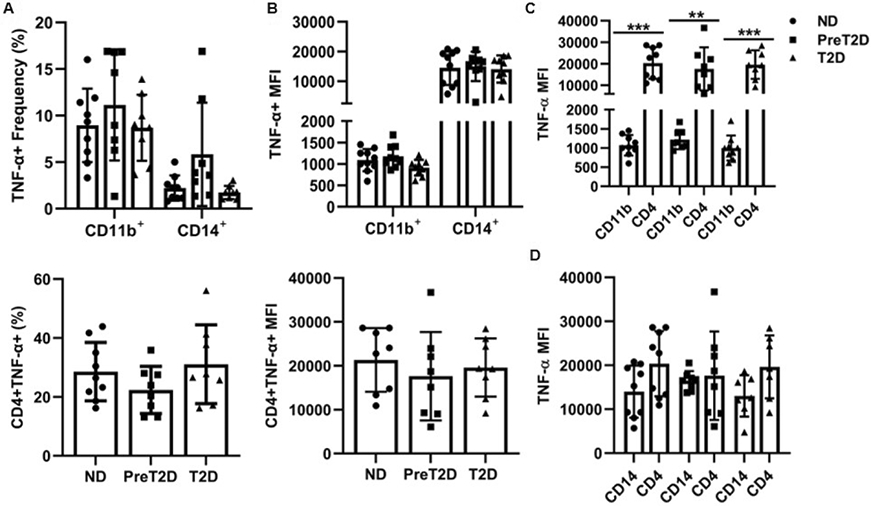
Peripheral blood mononuclear cells (PBMCs) from people with obesity with or without prediabetes or type 2 diabetes were stimulated with T cell-targeting CD3/CD28 or myeloid-targeting lipopolysaccharide for 20 to 72 hours to assess cytokine production using Bio-Plex. Bioinformatic modeling ranked cytokines with respect to their predictive power for metabolic health. Intracellular tumor necrosis factor α was quantitated as a classical indicator of metaflammation.
Cytokines increased over 72 hours following T cell-, but not myeloid-, targeted stimulation to indicate that acute myeloid inflammation may shift to T cell inflammation over time. T cells contributed more tumor necrosis factor α to peripheral inflammation regardless of metabolic status. Bioinformatic combination of cytokines from all cohorts, stimuli, and time points indicated that T cell-targeted stimulation was most important for differentiating inflammation in diabetes, consistent with previous identification of a mixed T helper type 1/T helper type 17 cytokine profile in diabetes.
T cells dominate peripheral inflammation in obesity; therefore, targeting T cells may be an effective approach for prevention/management of metaflammation.
髓系细胞在肥胖小鼠的代谢相关性炎症(代谢性炎症)中占主导地位,但髓系细胞在驱动人类肥胖相关后遗症的外周炎症中的作用尚未得到验证。本研究采用无偏倚的方法,对肥胖人群中髓系细胞和 T 细胞对代谢健康谱中肥胖相关外周炎症的贡献进行了排名。
用 T 细胞靶向 CD3/CD28 或髓系靶向脂多糖刺激肥胖人群的外周血单核细胞(PBMC)20-72 小时,用 Bio-Plex 评估细胞因子的产生。生物信息模型根据其对代谢健康的预测能力对细胞因子进行排序。用细胞内肿瘤坏死因子-α作为代谢性炎症的经典指标进行定量分析。
T 细胞靶向刺激后,细胞因子在 72 小时内增加,表明急性髓系炎症可能随着时间的推移向 T 细胞炎症转变。无论代谢状态如何,T 细胞对肿瘤坏死因子-α向外周炎症的贡献都更大。所有队列、刺激物和时间点的细胞因子的生物信息组合表明,T 细胞靶向刺激对区分糖尿病中的炎症最为重要,这与糖尿病中混合辅助性 T 细胞 1/辅助性 T 细胞 17 细胞因子谱的先前鉴定一致。
T 细胞在肥胖症的外周炎症中占主导地位;因此,靶向 T 细胞可能是预防/管理代谢性炎症的有效方法。