Biomolecular NMR Laboratory, Division of Genetics and Cell Biology, IRCCS San Raffaele Scientific Institute, Milan, Italy.
School of Medicine, Università Vita-Salute San Raffaele, Milan, Italy.
Mol Med. 2022 Sep 7;28(1):108. doi: 10.1186/s10020-022-00535-z.
High-mobility group box 1 protein (HMGB1) is an ubiquitous nuclear protein that once released in the extracellular space acts as a Damage Associated Molecular Pattern and promotes inflammation. HMGB1 is significantly elevated during Pseudomonas aeruginosa infections and has a clinical relevance in respiratory diseases such as Cystic Fibrosis (CF). Salicylates are HMGB1 inhibitors. To address pharmacological inhibition of HMGB1 with small molecules, we explored the therapeutic potential of pamoic acid (PAM), a salicylate with limited ability to cross epithelial barriers.
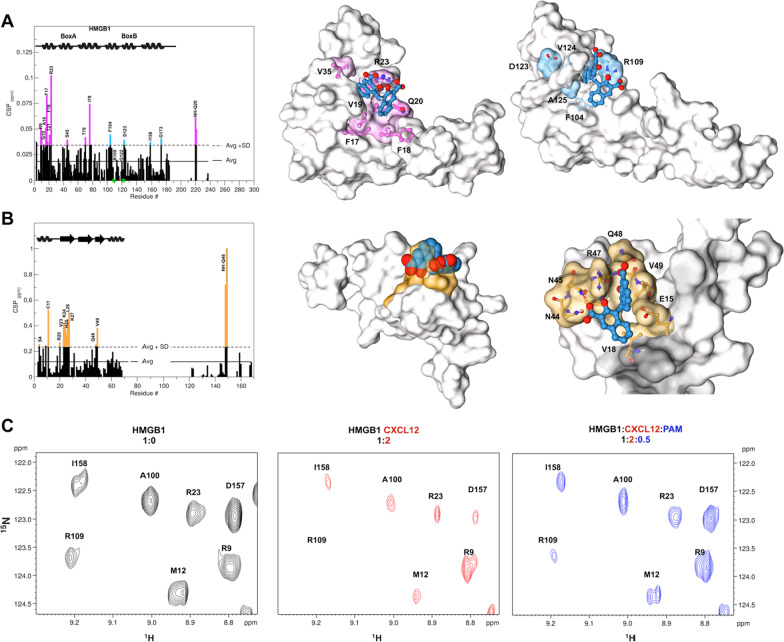
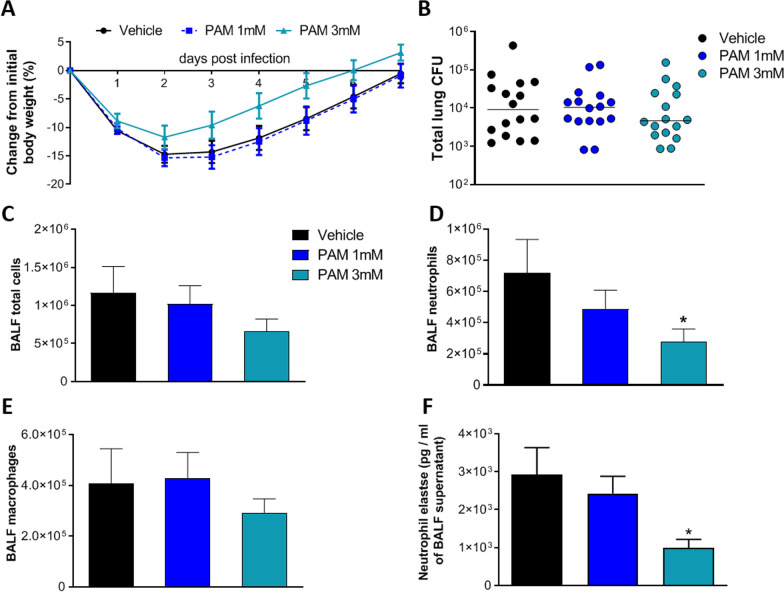
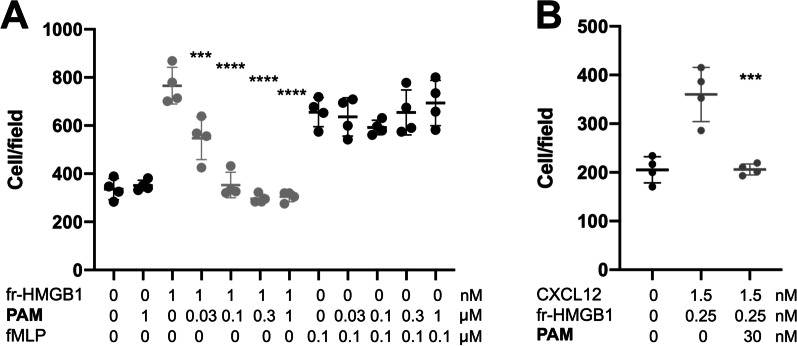
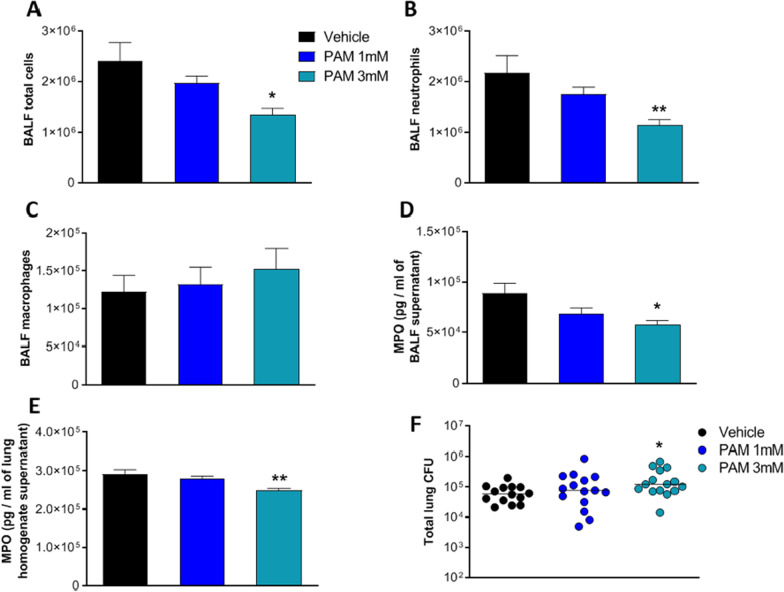
PAM binding to HMGB1 and CXCL12 was tested by Nuclear Magnetic Resonance Spectroscopy using chemical shift perturbation methods, and inhibition of HMGB1·CXCL12-dependent chemotaxis was investigated by cell migration experiments. Aerosol delivery of PAM, with single or repeated administrations, was tested in murine models of acute and chronic P. aeruginosa pulmonary infection in C57Bl/6NCrlBR mice. PAM efficacy was evaluated by read-outs including weight loss, bacterial load and inflammatory response in lung and bronco-alveolar lavage fluid.
Our data and three-dimensional models show that PAM is a direct ligand of both HMGB1 and CXCL12. We also showed that PAM is able to interfere with heterocomplex formation and the related chemotaxis in vitro. Importantly, PAM treatment by aerosol was effective in reducing acute and chronic airway murine inflammation and damage induced by P. aeruginosa. The results indicated that PAM reduces leukocyte recruitment in the airways, in particular neutrophils, suggesting an impaired in vivo chemotaxis. This was associated with decreased myeloperoxidase and neutrophil elastase levels. Modestly increased bacterial burdens were recorded with single administration of PAM in acute infection; however, repeated administration in chronic infection did not affect bacterial burdens, indicating that the interference of PAM with the immune system has a limited risk of pulmonary exacerbation.
This work established the efficacy of treating inflammation in chronic respiratory diseases, including bacterial infections, by topical delivery in the lung of PAM, an inhibitor of HMGB1.
高迁移率族蛋白 B1(HMGB1)是一种普遍存在的核蛋白,一旦释放到细胞外空间,就会作为一种损伤相关分子模式并促进炎症反应。铜绿假单胞菌感染时,HMGB1 显著升高,在囊性纤维化(CF)等呼吸道疾病中具有临床相关性。水杨酸盐是 HMGB1 的抑制剂。为了用小分子进行 HMGB1 的药理学抑制,我们探索了帕莫酸(PAM)的治疗潜力,PAM 是一种穿过上皮屏障能力有限的水杨酸盐。
使用化学位移扰动方法通过核磁共振波谱法测试 PAM 与 HMGB1 和 CXCL12 的结合,通过细胞迁移实验研究 HMGB1·CXCL12 依赖性趋化作用的抑制情况。通过单次或重复给予 PAM 的气溶胶给药,在 C57Bl/6NCrlBR 小鼠的急性和慢性铜绿假单胞菌肺部感染模型中进行了测试。通过体重减轻、肺部和支气管肺泡灌洗液中的细菌负荷和炎症反应等指标评估 PAM 的疗效。
我们的数据和三维模型表明,PAM 是 HMGB1 和 CXCL12 的直接配体。我们还表明,PAM 能够在体外干扰异源复合物的形成和相关趋化作用。重要的是,气溶胶给予 PAM 可有效减轻由铜绿假单胞菌引起的急性和慢性气道小鼠炎症和损伤。结果表明,PAM 减少了气道中的白细胞募集,特别是中性粒细胞,提示体内趋化作用受损。这与髓过氧化物酶和中性粒细胞弹性蛋白酶水平的降低有关。单次给予 PAM 治疗在急性感染中记录到略有增加的细菌负荷;然而,在慢性感染中重复给予 PAM 并不影响细菌负荷,这表明 PAM 与免疫系统的相互作用对肺部恶化的风险有限。
这项工作通过肺内给予 PAM(HMGB1 抑制剂),在治疗包括细菌感染在内的慢性呼吸道疾病中的炎症方面建立了疗效。