Mezzapelle Rosanna, Leo Manuela, Caprioglio Francesca, Colley Liam S, Lamarca Andrea, Sabatino Lina, Colantuoni Vittorio, Crippa Massimo P, Bianchi Marco E
School of Medicine, Vita-Salute San Raffaele University, 20132 Milan, Italy.
Division of Genetics and Cell Biology, IRCCS San Raffaele Hospital, 20232 Milan, Italy.
Cancers (Basel). 2022 May 6;14(9):2314. doi: 10.3390/cancers14092314.
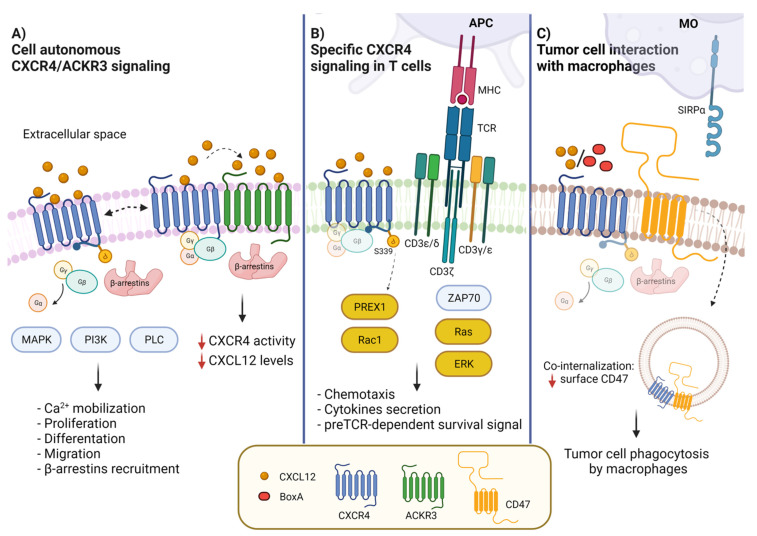
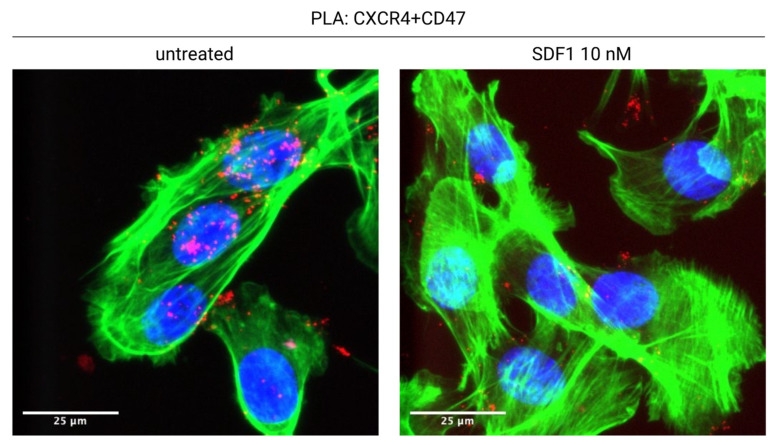
CXCR4 is a G-Protein coupled receptor that is expressed nearly ubiquitously and is known to control cell migration via its interaction with CXCL12, the most ancient chemokine. The functions of CXCR4/CXCL12 extend beyond cell migration and involve the recognition and disposal of unhealthy or tumor cells. The CXCR4/CXCL12 axis plays a relevant role in shaping the tumor microenvironment (TME), mainly towards dampening immune responses. Notably, CXCR4/CXCL12 cross-signal via the T and B cell receptors (TCR and BCR) and co-internalize with CD47, promoting tumor cell phagocytosis by macrophages in an anti-tumor immune process called ImmunoGenic Surrender (IGS). These specific activities in shaping the immune response might be exploited to improve current immunotherapies.
CXCR4是一种G蛋白偶联受体,几乎在所有地方都有表达,已知它通过与最古老的趋化因子CXCL12相互作用来控制细胞迁移。CXCR4/CXCL12的功能不仅限于细胞迁移,还涉及对不健康或肿瘤细胞的识别和清除。CXCR4/CXCL12轴在塑造肿瘤微环境(TME)中发挥着相关作用,主要是抑制免疫反应。值得注意的是,CXCR4/CXCL12通过T细胞和B细胞受体(TCR和BCR)进行交叉信号传递,并与CD47共同内化,在一种称为免疫原性投降(IGS)的抗肿瘤免疫过程中促进巨噬细胞对肿瘤细胞的吞噬作用。这些在塑造免疫反应中的特定活动可能被用于改进当前的免疫疗法。