Department of Neurology and Institute of Translational Neurology, University Hospital Muenster, Albert-Schweitzer-Campus 1, 48149, Muenster, Germany.
Department of Neurology, University Hospital Duesseldorf, Duesseldorf, Germany.
J Neuroinflammation. 2022 Sep 7;19(1):220. doi: 10.1186/s12974-022-02583-y.
Intravenous methylprednisolone is the standard treatment for a multiple sclerosis relapse; however, this fails to improve symptoms in up to one quarter of patients. Immunoadsorption is an accepted treatment for refractory relapses, but prospective comparator-controlled studies are missing.
In this observational study, patients with steroid-refractory acute multiple sclerosis relapses receiving either six courses of tryptophan-immunoadsorption or double-dose methylprednisolone therapy were analysed. Outcomes were evaluated at discharge and three months later. Immune profiling of blood lymphocytes and proteomic analysis were performed by multi-parameter flow cytometry and Olink analysis, respectively (NCT04450030).
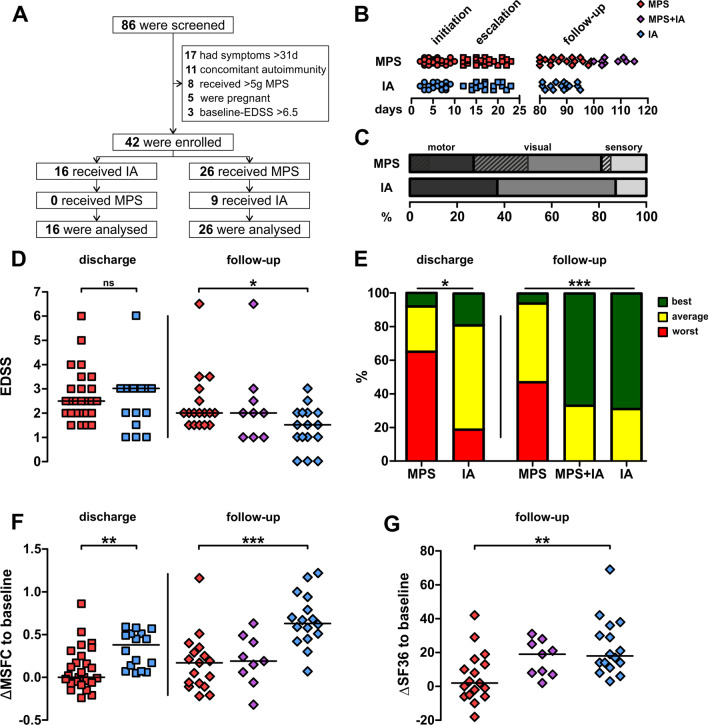
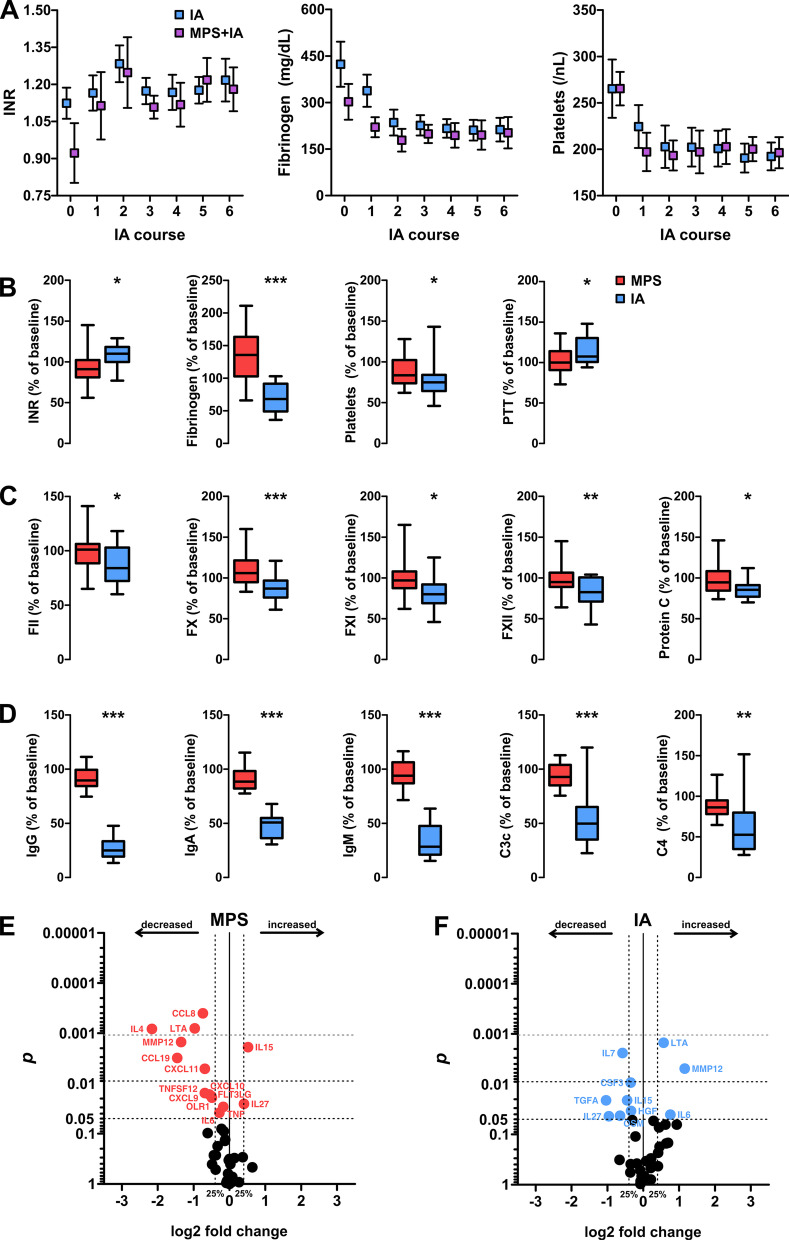
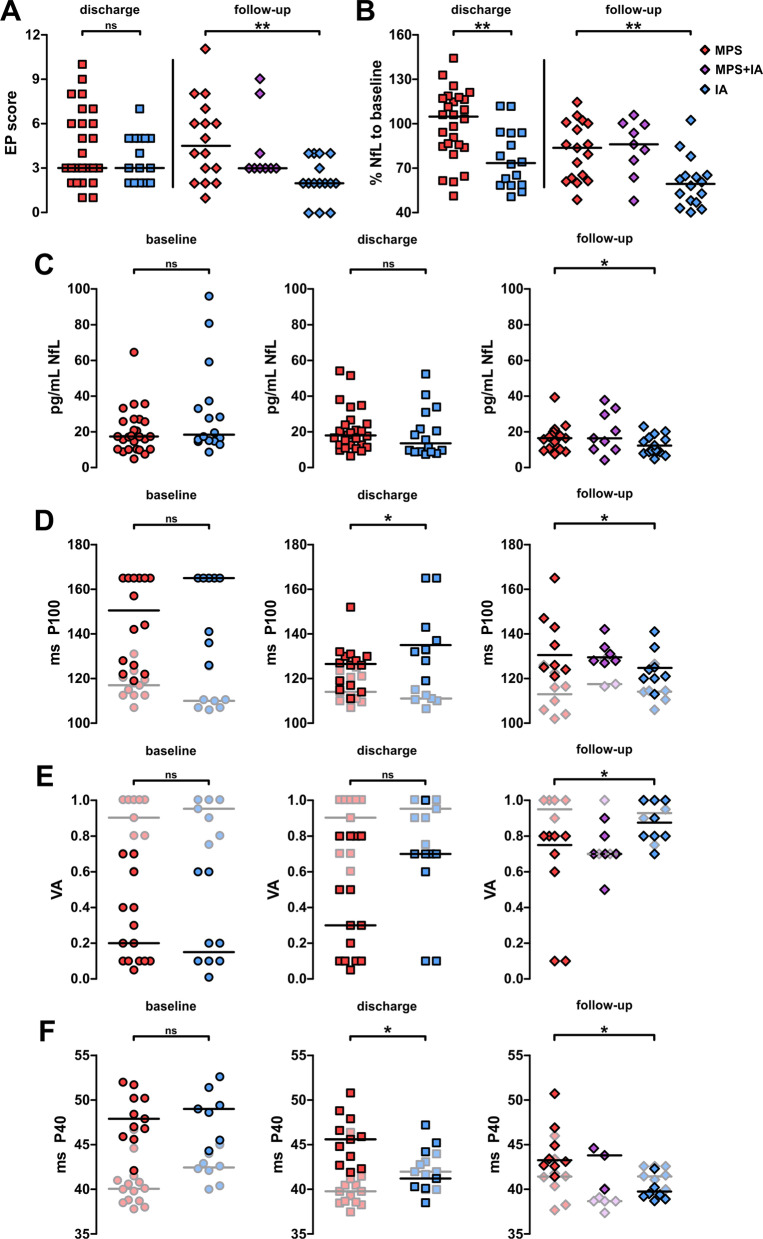
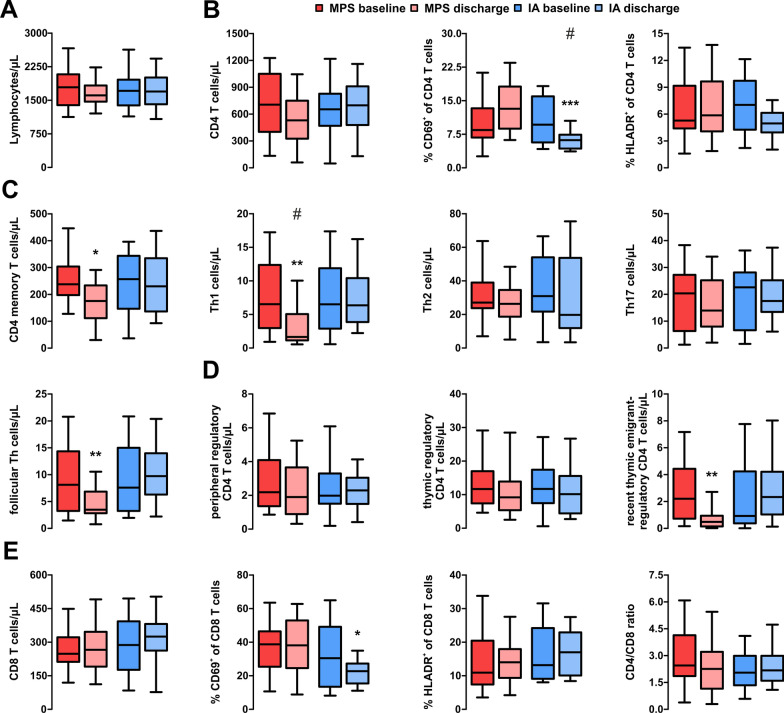
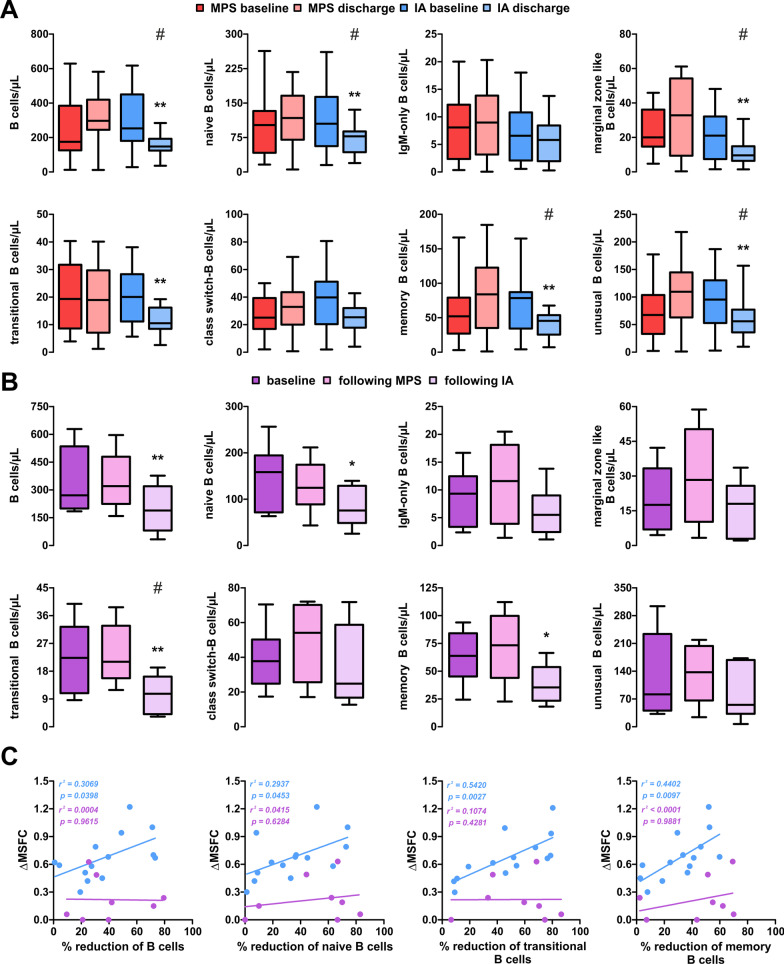
42 patients were enrolled (methylprednisolone: 26 patients; immunoadsorption: 16 patients). For determination of the primary outcome, treatment response was stratified according to relative function system score changes ("full/best" vs. "average" vs. "worse/none"). Upon discharge, the adjusted odds ratio for any treatment response ("full/best" + "average" vs. "worse/none") was 10.697 favouring immunoadsorption (p = 0.005 compared to methylprednisolone). At follow-up, the adjusted odds ratio for the best treatment response ("full/best" vs. "average" + "worse/none") was 103.236 favouring IA patients (p = 0.001 compared to methylprednisolone). Similar results were observed regarding evoked potentials and quality of life outcomes, as well as serum neurofilament light-chain levels. Flow cytometry revealed a profound reduction of B cell subsets following immunoadsorption, which was closely correlated to clinical outcomes, whereas methylprednisolone had a minimal effect on B cell populations. Immunoadsorption treatment skewed the blood cytokine network, reduced levels of B cell-related cytokines and reduced immunoglobulin levels as well as levels of certain coagulation factors.
Immunoadsorption demonstrated favourable outcomes compared to double-dose methylprednisolone. Outcome differences were significant at discharge and follow-up. Further analyses identified modulation of B cell function as a potential mechanism of action for immunoadsorption, as reduction of B cell subsets correlated with clinical improvement.
静脉注射甲基强的松龙是治疗多发性硬化症复发的标准治疗方法;然而,多达四分之一的患者的症状并未因此得到改善。免疫吸附是治疗难治性复发的一种公认方法,但缺乏前瞻性对照研究。
在这项观察性研究中,分析了接受六次色氨酸免疫吸附或双倍剂量甲基强的松龙治疗的类固醇难治性急性多发性硬化症复发患者。在出院时和三个月后评估结果。通过多参数流式细胞术和 Olink 分析分别进行淋巴细胞免疫谱和蛋白质组学分析(NCT04450030)。
共纳入 42 例患者(甲基强的松龙组:26 例;免疫吸附组:16 例)。为了确定主要结局,根据相对功能系统评分变化(“完全/最佳”与“平均”与“更差/无”)对治疗反应进行分层。出院时,免疫吸附治疗任何反应(“完全/最佳”+“平均”与“更差/无”)的调整后优势比为 10.697,有利于免疫吸附(与甲基强的松龙相比,p=0.005)。随访时,免疫吸附治疗最佳反应(“完全/最佳”与“平均”+“更差/无”)的调整后优势比为 103.236,有利于 IA 患者(与甲基强的松龙相比,p=0.001)。关于诱发电位和生活质量结果以及血清神经丝轻链水平也观察到类似的结果。流式细胞术显示免疫吸附后 B 细胞亚群明显减少,与临床结果密切相关,而甲基强的松龙对 B 细胞群几乎没有影响。免疫吸附治疗改变了血液细胞因子网络,降低了 B 细胞相关细胞因子水平以及免疫球蛋白和某些凝血因子水平。
免疫吸附治疗与双倍剂量甲基强的松龙相比显示出有利的结果。在出院时和随访时,结果差异有统计学意义。进一步分析确定 B 细胞功能的调节是免疫吸附的潜在作用机制,因为 B 细胞亚群的减少与临床改善相关。