Li Ruili, Luo Weibo, Liu Yifeng, Chen Chi, Chen Shunxian, Yang Jie, Wu Peifen, Lv Xucong, Liu Zhibin, Ni Li, Han Jinzhi
Institute of Food Science and Technology, College of Biological Science and Engineering, Fuzhou University, Fuzhou 350108, China.
College of Food Science, Fujian Agriculture and Forestry University, Fuzhou, 350002, China.
Curr Res Food Sci. 2022 Aug 26;5:1320-1329. doi: 10.1016/j.crfs.2022.07.014. eCollection 2022.
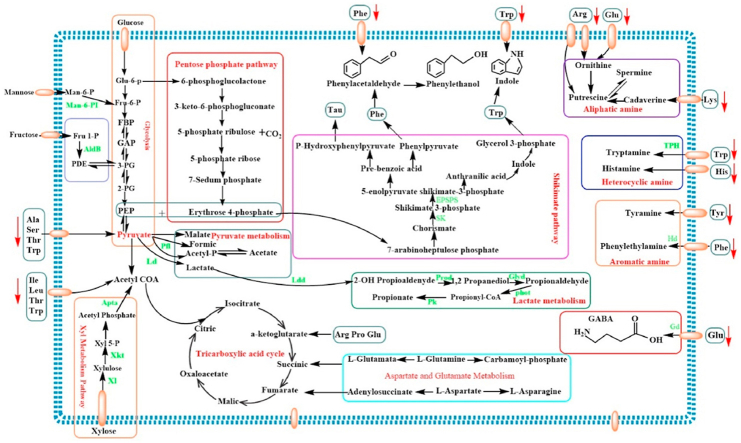
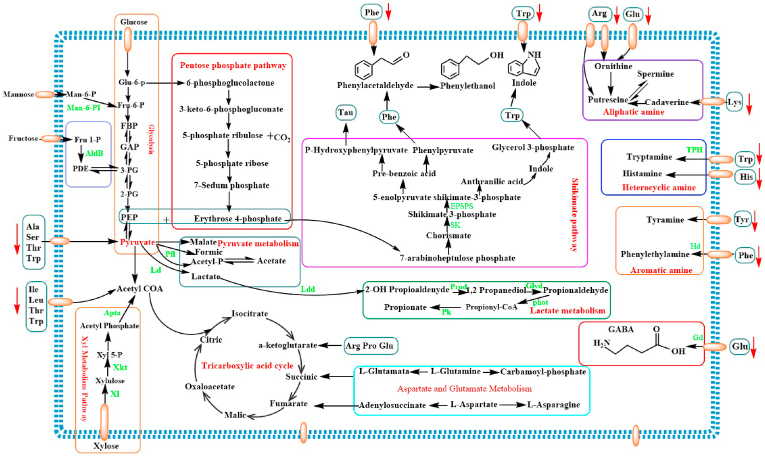
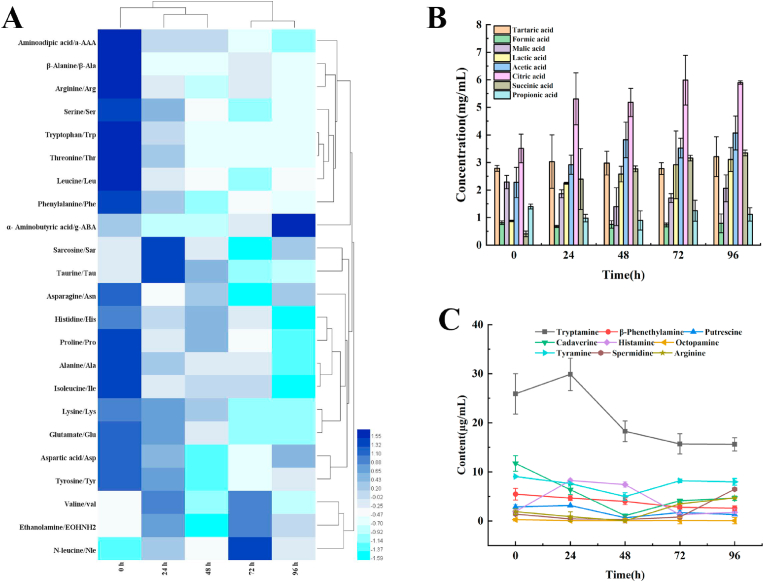
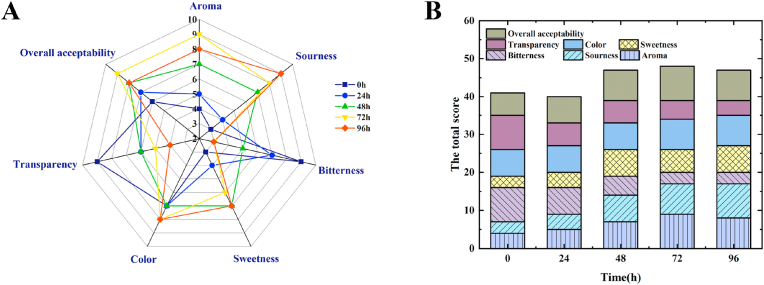
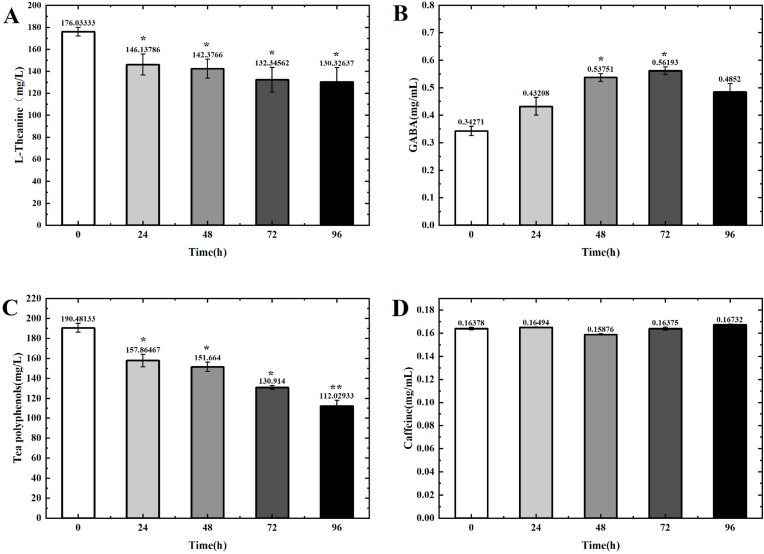
At present, lactic acid bacteria (LAB) fermentation is commonly considered as an effective strategy to remarkably drive the improvement of flavor and nutritional value, and extend shelf-life of fermented foods. In this study, the by-product of tea manufacture, including broken tea segments and tea stalk, was used to produce fermented tea beverages. In addition, the residual components of matrices and bacterial metabolites were measured, as well as the sensory quality of the beverage was evaluated. Subsequently, the determination of monosaccharides, volatile aroma profile, free amino acids, biogenic amines and organic acids, and several functional substances involving γ-aminobutyric acid (GABA), polyphenols, caffeine and L-theanine were carried out. The results revealed that glucose, fructose, mannose and xylose are principal carbon source of RLL68 during the fermentation; moreover, the abundance of aromatic substances is varied dramatically and the characteristic flavors of the beverages, particularly fermentation for 48 h and 72 h, are imparted with sweet and fruity odor on the basis of initial nutty and floral odor; Meanwhile, the organoleptic qualities of fermented beverages is also enhanced. Furthermore, the levels of organic acids and GABA are elevated, while the bitter amino acids, as well as some bioactive substances including tea polyphenols and L-theanine are declined; Besides, the caffeine level almost remains constant, and quite low levels of various biogenic amines are also observed. The results of this study will provide the theoretical basis to steer and control the flavor and quality of the fermented tea beverages in the future.
目前,乳酸菌(LAB)发酵通常被认为是显著提升风味和营养价值、延长发酵食品保质期的有效策略。在本研究中,茶叶生产的副产品,包括碎茶段和茶梗,被用于生产发酵茶饮料。此外,还测定了基质的残留成分和细菌代谢产物,并评估了饮料的感官品质。随后,对单糖、挥发性香气成分、游离氨基酸、生物胺和有机酸,以及包括γ-氨基丁酸(GABA)、多酚、咖啡因和茶氨酸在内的几种功能物质进行了测定。结果表明,葡萄糖、果糖、甘露糖和木糖是RLL68在发酵过程中的主要碳源;此外,芳香物质的丰度变化显著,饮料的特征风味,特别是发酵48小时和72小时的饮料,在初始坚果味和花香气味的基础上带有甜味和果香味;同时,发酵饮料的感官品质也得到了提升。此外,有机酸和GABA的含量升高,而苦味氨基酸以及包括茶多酚和茶氨酸在内的一些生物活性物质含量下降;此外,咖啡因含量几乎保持不变,且各种生物胺的含量也很低。本研究结果将为未来调控发酵茶饮料的风味和品质提供理论依据。