Department of Audiology, Faculty of Humanities, University of the Witwatersrand, Johannesburg.
S Afr J Commun Disord. 2022 Aug 12;69(2):e1-e12. doi: 10.4102/sajcd.v69i2.899.
On 30 January 2020, the World Health Organization (WHO) officially declared an outbreak of the coronavirus disease 2019 (COVID-19) to be a global health emergency. Research has focused on the impact and response to life-threatening symptoms of COVID-19 across the lifespan; however, there is a need to investigate the effects of COVID-19 on the cochleovestibular system, as viral infections are known to impact this system. This is particularly important for contexts where resources are limited and prioritisation of resources requires strong risk versus benefit evaluations.
Therefore, the purpose of this scoping review was to investigate published evidence on the impact of COVID-19 on the cochleovestibular system across the lifespan in order to allow for strategic clinical care planning in South Africa, where capacity versus demand challenges exist.
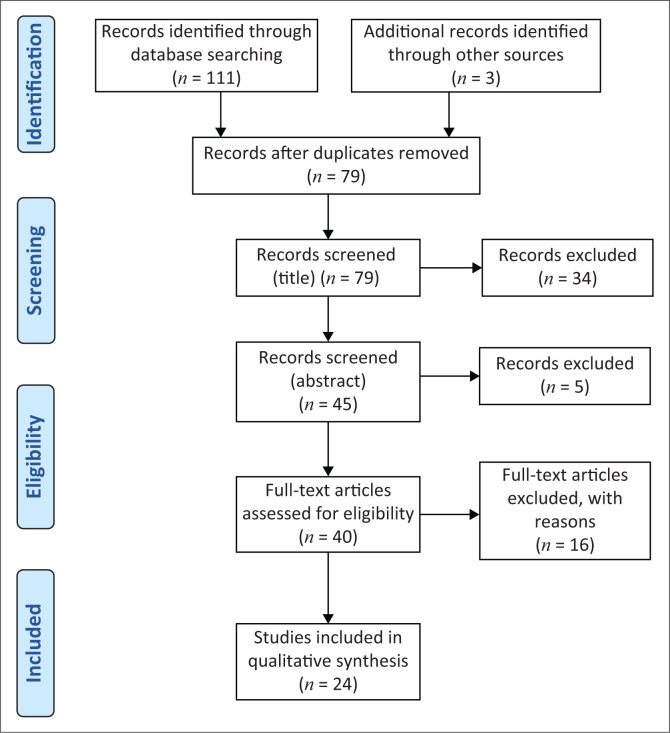
Electronic bibliographic databases such as CINAHL, EBSCOHost, MEDLINE, ProQuest, PubMed, Scopus and ScienceDirect were searched for peer-reviewed publications between January 2020 and January 2022. These had to be published in English and related to the impact of COVID-19 on the cochleovestibular system, where the question was: 'what evidence has been published on the impact of COVID-19 on the cochleovestibular system?' Review selection and characterisation was performed by the researcher with an independent review by a colleague using pretested forms.
Of a total of 24 studies that met the inclusion criteria, the current scoping review revealed limited conclusive published evidence linking COVID-19 to permanent hearing function symptoms. Current evidence supports the possibility of COVID-19, similar to other viral infections in adults, impacting the cochleovestibular system and causing tinnitus, vertigo and sudden sensorineural hearing loss (SSNHL), with the symptoms being generally temporary and resolving either partially or completely following therapy with steroids, with very inconclusive findings in the paediatric population.
These findings raise global implications for properly designed studies, which include longitudinal follow-up of cases across the lifespan, examining this link with some focus on establishing the pathophysiologic mechanisms at play as well. In the meanwhile, current findings raise the value of polymerase chain reaction (PCR) testing for all patients presenting with unexplained cochleovestibular symptoms during the pandemic, as these may be the only presenting symptoms indicating COVID-19, thus requiring careful treatment and management.
2020 年 1 月 30 日,世界卫生组织(WHO)正式宣布 2019 年冠状病毒病(COVID-19)爆发为全球卫生紧急事件。研究集中在危及生命的 COVID-19 症状在整个生命周期中的影响和应对上;然而,有必要调查 COVID-19 对耳蜗前庭系统的影响,因为病毒感染已知会影响该系统。这对于资源有限且需要对资源进行强有力的风险与效益评估的情况下尤为重要。
因此,本范围综述的目的是调查已发表的关于 COVID-19 在整个生命周期中对耳蜗前庭系统影响的证据,以便为南非制定战略性临床护理计划,南非存在资源能力与需求的挑战。
在 2020 年 1 月至 2022 年 1 月期间,电子文献数据库(如 CINAHL、EBSCOHost、MEDLINE、ProQuest、PubMed、Scopus 和 ScienceDirect)检索了同行评议的出版物,这些出版物必须是用英语发表的,且与 COVID-19 对耳蜗前庭系统的影响有关,问题是:“有哪些关于 COVID-19 对耳蜗前庭系统影响的证据已经发表?”研究人员使用预测试表格进行了研究选择和特征描述,同事进行了独立审查。
共有 24 项符合纳入标准的研究,本次范围综述结果表明,将 COVID-19 与永久性听力功能症状联系起来的结论性证据有限。目前的证据支持 COVID-19 类似于成人的其他病毒感染,有可能影响耳蜗前庭系统并导致耳鸣、眩晕和突发性感觉神经性听力损失(SSNHL),这些症状通常是暂时的,并在类固醇治疗后部分或完全缓解,在儿科人群中的发现非常不明确。
这些发现对全球范围内的研究具有重要意义,包括对整个生命周期中的病例进行纵向随访,重点研究这种联系,并建立起发挥作用的病理生理机制。与此同时,目前的研究结果提高了聚合酶链反应(PCR)检测在大流行期间所有出现不明原因耳蜗前庭症状患者中的应用价值,因为这些症状可能是唯一表明 COVID-19 的症状,因此需要谨慎治疗和管理。