Division of Human Biology, Fred Hutchinson Cancer Center, Seattle, United States.
Molecular Medicine and Mechanisms of Disease Graduate Program, University of Washington, Seattle, United States.
Elife. 2022 Sep 8;11:e80111. doi: 10.7554/eLife.80111.
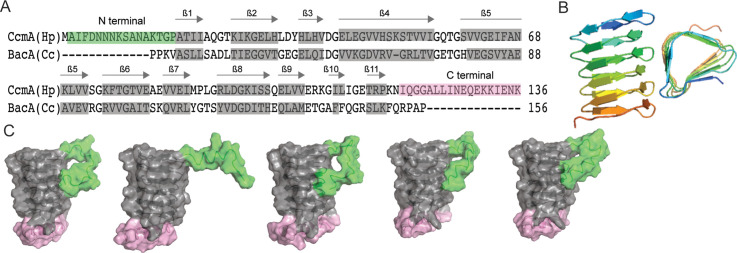
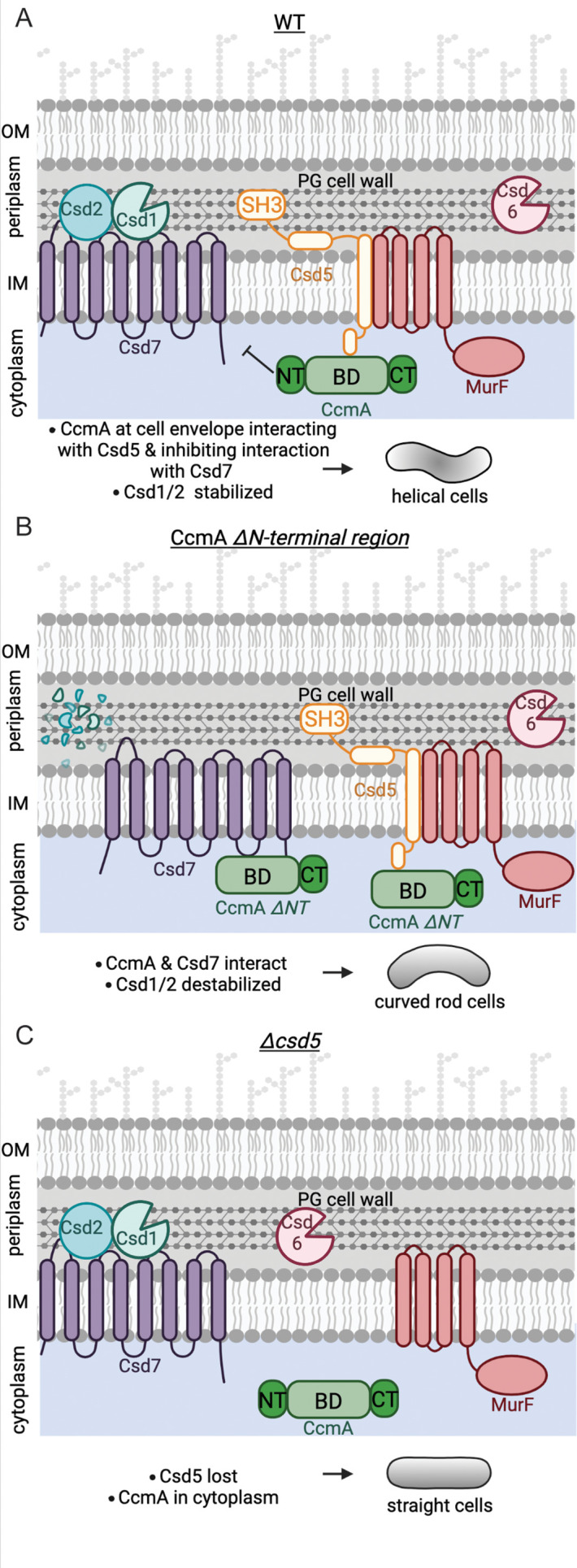
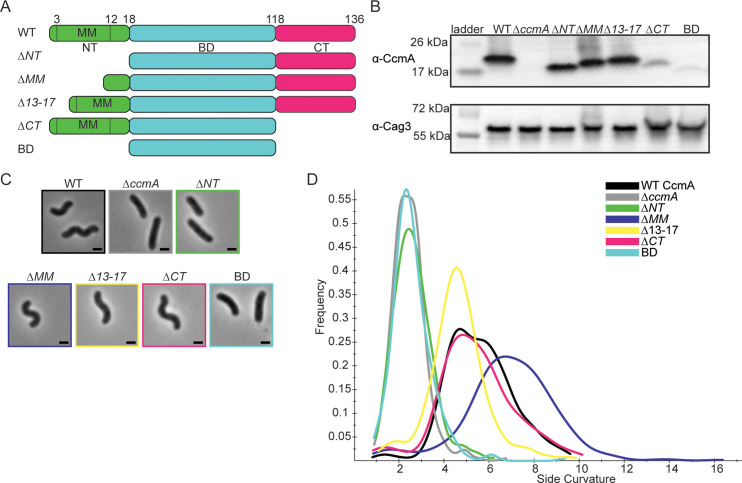
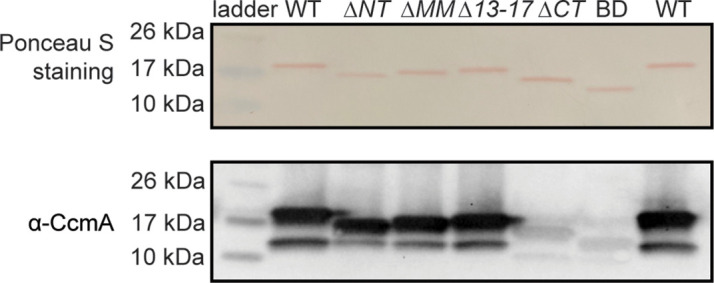
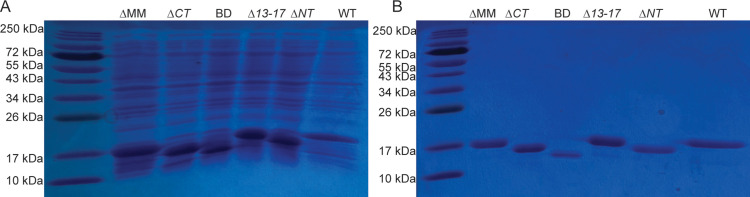
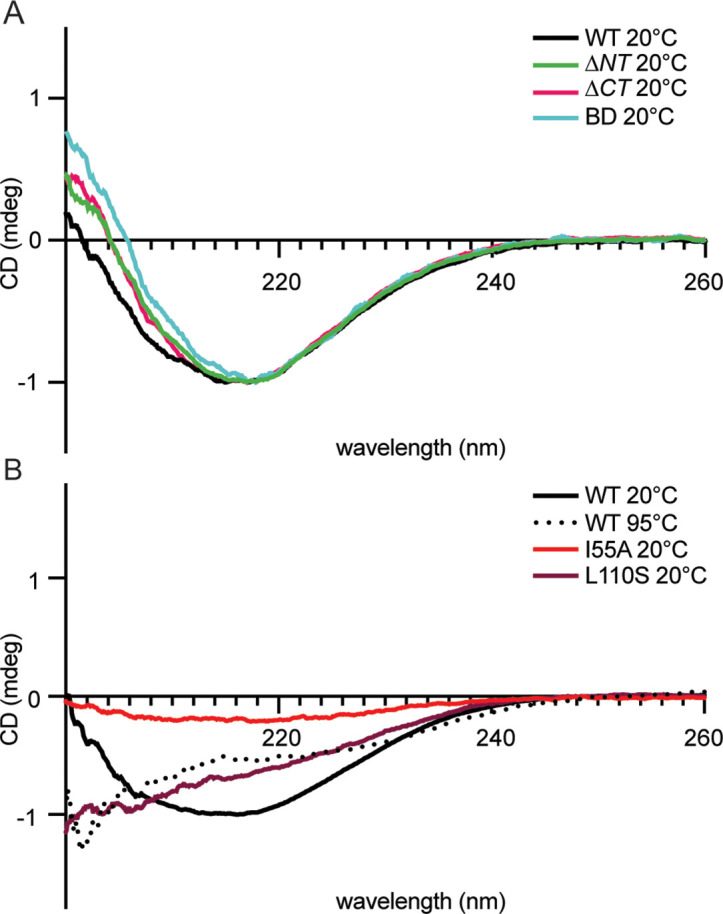
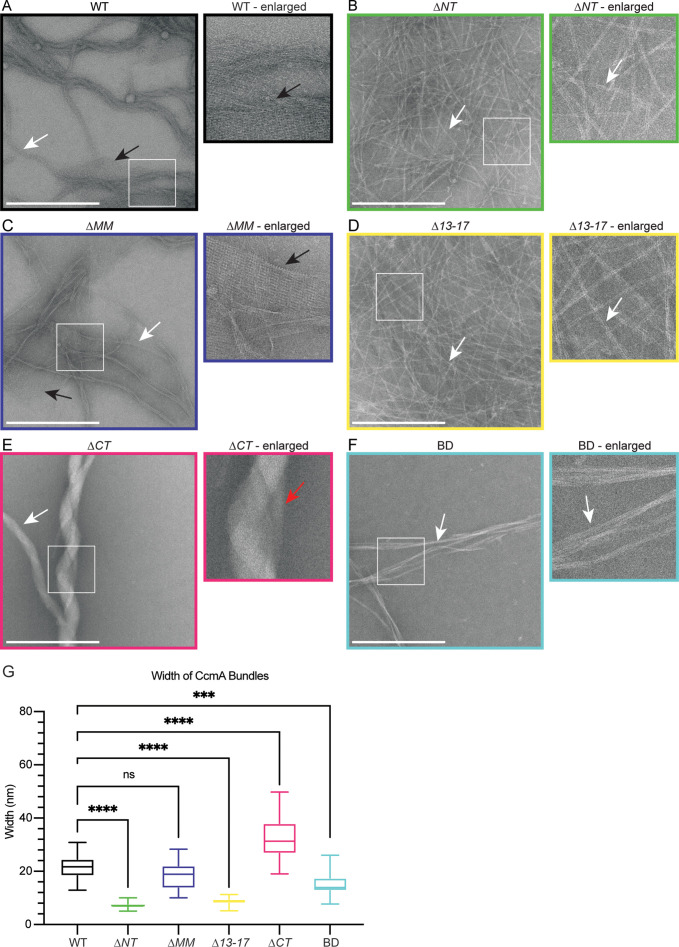
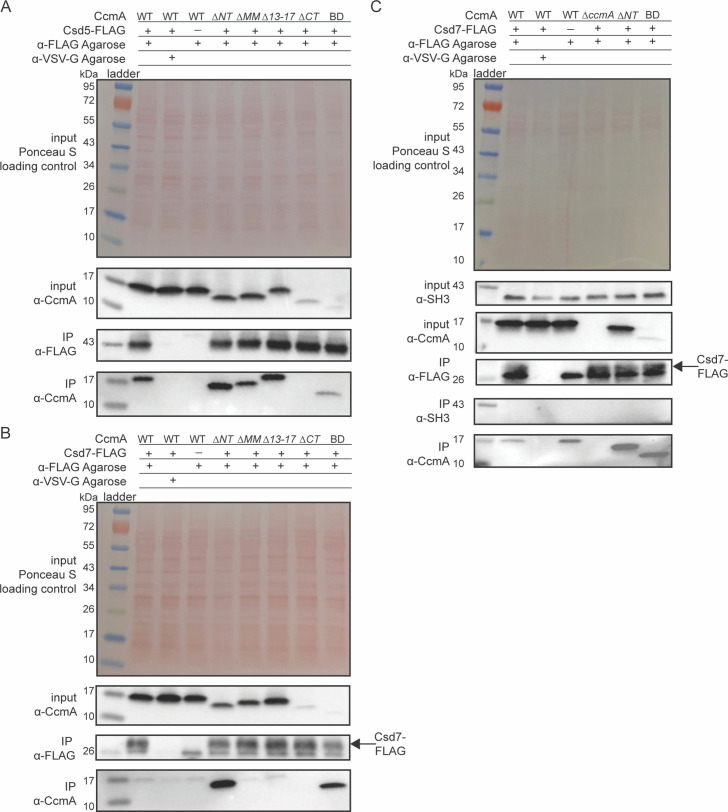
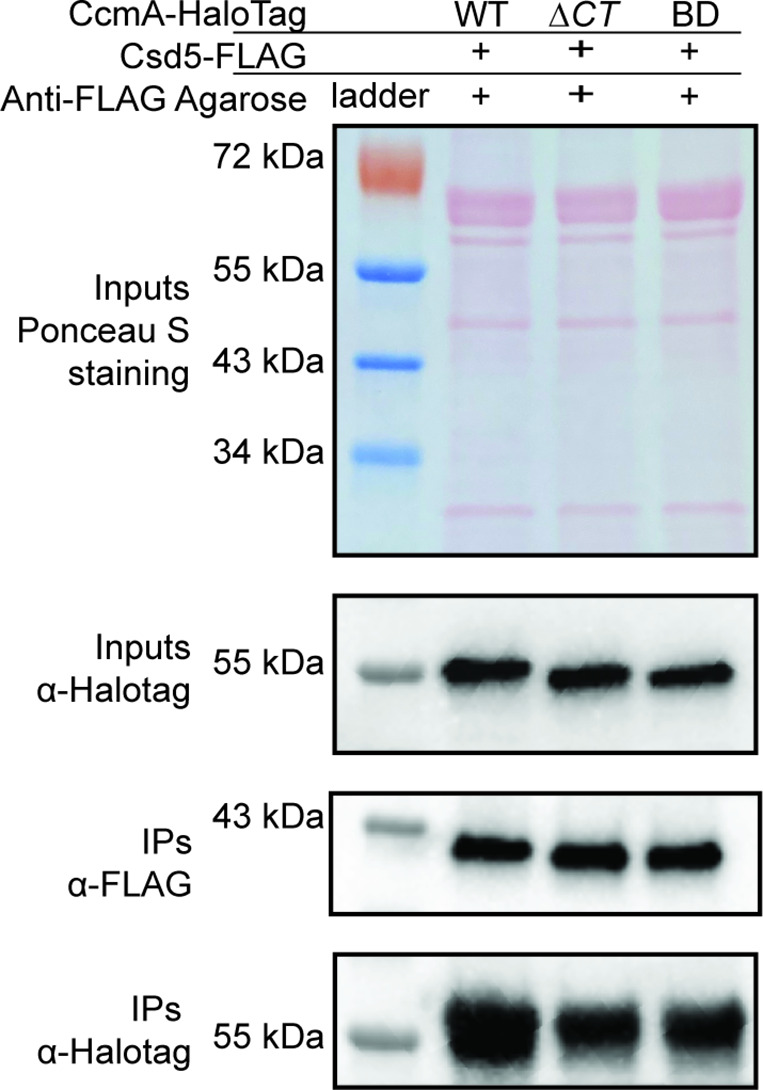
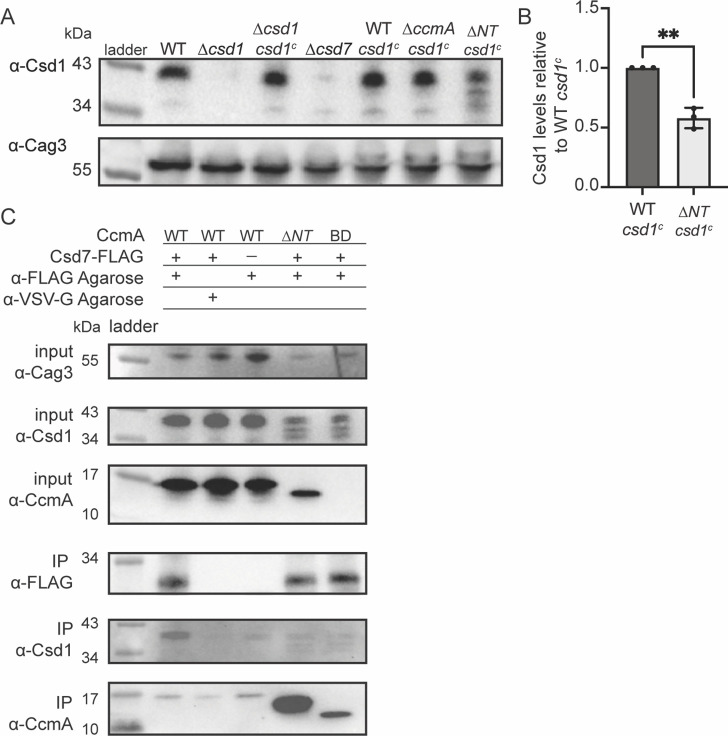
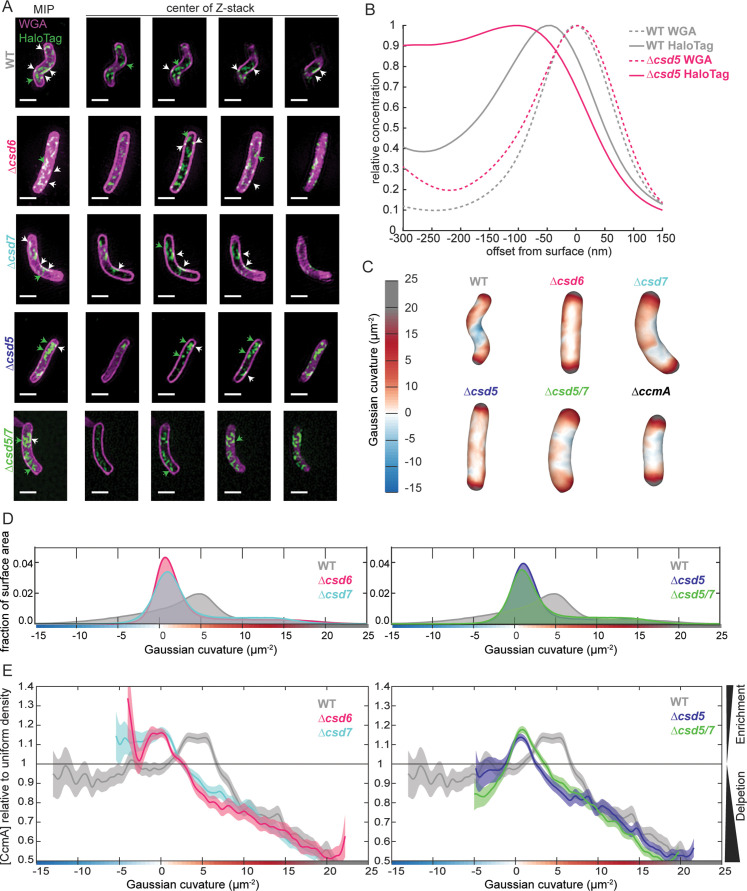
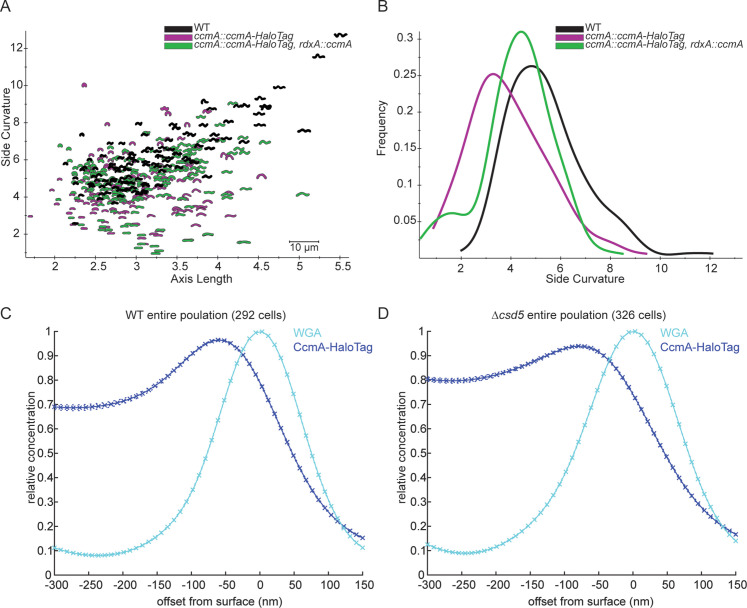
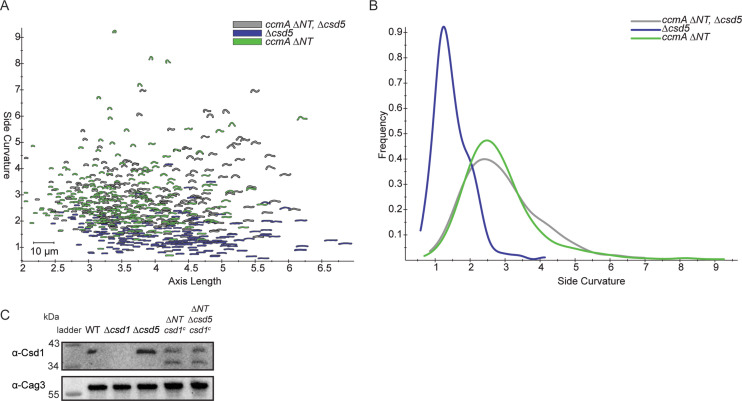
The helical shape of cells promotes robust stomach colonization; however, how the helical shape of cells is determined is unresolved. Previous work identified helical-cell-shape-promoting protein complexes containing a peptidoglycan-hydrolase (Csd1), a peptidoglycan precursor synthesis enzyme (MurF), a non-enzymatic homolog of Csd1 (Csd2), non-enzymatic transmembrane proteins (Csd5 and Csd7), and a bactofilin (CcmA). Bactofilins are highly conserved, spontaneously polymerizing cytoskeletal bacterial proteins. We sought to understand CcmA's function in generating the helical shape of cells. Using CcmA deletion analysis, in vitro polymerization, and in vivo co-immunoprecipitation experiments, we identified that the bactofilin domain and N-terminal region of CcmA are required for helical cell shape and the bactofilin domain of CcmA is sufficient for polymerization and interactions with Csd5 and Csd7. We also found that CcmA's N-terminal region inhibits interaction with Csd7. Deleting the N-terminal region of CcmA increases CcmA-Csd7 interactions and destabilizes the peptidoglycan-hydrolase Csd1. Using super-resolution microscopy, we found that Csd5 recruits CcmA to the cell envelope and promotes CcmA enrichment at the major helical axis. Thus, CcmA helps organize cell-shape-determining proteins and peptidoglycan synthesis machinery to coordinate cell wall modification and synthesis, promoting the curvature required to build a helical cell.
细胞的螺旋形状促进了其在胃中的旺盛定植;然而,细胞的螺旋形状是如何确定的,目前仍不清楚。先前的工作确定了促进螺旋细胞形状的蛋白复合物,这些复合物包含肽聚糖水解酶(Csd1)、肽聚糖前体合成酶(MurF)、Csd1 的非酶类同源物(Csd2)、非酶类跨膜蛋白(Csd5 和 Csd7)和细菌伴丝蛋白(CcmA)。细菌伴丝蛋白是高度保守的、能自发聚合的细菌细胞骨架蛋白。我们试图了解 CcmA 在产生细胞螺旋形状中的作用。通过 CcmA 缺失分析、体外聚合和体内共免疫沉淀实验,我们发现 CcmA 的伴丝蛋白结构域和 N 端区域对于细胞的螺旋形状是必需的,并且 CcmA 的伴丝蛋白结构域足以进行聚合以及与 Csd5 和 Csd7 相互作用。我们还发现 CcmA 的 N 端区域抑制与 Csd7 的相互作用。删除 CcmA 的 N 端区域会增加 CcmA-Csd7 相互作用并使肽聚糖水解酶 Csd1 不稳定。通过超分辨率显微镜,我们发现 Csd5 将 CcmA 招募到细胞膜,并促进 CcmA 在主要螺旋轴上的富集。因此,CcmA 有助于组织细胞形状决定蛋白和肽聚糖合成机器,以协调细胞壁的修饰和合成,促进构建螺旋细胞所需的曲率。