Queen Square Brain Bank for Neurological Disorders, UCL Queen Square Institute of Neurology, London, UK.
Department of Clinical and Movement Neurosciences, UCL Queen Square Institute of Neurology, London, UK.
Acta Neuropathol Commun. 2022 Sep 8;10(1):134. doi: 10.1186/s40478-022-01424-6.
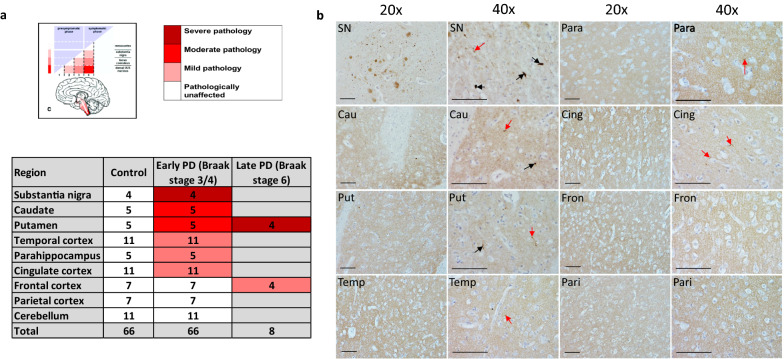
The molecular drivers of early sporadic Parkinson's disease (PD) remain unclear, and the presence of widespread end stage pathology in late disease masks the distinction between primary or causal disease-specific events and late secondary consequences in stressed or dying cells. However, early and mid-stage Parkinson's brains (Braak stages 3 and 4) exhibit alpha-synuclein inclusions and neuronal loss along a regional gradient of severity, from unaffected-mild-moderate-severe. Here, we exploited this spatial pathological gradient to investigate the molecular drivers of sporadic PD.
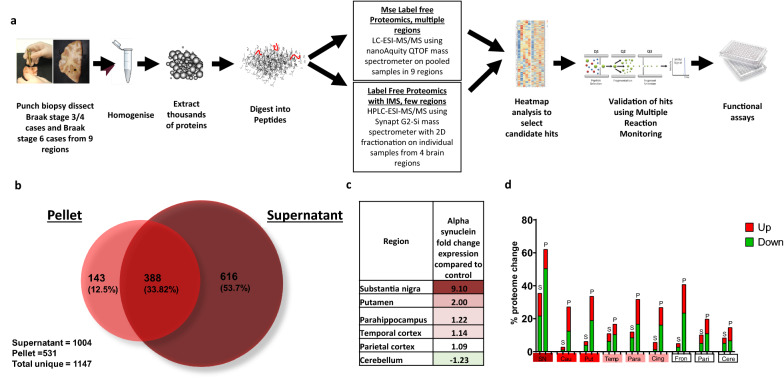
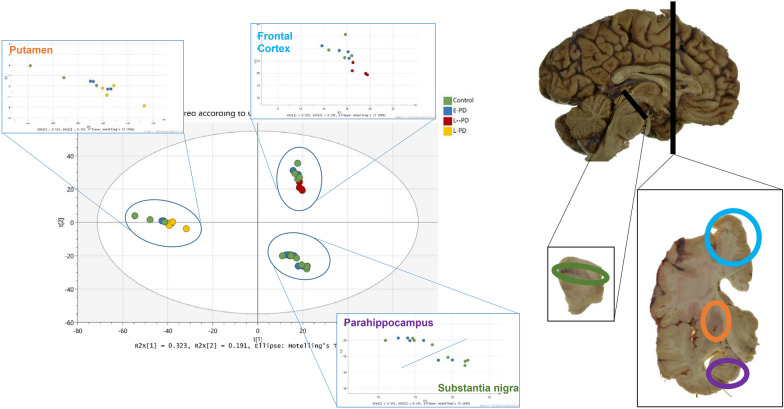
We combined high precision tissue sampling with unbiased large-scale profiling of protein expression across 9 brain regions in Braak stage 3 and 4 PD brains, and controls, and verified these results using targeted proteomic and functional analyses.
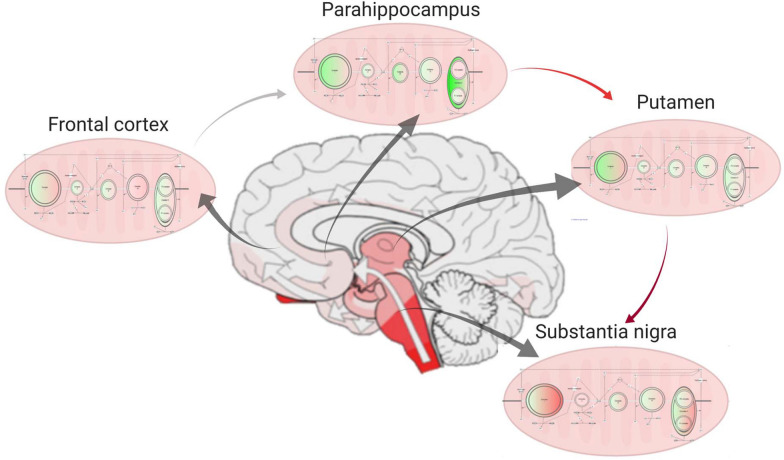
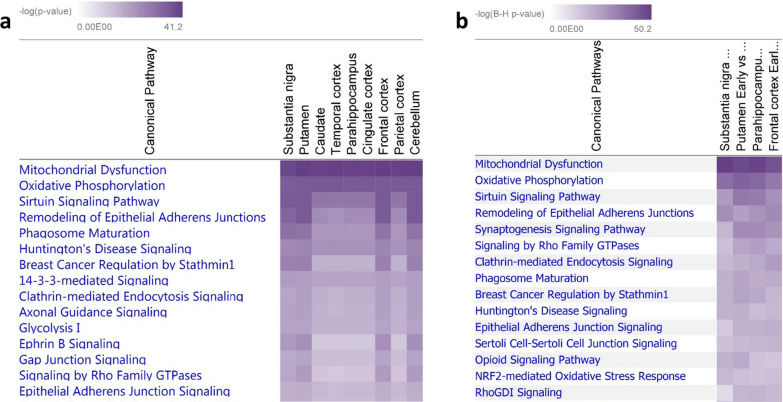
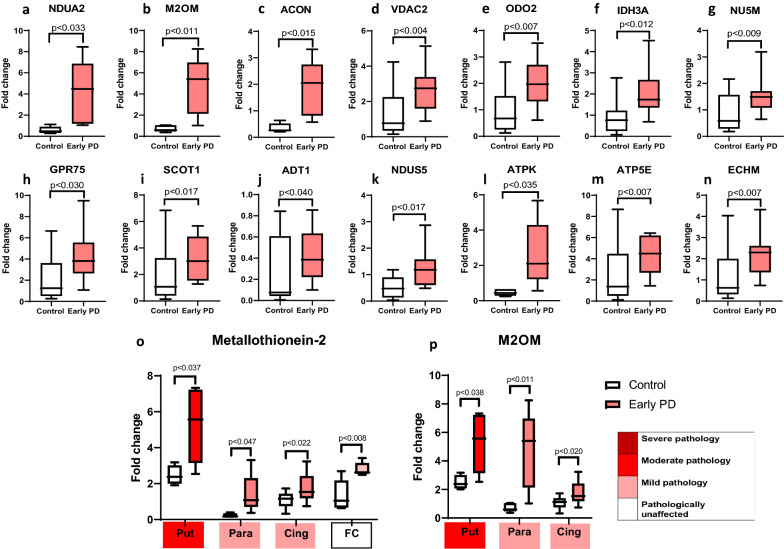
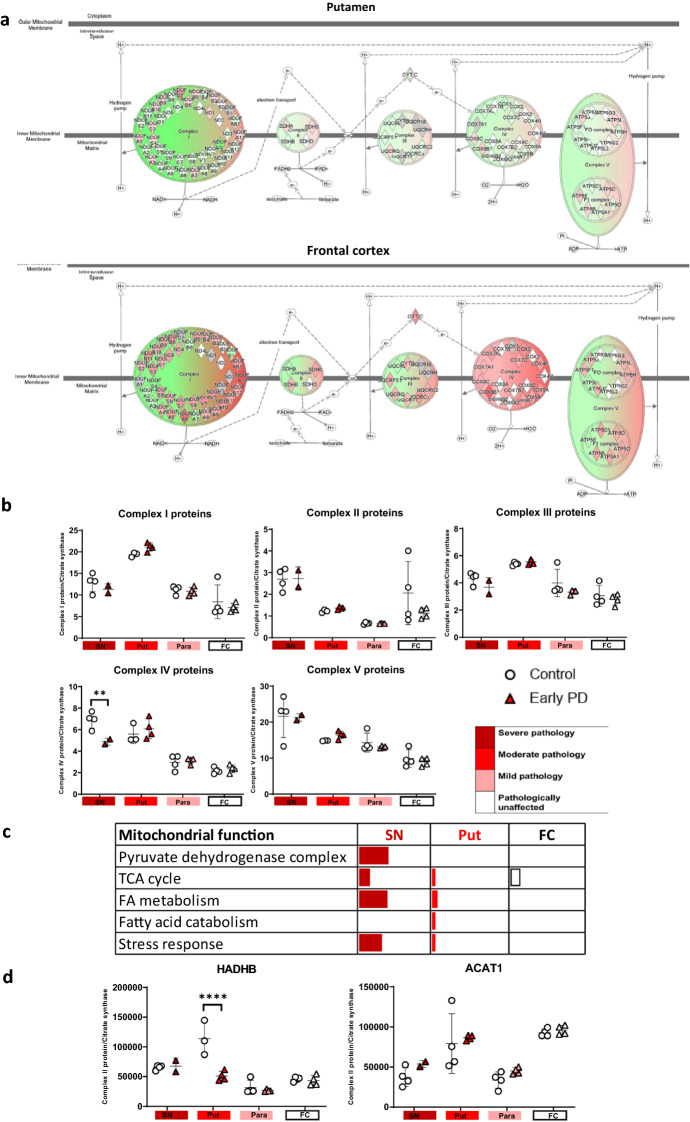
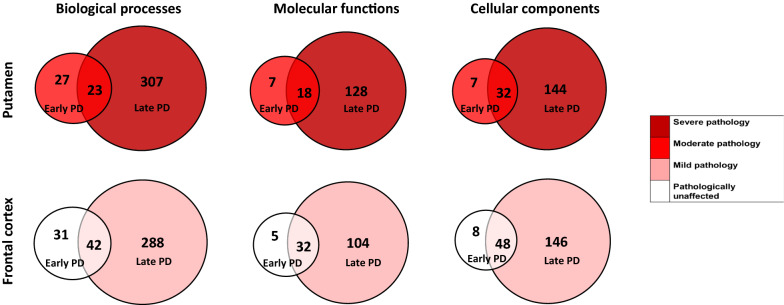
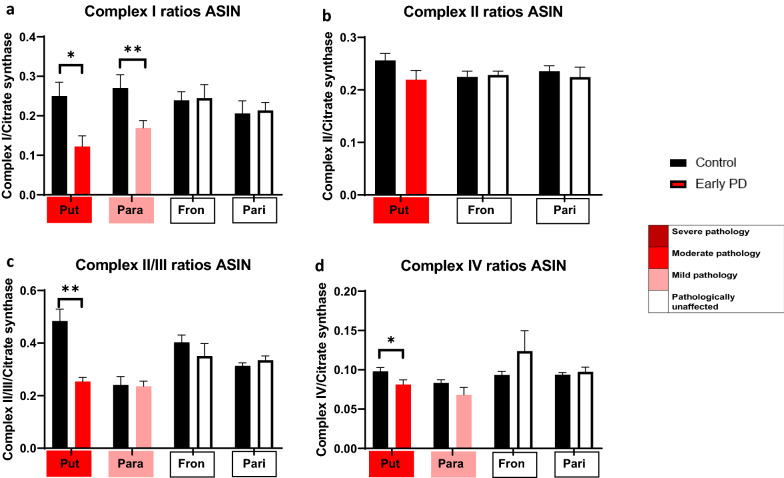
We demonstrate that the spatio-temporal pathology gradient in early-mid PD brains is mirrored by a biochemical gradient of a changing proteome. Importantly, we identify two key events that occur early in the disease, prior to the occurrence of alpha-synuclein inclusions and neuronal loss: (i) a metabolic switch in the utilisation of energy substrates and energy production in the brain, and (ii) perturbation of the mitochondrial redox state. These changes may contribute to the regional vulnerability of developing alpha-synuclein pathology. Later in the disease, mitochondrial function is affected more severely, whilst mitochondrial metabolism, fatty acid oxidation, and mitochondrial respiration are affected across all brain regions.
Our study provides an in-depth regional profile of the proteome at different stages of PD, and highlights that mitochondrial dysfunction is detectable prior to neuronal loss, and alpha-synuclein fibril deposition, suggesting that mitochondrial dysfunction is one of the key drivers of early disease.
早发性散发性帕金森病(PD)的分子驱动因素仍不清楚,晚期疾病的广泛终末期病理学掩盖了原发性或因果特异性疾病事件与应激或濒死细胞中晚期继发性后果之间的区别。然而,早中期帕金森病大脑(Braak 阶段 3 和 4)沿严重程度的区域梯度表现出α-突触核蛋白包涵体和神经元丢失,从轻度到中度到重度。在这里,我们利用这种空间病理梯度来研究散发性 PD 的分子驱动因素。
我们结合高精度组织采样和对 Braak 阶段 3 和 4 PD 大脑以及对照中 9 个脑区的无偏大规模蛋白质表达进行了无偏分析,并使用靶向蛋白质组学和功能分析验证了这些结果。
我们证明,早中期 PD 大脑中的时空病理梯度与不断变化的蛋白质组的生化梯度相吻合。重要的是,我们确定了在疾病发生之前发生的两个关键事件,即在α-突触核蛋白包涵体和神经元丢失之前:(i)大脑中能量底物利用和能量产生的代谢转变,以及(ii)线粒体氧化还原状态的扰动。这些变化可能导致正在发展的α-突触核蛋白病理学的区域易感性。在疾病的后期,线粒体功能受到更严重的影响,而线粒体代谢、脂肪酸氧化和线粒体呼吸在所有脑区都受到影响。
我们的研究提供了 PD 不同阶段的蛋白质组的深度区域谱,并强调了线粒体功能障碍在神经元丢失和α-突触核蛋白纤维沉积之前即可检测到,表明线粒体功能障碍是早期疾病的关键驱动因素之一。