Department of Endocrinology, Institute of Endocrine and Metabolic Diseases, The First Affiliated Hospital of USTC, Division of Life Sciences and Medicine, Clinical Research Hospital of Chinese Academy of Sciences (Hefei), University of Science and Technology of China, Hefei 230001, China.
Department of Endocrinology and Metabolic Disease, The Third Affiliated Hospital of Sun Yat-sen University, Guangzhou 510000, China.
Int J Mol Sci. 2022 Aug 26;23(17):9687. doi: 10.3390/ijms23179687.
Non-alcoholic fatty liver disease (NAFLD) affects one-quarter of individuals worldwide. Liver biopsy, as the current reliable method for NAFLD evaluation, causes low patient acceptance because of the nature of invasive sampling. Therefore, sensitive non-invasive serum biomarkers are urgently needed.
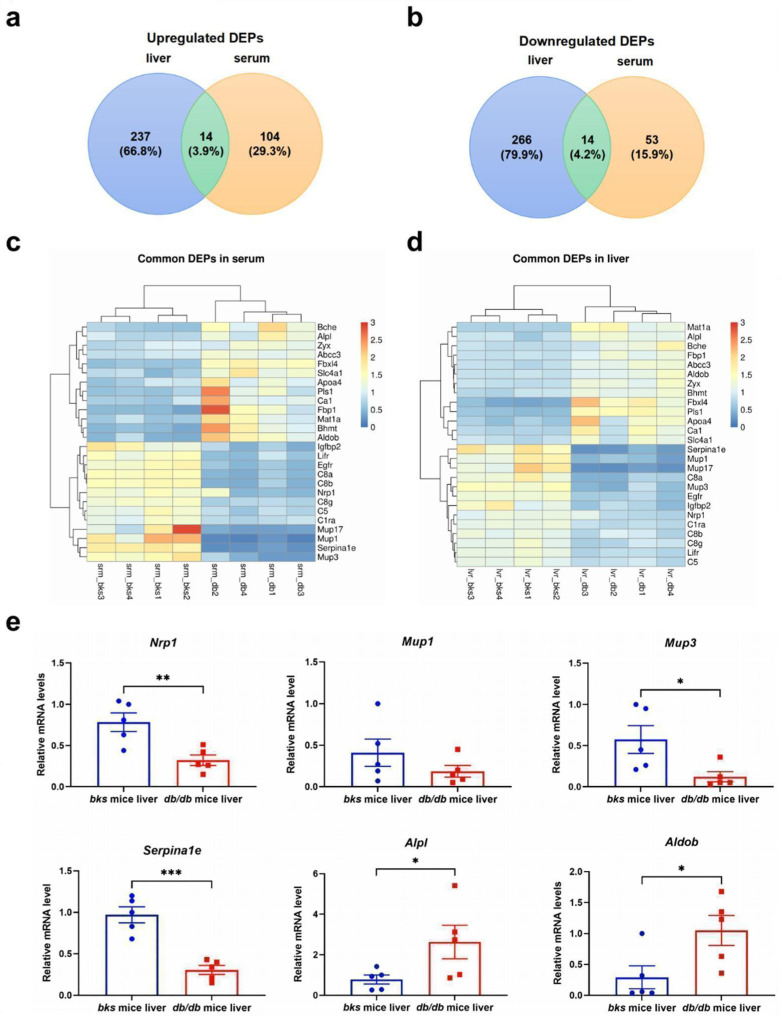
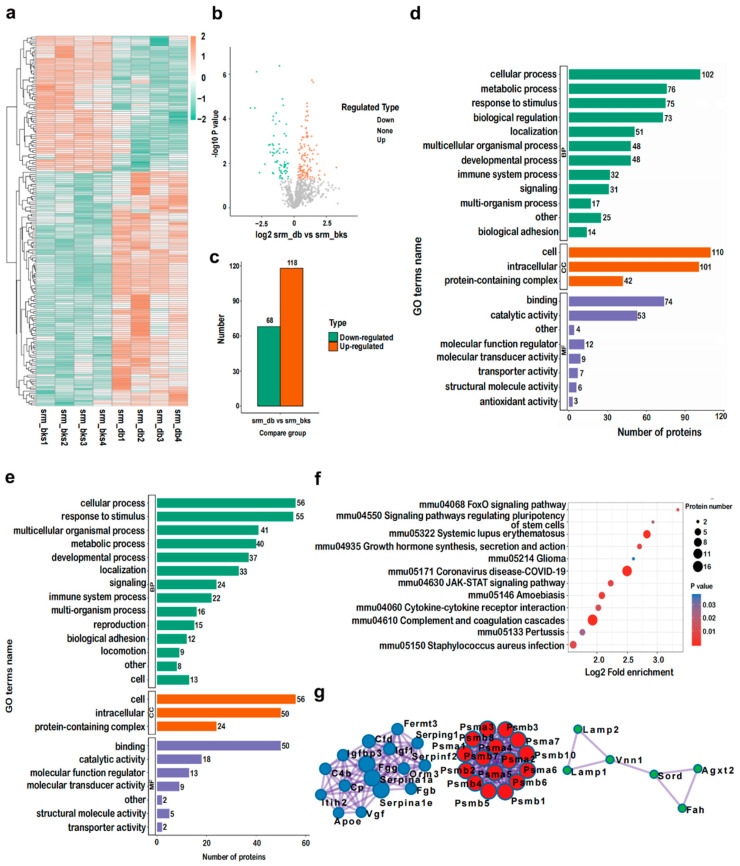
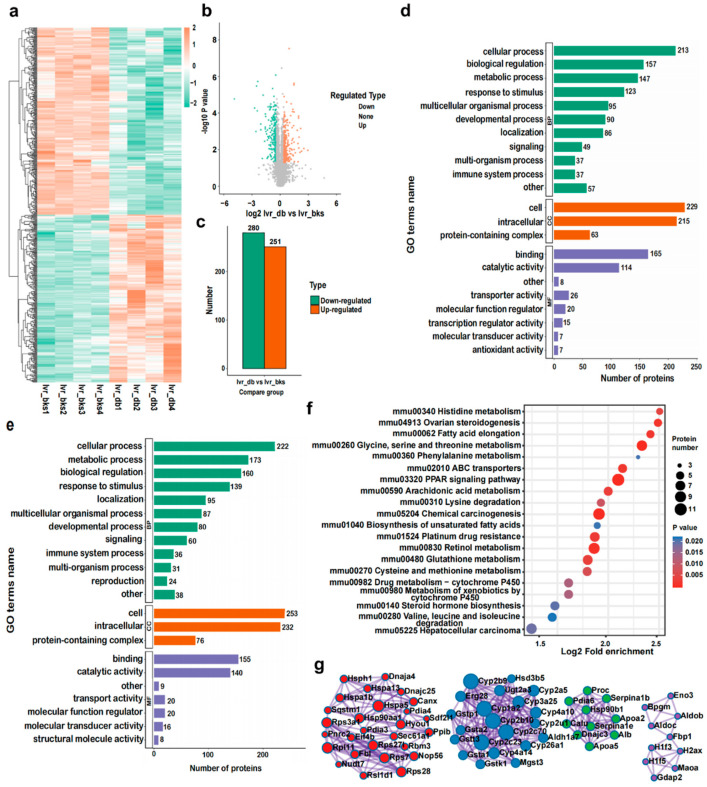
The serum gene ontology (GO) classification and Kyoto encyclopedia of genes and genomes (KEGG) analysis revealed the DEPs enriched in pathways including JAK-STAT and FoxO. GO analysis indicated that serum DEPs were mainly involved in the cellular process, metabolic process, response to stimulus, and biological regulation. Hepatic proteomic KEGG analysis revealed the DEPs were mainly enriched in the PPAR signaling pathway, retinol metabolism, glycine, serine, and threonine metabolism, fatty acid elongation, biosynthesis of unsaturated fatty acids, glutathione metabolism, and steroid hormone biosynthesis. GO analysis revealed that DEPs predominantly participated in cellular, biological regulation, multicellular organismal, localization, signaling, multi-organism, and immune system processes. Protein-protein interaction (PPI) implied diverse clusters of the DEPs. Besides, the paralleled changes of the common upregulated and downregulated DEPs existed in both the liver and serum were validated in the mRNA expression of NRP1, MUP3, SERPINA1E, ALPL, and ALDOB as observed in our proteomic screening.
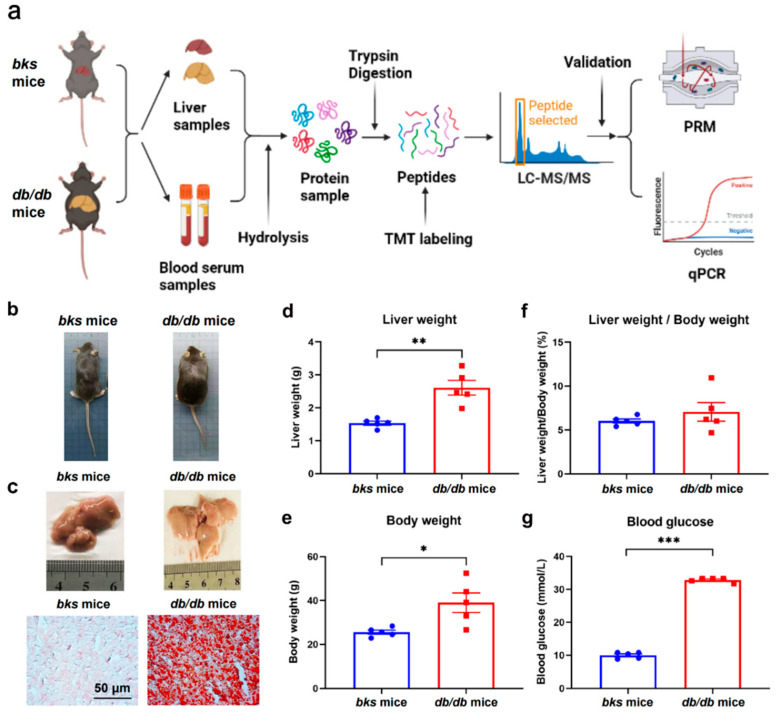
We conducted hepatic and serum proteomic analysis based on the leptin-receptor-deficient mouse (/), a well-established diabetic mouse model with overt obesity and NAFLD. The results show differentially expressed proteins (DEPs) in hepatic and serum proteomic analysis. A parallel reaction monitor (PRM) confirmed the authenticity of the selected DEPs.
These results are supposed to offer sensitive non-invasive serum biomarkers for diabetes and NAFLD.
非酒精性脂肪性肝病(NAFLD)影响全球四分之一的人群。肝活检作为目前评估 NAFLD 的可靠方法,由于其侵袭性采样的性质,导致患者接受度低。因此,迫切需要敏感的非侵入性血清生物标志物。
血清基因本体论(GO)分类和京都基因与基因组百科全书(KEGG)分析显示,差异表达蛋白(DEPs)在 JAK-STAT 和 FoxO 等途径中富集。GO 分析表明,血清 DEPs 主要参与细胞过程、代谢过程、对刺激的反应和生物调节。肝蛋白质组学 KEGG 分析显示,DEPs 主要富集在 PPAR 信号通路、视黄醇代谢、甘氨酸、丝氨酸和苏氨酸代谢、脂肪酸延长、不饱和脂肪酸合成、谷胱甘肽代谢和类固醇激素生物合成中。GO 分析表明,DEPs 主要参与细胞、生物调节、多细胞生物、定位、信号转导、多器官和免疫系统过程。蛋白质-蛋白质相互作用(PPI)暗示了 DEPs 的不同簇。此外,在我们的蛋白质组学筛选中观察到,在肝脏和血清中都存在共同上调和下调的 DEPs 的平行变化,这在 NRP1、MUP3、SERPINA1E、ALPL 和 ALDOB 的 mRNA 表达中得到了验证。
我们基于瘦素受体缺陷小鼠(/)进行了肝和血清蛋白质组学分析,这是一种肥胖和 NAFLD 明显的糖尿病小鼠模型。结果显示肝和血清蛋白质组学分析中差异表达的蛋白质(DEPs)。平行反应监测(PRM)证实了所选 DEPs 的真实性。
这些结果有望为糖尿病和 NAFLD 提供敏感的非侵入性血清生物标志物。