Meng Qingnan, Li Xiaoying, Xiong Xuelian
The Key Laboratory of Metabolism and Molecular Medicine of the Ministry of Education, Department of Endocrinology and Metabolism, Zhongshan Hospital, Fudan University, Shanghai, China.
Front Genet. 2022 Apr 26;13:872518. doi: 10.3389/fgene.2022.872518. eCollection 2022.
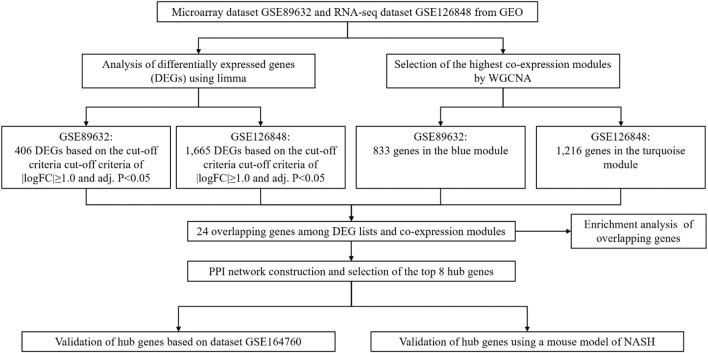
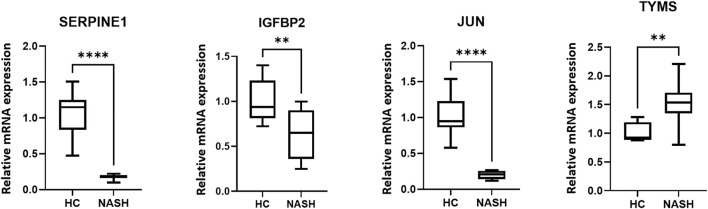
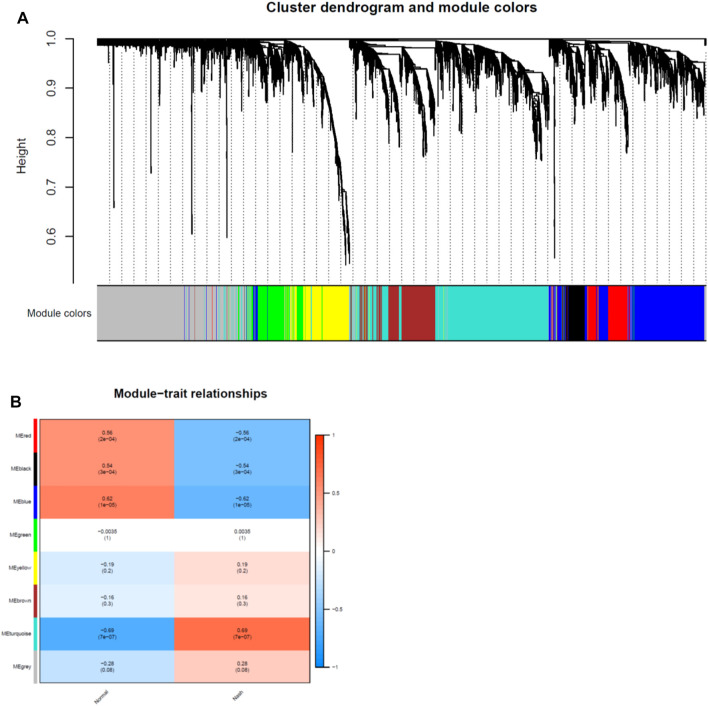
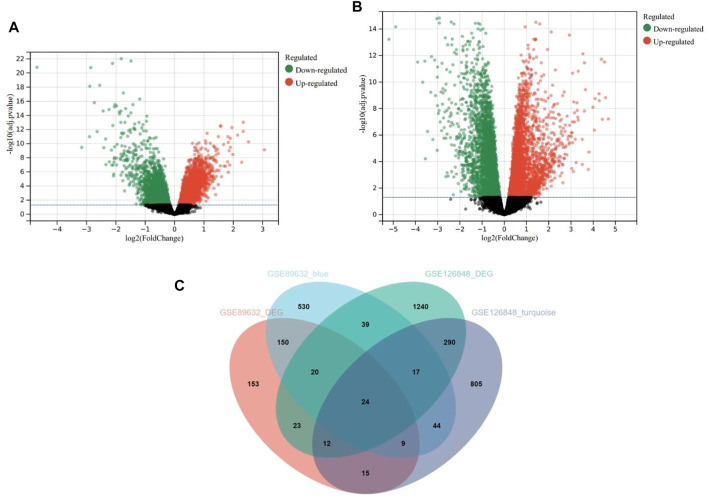
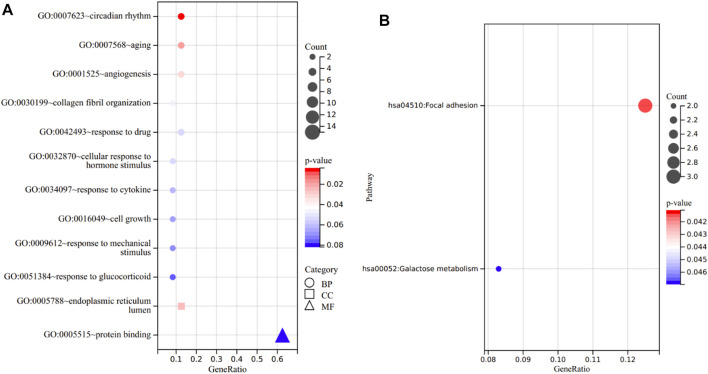
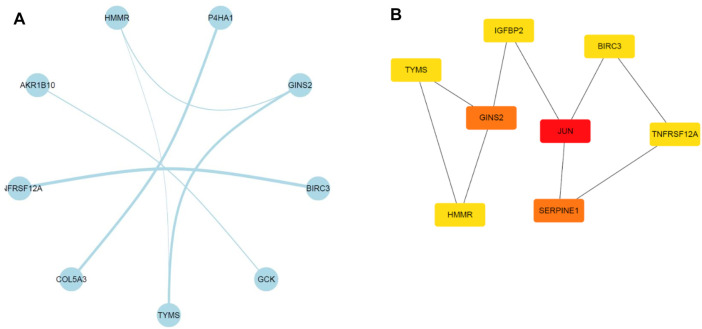
As a major cause of liver disease worldwide, non-alcoholic fatty liver disease (NAFLD) comprises non-alcoholic fatty liver (NAFL) and non-alcoholic steatohepatitis (NASH). Due to the high prevalence and poor prognosis of NASH, it is critical to understand its mechanisms. However, the etiology and mechanisms remain largely unknown. In addition, the gold standard for the diagnosis of NASH is liver biopsy, which is an invasive procedure. Therefore, there is a pressing need to develop noninvasive tests for NASH diagnosis. The goal of the study is to discover key genes involved in NASH development and investigate their value as noninvasive biomarkers. The Gene Expression Omnibus (GEO) database was used to obtain two datasets encompassing NASH patients and healthy controls. We used weighted gene co-expression network analysis (WGCNA) and differential expression analysis in order to investigate the association between gene sets and clinical features, as well as to discover co-expression modules. A protein-protein interaction (PPI) network was created to extract hub genes. The results were validated using another publicly available dataset and mice treated with a high-fat diet (HFD) and carbon tetrachloride (CCl4). A total of 24 differentially co-expressed genes were selected by WGCNA and differential expression analysis. KEGG analysis indicated most of them were enriched in the focal adhesion pathway. GO analysis showed these genes were mainly enriched in circadian rhythm, aging, angiogenesis and response to drug (biological process), endoplasmic reticulum lumen (cellular component), and protein binding (molecular function). As a result, eight genes (JUN, SERPINE1, GINS2, TYMS, HMMR, IGFBP2, BIRC3, TNFRSF12A) were identified as hub genes. Finally, three genes were found significantly changed in both the validation dataset and the mouse model. Our research discovered genes that have the potential to mediate the process of NASH and might be useful diagnostic biomarkers for the disorder.
作为全球肝病的主要病因,非酒精性脂肪性肝病(NAFLD)包括非酒精性脂肪肝(NAFL)和非酒精性脂肪性肝炎(NASH)。由于NASH的高患病率和不良预后,了解其发病机制至关重要。然而,其病因和机制仍 largely 未知。此外,NASH诊断的金标准是肝活检,这是一种侵入性操作。因此,迫切需要开发用于NASH诊断的非侵入性检测方法。本研究的目的是发现参与NASH发生发展的关键基因,并研究它们作为非侵入性生物标志物的价值。使用基因表达综合数据库(GEO)获取了两个包含NASH患者和健康对照的数据集。我们使用加权基因共表达网络分析(WGCNA)和差异表达分析来研究基因集与临床特征之间的关联,并发现共表达模块。构建了蛋白质-蛋白质相互作用(PPI)网络以提取枢纽基因。使用另一个公开可用的数据集以及用高脂饮食(HFD)和四氯化碳(CCl4)处理的小鼠对结果进行了验证。通过WGCNA和差异表达分析共选择了24个差异共表达基因。KEGG分析表明,其中大多数基因在粘着斑通路中富集。GO分析表明,这些基因主要富集于昼夜节律、衰老、血管生成和药物反应(生物学过程)、内质网腔(细胞成分)以及蛋白质结合(分子功能)。结果,八个基因(JUN、SERPINE1、GINS2、TYMS、HMMR、IGFBP2、BIRC3、TNFRSF12A)被鉴定为枢纽基因。最后,在验证数据集和小鼠模型中均发现三个基因有显著变化。我们的研究发现了有可能介导NASH进程的基因,这些基因可能是该疾病有用的诊断生物标志物。