Department of Chemistry, Josip Juraj Strossmayer University of Osijek, Cara Hadrijana 8/A, 31000 Osijek, Croatia.
Agricultural Institute Osijek, Južno predgrađe 17, 31000 Osijek, Croatia.
Int J Mol Sci. 2022 Aug 26;23(17):9702. doi: 10.3390/ijms23179702.
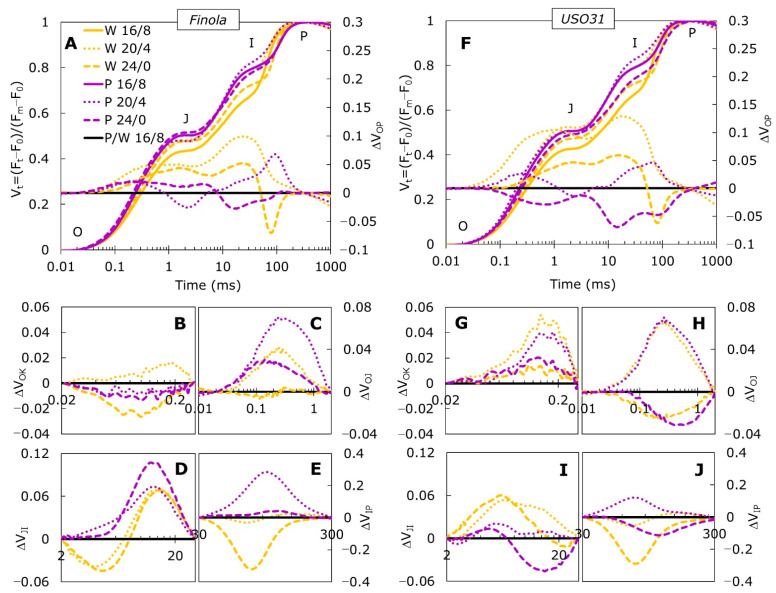
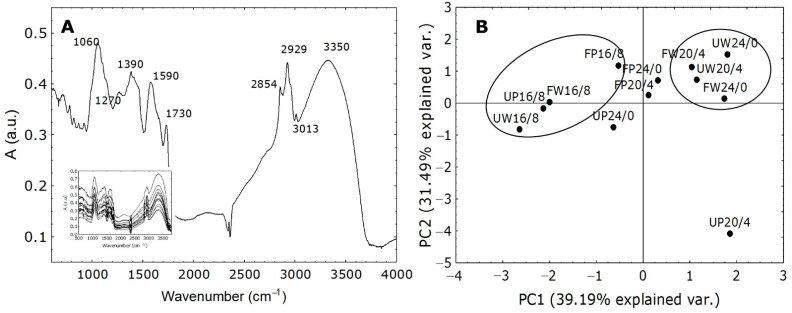
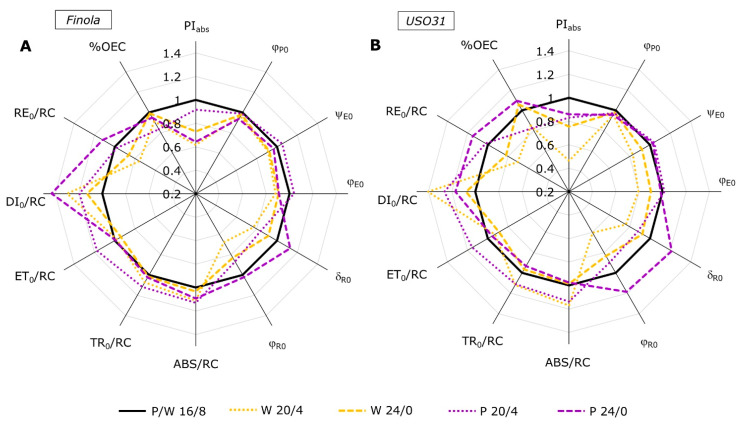
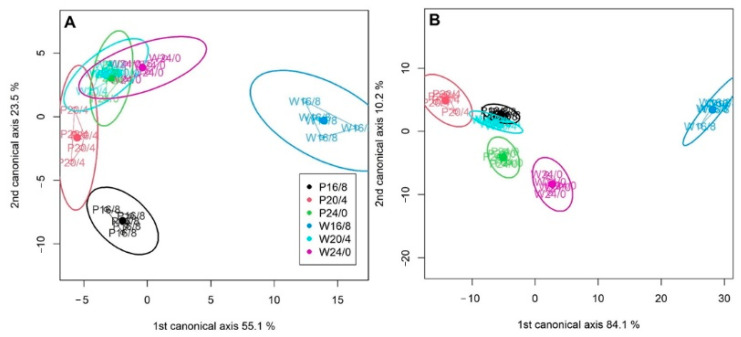
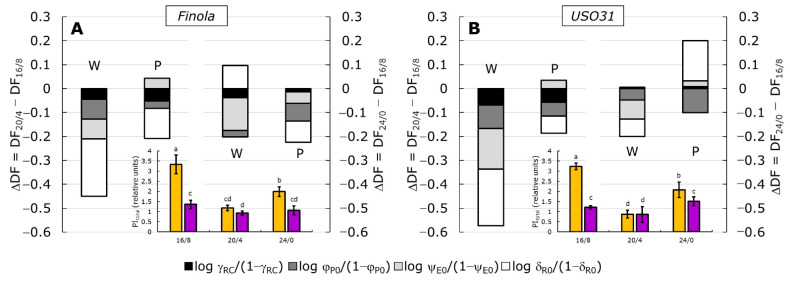
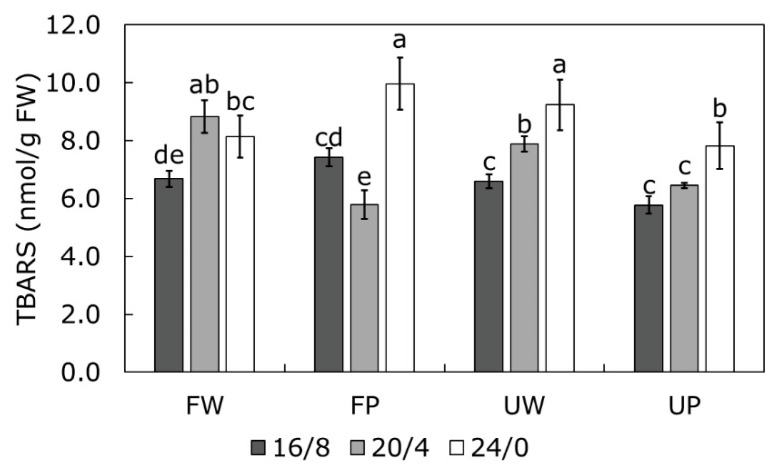
Industrial hemp is a fast-growing, short-day plant, characterized by high biomass yields and low demands for cultivation. To manipulate growth, hemp is usually cultivated under prolonged photoperiods or continuous light that could cause photooxidative damage and adjustments of photosynthetic reactions. To determine the extent of changes in photosynthetic response caused by prolonged light exposure, we employed chlorophyll fluorescence measurements accompanied with level of lipid peroxidation (TBARS) and FT-IR spectroscopy on two cultivars. Plants were grown under white (W) and purple (P) light at different photoperiods (16/8, 20/4, and 24/0). Our results showed diverse photosynthetic reactions induced by the different light type and by the duration of light exposure in two cultivars. The most beneficial condition was the 16/8 photoperiod, regardless of the light type since it brought the most efficient physiological response and the lowest TBARS contents suggesting the lowest level of thylakoid membrane damage. These findings indicate that different efficient adaptation strategies were employed based on the type of light and the duration of photoperiod. White light, at both photoperiods, caused higher dissipation of excess light causing reduced pressure on PSI. Efficient dissipation of excess energy and formation of cyclic electron transport around PSI suggests that P20/4 initiated an efficient repair system. The P24/0 maintained functional electron transport between two photosystems suggesting a positive effect on the photosynthetic reaction despite the damage to thylakoid membranes.
工业大麻是一种生长迅速、短日照的植物,具有生物量产量高、对栽培要求低的特点。为了控制其生长,通常在长日照或连续光照条件下栽培,这可能会导致光氧化损伤和光合作用反应的调整。为了确定长时间光照暴露对光合作用反应的变化程度,我们采用叶绿素荧光测量方法,并结合两种品种的脂质过氧化(TBARS)水平和傅里叶变换红外光谱(FT-IR)分析。在不同的光周期(16/8、20/4 和 24/0)下,植物在白光(W)和紫光(P)下生长。我们的结果表明,两种品种在不同的光质和光照时间下,诱导了不同的光合作用反应。最有益的条件是 16/8 光周期,无论光质如何,因为它带来了最有效的生理反应和最低的 TBARS 含量,表明类囊体膜损伤程度最低。这些发现表明,不同的有效适应策略是基于光质和光周期的持续时间来采用的。在两种光周期下,白光都会导致过量光能的耗散增加,从而减轻 PSI 的压力。PSI 周围的高效过剩能量耗散和环状电子传递的形成表明,P20/4 启动了一个有效的修复系统。P24/0 在两个光系统之间保持了功能性的电子传递,这表明尽管类囊体膜受损,但对光合作用反应仍有积极影响。